Full Article
about Tolbaños
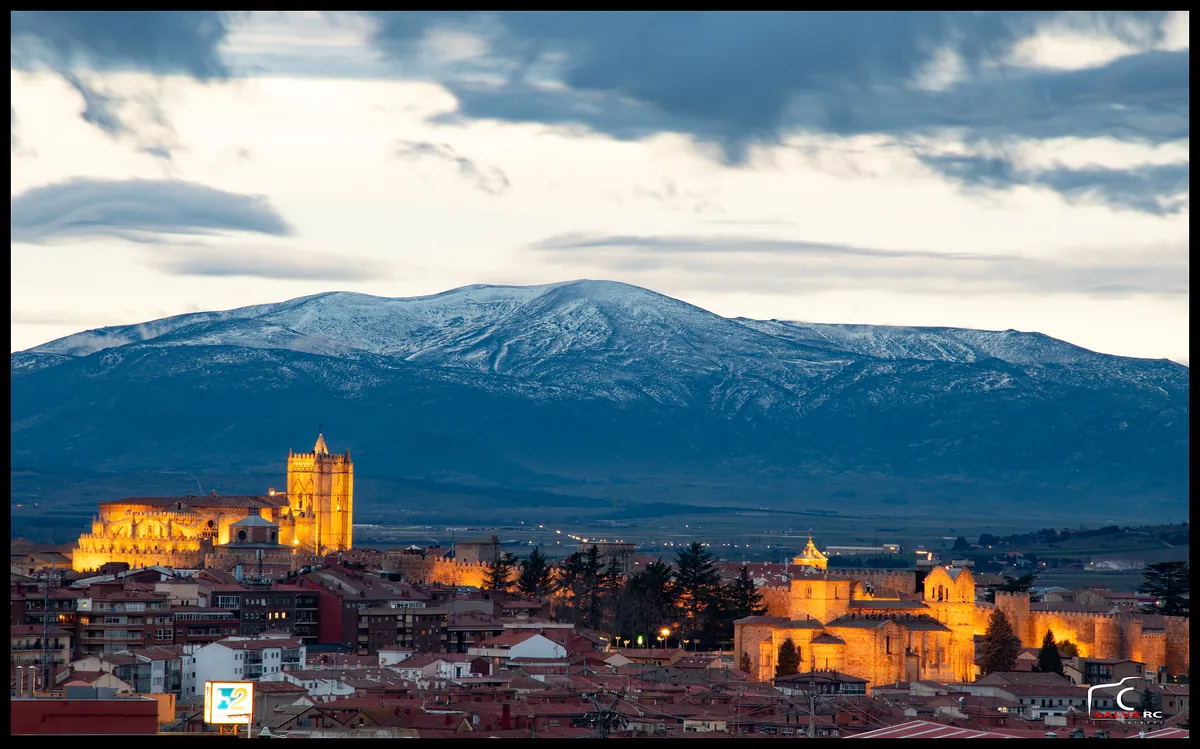
Near Ávila and the Puerto de la Lancha; a landscape of rocky outcrops and holm oaks.
Hide article Read full article
A Brief Stop in the Sierra de Ávila
Before arriving in Tolbaños, two things are worth knowing. There is very little space to leave the car within the village itself, and there are no services designed for passers-by. It makes sense to park at the entrance and continue on foot. Tourism in Tolbaños is essentially about walking for a while and looking around. The village reveals itself quickly.
Tolbaños sits at 1,139 metres above sea level, in the Sierra de Ávila, a mountainous area in the province of Ávila within Castilla y León. It is a small settlement of only a few dozen houses and around eighty-odd residents. Beyond the compact centre, there is barely any movement. Life here is quiet and measured, shaped by altitude and open land.
This is not a place of attractions lined up for visitors. It is a short pause in a rural landscape, a chance to see a village that continues much as it has for decades.
Stone Streets and Granite Walls
Tolbaños is built in stone and granite, materials that define both its appearance and its character. The streets are short. Several are surfaced with asphalt, though stretches of earth remain between houses, along with entrances to former animal yards and corrals.
The main square lies close to the entrance to the village. It is modest in size. From here, Calle Real begins, joined by a few tracks that lead out towards the surrounding fields. The historic centre can be covered in a short time without any need for a plan.
Many houses still have wide gateways. In the past, carts and livestock would have passed through them. Wooden balconies appear on some façades, and old stone walls enclose small patios and yards. There has not been much new construction, so the overall feel remains largely traditional. The materials, the scale and the layout all reflect its agricultural past.
There is no sense of restoration for show. What stands here does so because it continues to serve a purpose or has simply endured.
San Andrés and Everyday Details
The most recognisable building in Tolbaños is the church of San Andrés. It dates from the late sixteenth century, although it has undergone later alterations. The structure is straightforward: a square tower, a simple nave and a discreet bell gable on one side. Its presence anchors the village visually, rising above the low roofs of the surrounding houses.
Beyond the church, there are no other notable monuments. Instead, attention falls on smaller details. Old wooden gates, weathered stone walls and interior courtyards hint at the agricultural rhythm that once defined daily life. These elements are not presented as heritage attractions, yet they speak clearly about how the village functioned.
Walking through the streets takes little time, but the texture of the place rewards a slower pace. The worn thresholds and broad entrances tell of animals being led in at dusk. The stonework shows the skill of local building traditions, adapted to the climate and available materials of the Sierra de Ávila.
The Landscape Beyond the Last House
Once outside the built-up area, rural tracks begin almost immediately. The landscape opens into gentle hills dotted with holm oaks, low scrub and pastureland. The terrain undulates softly rather than rising into dramatic peaks. It is a landscape that changes little throughout the year.
In spring, the fields appear greener. In summer, dry tones dominate. When the cold sets in, serious frosts are possible and occasional snowfall can cover the ground. At this altitude, winter has weight.
Griffon vultures are sometimes seen circling above the hills. Their presence is not unusual in this part of the sierra, where open countryside provides suitable conditions for large birds of prey. Apart from them and the occasional farm activity, the surroundings remain largely still.
The transition from village to countryside is immediate. A few steps beyond the last houses, there are only tracks, fields and sky.
Walking the Local Tracks
There are no signposted walking routes or information panels. Any walk here follows agricultural tracks and old paths that have long been used by local residents. Those intending to venture further from the village would be wise to carry a map or GPS.
Some of these tracks connect Tolbaños with other small settlements in the area. They are calm stretches without traffic. Rather than being routes designed for visitors, they remain practical paths for local use.
In autumn, mushrooms appear in certain oak groves, especially níscalos, known in English as saffron milk caps. As always, caution is advisable for anyone unfamiliar with wild mushroom picking.
A walk around Tolbaños is simple and unstructured. There are no marked viewpoints or curated stops. The appeal lies in moving through open land at a steady pace, following paths that have been used for generations.
Before You Go
Tolbaños can be seen in a little over an hour. Two hours if time is spent exploring the nearby tracks. There are no shops open all year round and no bars with a constant atmosphere. Anyone planning a visit should bring what they need, including water, some food and suitable footwear for walking on rural tracks.
For those looking to fill a longer day, Tolbaños works best combined with other villages in the Sierra de Ávila. On its own, the stop is brief. That is part of its nature.
This is a village of stone, short streets and open land. It does not attempt to be more than it is. Visitors arrive, walk, look around and leave again, carrying a clear impression of a small settlement set high in the Sierra de Ávila, where the pace remains slow and the landscape does most of the talking.