Full Article
about Tornadizos de Ávila
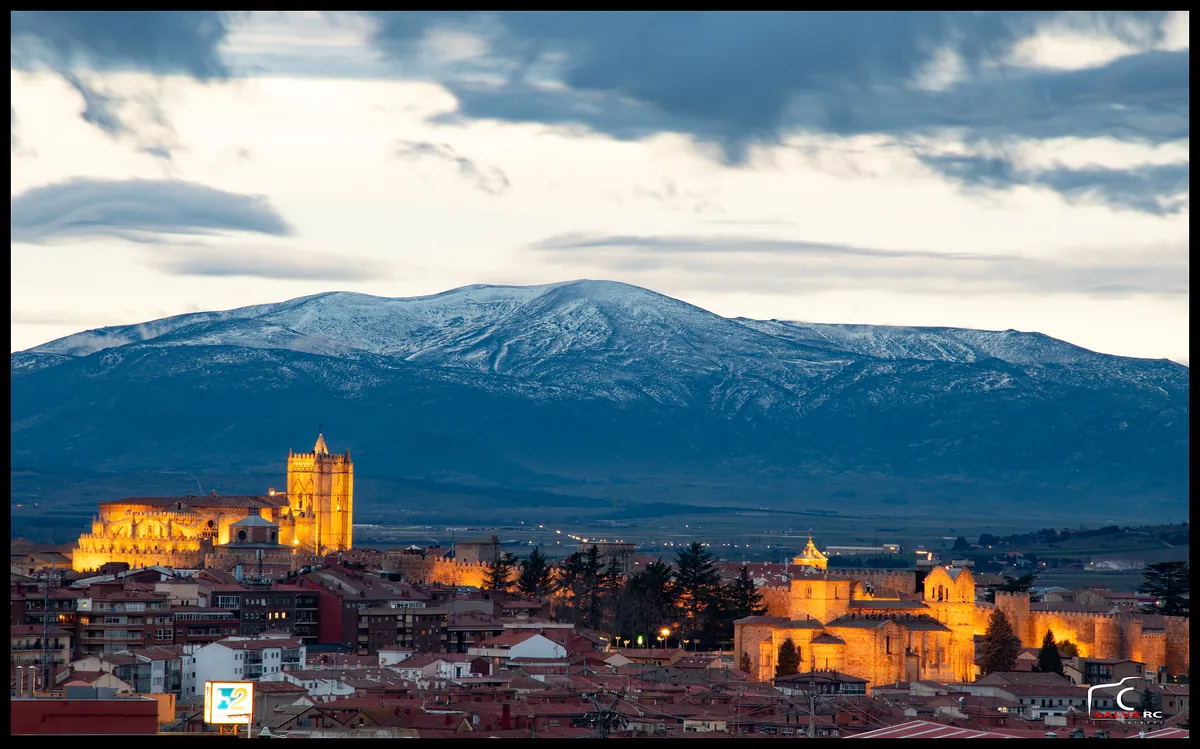
Very close to the capital; a residential and farming area with views of the city.
Hide article Read full article
Between the Moraña and the Sierra
Tornadizos de Ávila sits on the eastern edge of the Sierra de Ávila, at just over 1,100 metres above sea level. It marks a point of transition. To one side lies the open cereal landscape of the Moraña, to the other the first rises of the mountains. This position shapes both the scenery and the way the village has developed over time.
With fewer than five hundred residents, Tornadizos reflects the scale typical of settlements around the city of Ávila. These are small places, historically tied to farming and livestock, where daily life has long depended on the rhythms of the land. Winters here are known for being harsh, and that climate has left its mark on how homes are built and how the village is organised.
The name Tornadizos is often linked to old transit routes. Local paths once crossed this area, connecting nearby villages with the city of Ávila and with the passes leading into the sierra. The idea of “tornar”, to return by the same route, appears to have survived in the place name, a reminder of movement back and forth through this landscape.
Today, the village presents a familiar image for this part of the province. Stone and adobe walls line short streets that open into small squares, all arranged around a central church. The buildings follow a practical logic: thick walls, low heights and orientations chosen to reduce exposure to cold and wind.
Tornadizos lies about 25 kilometres from Ávila. It forms part of a rural belt that has always maintained close ties with the provincial capital, both for work and for access to services.
The Church and the Shape of the Village
At the centre of Tornadizos stands the parish church. It has been altered at different points in its history, yet it still follows a model seen across much of the province. Its masonry walls, compact form and simple tower give it a solid presence that can be recognised from almost anywhere in the village.
The importance of the church comes less from its size and more from its position. The square around it acts as a meeting place and sets the pattern for the surrounding streets. This kind of layout is common in villages across this part of Castile, where the church often anchors both daily life and the physical structure of the settlement.
Beyond the church, the rest of the village retains clear examples of traditional architecture from the province of Ávila. Houses built from masonry stand alongside large entrance gates once designed for carts. Inside, many properties include enclosed courtyards. These spaces were traditionally used to keep livestock or store grain, reflecting the agricultural focus of the area.
Some homes show additions from the 20th century, when families expanded older buildings. These changes sit alongside the original structures rather than replacing them, so the overall character of the village remains consistent. The result is a place where different periods can be read through small architectural details rather than through large, abrupt changes.
Paths Through Fields and Dehesa
The landscape around Tornadizos is open and largely uninterrupted. Cereal fields and pasture dominate, while low rises to the north hint at the approaching sierra. It is not an area defined by major signposted routes starting from the village itself. Instead, there is a network of agricultural tracks that link fields, farms and neighbouring settlements.
These paths are straightforward to walk, provided the routes are known in advance or checked locally. They follow the working landscape rather than being designed for tourism, which gives them a direct connection to how the land is used.
In milder months, the area shows more movement in the sky and across the fields. Birds such as kites, kestrels and storks are often visible, either perched on posts or circling above recently worked ground. Their presence adds another layer to a landscape that might otherwise seem still at first glance.
This wide, lightly altered terrain forms part of the identity of the region. It also explains much about the traditional economy of Tornadizos, where agriculture and livestock have long shaped both livelihoods and land use.
Festivities and Everyday Life
As in many small municipalities in the province, the calendar of festivities becomes more noticeable in summer. During the patron saint celebrations, residents who live elsewhere return, and for a few days the village takes on a more active atmosphere.
Religious observances continue to play a role as well. Semana Santa, or Holy Week, is marked with simple events that remain closely tied to local tradition rather than large-scale processions.
Outside these moments, daily life follows a quieter rhythm. The scale of the village means that social life is often centred around shared spaces such as the square near the church, where the layout naturally brings people together.
Visiting Tornadizos de Ávila
Tornadizos de Ávila is located around 25 kilometres from the city of Ávila and can be reached بسهولة by car from the provincial capital. Its proximity makes it part of a wider rural area that remains connected to the city.
The village itself can be explored quickly. A walk through the streets near the church offers the clearest sense of its layout and architecture. From there, heading out along one of the tracks that cross the surrounding fields provides a wider view of the landscape that defines the area.
Services in Tornadizos are limited, which is typical for a settlement of this size. For a longer stay or a broader range of facilities, many visitors choose to base themselves in Ávila and explore the surrounding villages from there.
What Tornadizos offers is a straightforward view of rural life in this part of Castilla y León. Its setting between open farmland and the first slopes of the Sierra de Ávila, combined with its traditional layout and architecture, makes it a place best understood by walking through it and looking outward to the land that surrounds it.