Full Article
about Villamiel De La Sierra
Ocultar artículo Leer artículo completo
The church bell strikes noon, yet nobody appears. Not a single shop door opens, no café owner emerges to sweep the pavement. In Villamiel de la Sierra, the siesta starts early and finishes late; the only movement is a red kite wheeling overhead, its shadow crossing the same stone walls that have absorbed centuries of midday heat.
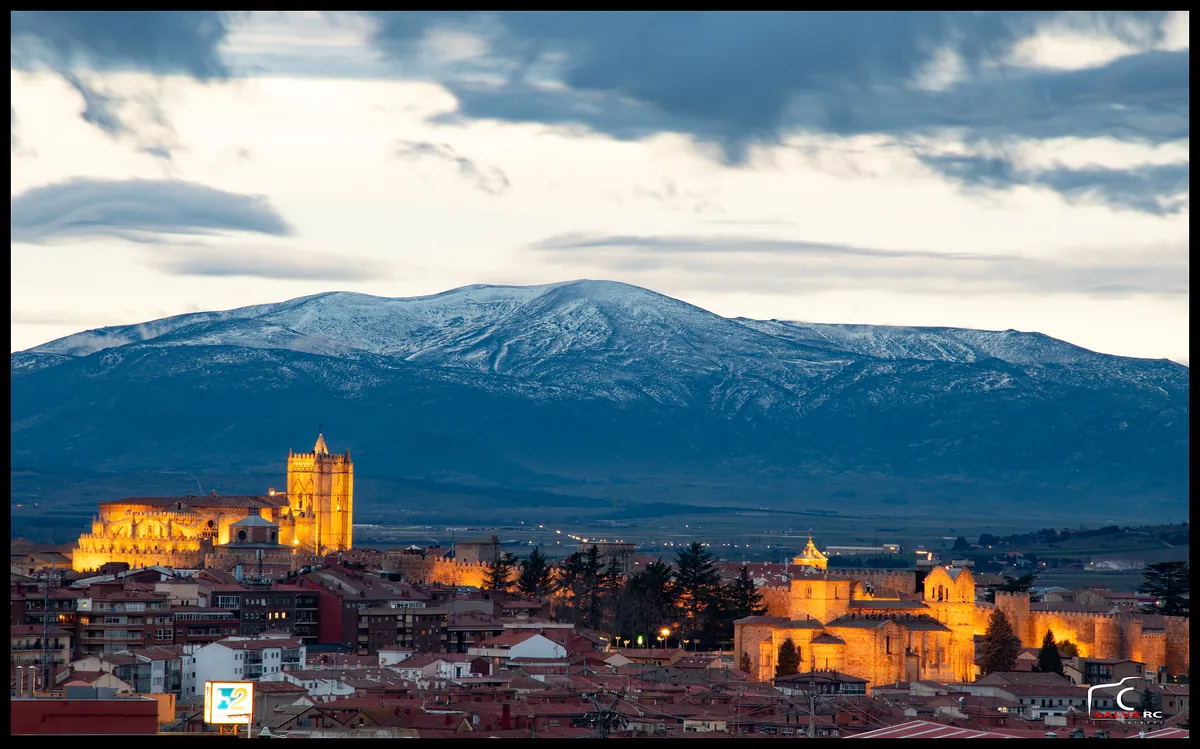
This is not the Spain of glossy brochures. Perched at 1,020 metres on the northern edge of the Castilian plateau, the village sits where the meseta begins its roll towards the Bay of Biscay, 130 kilometres north. The altitude matters: even in July the dawn temperature can dip to 12°C, and winter snow sometimes cuts the single access road for a day or two. Bring layers, whatever the season, and expect the sky to dominate the horizon in a way that feels almost Nordic.
Stone, Adobe and the Art of Doing Nothing
Villamiel's population hovers around 130, down from 500 in the 1950s. Empty houses outnumber occupied ones, their timber doors reinforced with iron studs, their adobe walls softening under the paint. Peek through a cracked shutter and you may see a threshing sled propped against a hearth, or a 1970s calendar still marking the month the owner left for Burgos or Madrid. This is not abandonment; it is simply the pace at which rural Castile breathes.
The village rewards slow attention. Walk the single main street at 4pm and you will pass two palomares—dovecotes—built into gable ends, their nesting holes now sealed against sparrows. A lintel carries the date 1764 in Roman numerals; another frame still holds the iron ring where a mule was once tethered. There is no interpretation board, no QR code, just the satisfaction of noticing. The parish church of San Miguel keeps similar counsel: a modest sandstone rectangle with a belfry added in 1893 after lightning split the earlier tower. Step inside and the air smells of wax and grain dust; the altar cloth is embroidered with wheat sheaves, a reminder that the liturgical calendar still follows the sowing cycle.
Footpaths that Follow the Harvest
Three gravel tracks leave the upper edge of the village, each marked only by a finger-post giving distances in archaic Castilian leagues. The shortest (4 km, circular) dips into the Arroyo de los Corzos, where roe deer drink at dawn, then climbs back through a stand of maritime pines planted under Franco to halt soil erosion. Mid-March to early May is the kindest window: the wheat shows emerald, the poppies flare scarlet, and night temperatures stay above 5°C. Summer hikers should carry at least two litres of water per person; the shadeless plateau evaporates perspiration faster than you realise, and the only fountain sits behind locked gates at an abandoned finca.
A longer option strikes west towards Hontoria del Pinar (12 km return). Halfway, the path crosses the GR-86 long-distance footpath; turn right and you can follow its white-and-red flashes to the ruins of the Cistercian monastery of Retuerta, roofless since 1835 yet still scented by wild lavender. Mobile reception vanishes after the second kilometre, so download the IGN 1:25,000 map beforehand; the paper version costs €8 at Burgos station if you forget.
What Passes for Gastronomy When Nobody is Watching
Villamiel has no restaurant, no weekend gastro-bar, not even a permanent shop. The last grocer closed in 2014 when its owner retired to Miranda de Ebro. Instead, every second Friday a white van parks beside the ayuntamiento at 11am and sells fruit, tinned beans and household bleach from the tailgate. Locals know to arrive early; outsiders learn by trial. For a proper meal you drive 18 minutes south to Salas de los Infantes, where Asador Casa Valentín slow-roasts Segovian suckling lamb in a wood-fired brick oven. A quarter portion (more than enough with chips and house wine) costs €19; they open Sunday lunch only if reserved before noon Saturday.
Self-catering is simpler. Ring the dairy at Quintanilla del Coco (10 km) before 9am and they will leave fresh goat's cheese in a cooler by the farm gate; €4 buys a wheel the size of a coffee-cup saucer, still seeping whey. The village bakery in Villamiel fires its oven once a week—usually Tuesday—producing crusty loaves that sell out within an hour. Miss it and the next supplier is the petrol station on the N-234, where the bread arrives frozen from a Burgos factory and is rebaked on site. Accept no substitute.
When the Fiesta is Yours, Not Instagram's
The feast of the Assumption on 15 August doubles as Villamiel's homecoming weekend. Emigrants return from Bilbao, Barcelona, even Swindon, inflating the population to perhaps 400. A sound system appears in the square, playing 1980s Spanish pop at a volume that makes the pigeons flee. At midday the council lays on cocido—chickpea stew—served in plastic bowls; donation €3, wine free if you bring your own bottle. By 2pm the dancing starts; by 4pm the older generation has retreated indoors, leaving teenagers to flirt under the plane trees. Visitors are welcome, but there is no tourist office, no bilingual programme, just the understanding that if you stand still long enough someone will press a spoon into your hand.
The other date to note is 29 September, the Día de San Miguel. Morning mass is followed by a procession that carries the polychrome statue of the archangel around the vegetable gardens at the edge of the village. The route is chosen so the priest can sprinkle holy water on the fields; yields have not improved, but nobody has suggested stopping.
Getting There, Staying There, Leaving
There is no railway. From the UK, fly to Bilbao, collect a hire car, and drive south on the A-68 for 90 minutes. After Salas de los Infantes take the BU-560 for 12 km; the road narrows to a single track, but the tarmac is good and the only hazard is the occasional free-range mastiff. In winter carry snow chains—local law above 1,000 m from November to March.
Accommodation is limited. Three village houses have been restored as holiday lets; expect stone floors, wood-burning stoves and Wi-Fi that struggles with a second device. Prices hover around €70 per night for two, minimum stay three nights in high season. Book through the provincial tourism board; their Burgos office answers emails in English within 48 hours. The nearest hotel is the three-star Arlanza in Salas (€65 B&B), convenient if you crave a bar open past 10pm.
Leave before dawn in October and you will see the plateau float beneath a sea of fog, only the church tower and the grain silo breaking the surface. It is the sort of sight that makes you slow the car, then stop, then realise you have been holding your breath. No entrance fee, no souvenir stall, no coach park. Just the quiet assertion that places still exist whose value is measured in stillness, not selfies.