Full Article
about Villoruebo
Ocultar artículo Leer artículo completo
The church bell strikes noon and every dog in Villoruebo stops barking at once. For sixty seconds the only sound is a tractor churning stubble three fields away, then the dogs remember themselves and the chorus resumes. This is how time works here: marked by diesel engines, church bells, and the slow wheel of cereal crops that surround the village in every direction.
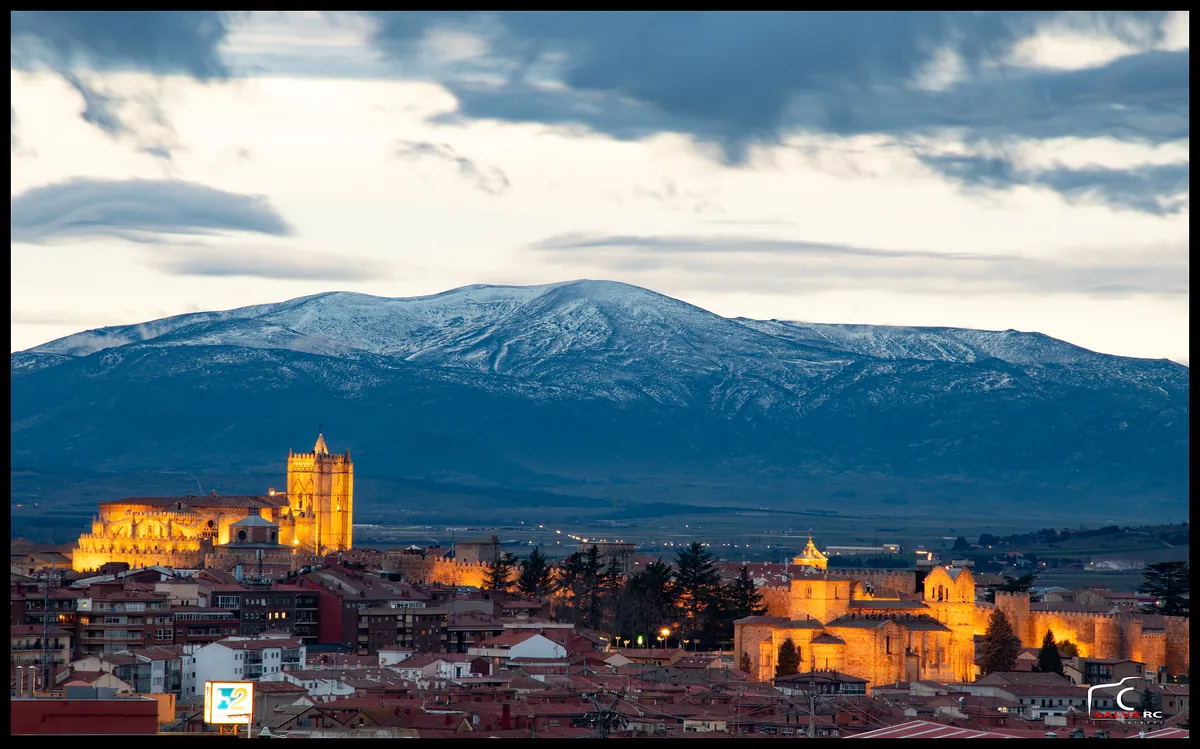
Villoruebo sits 840 metres above sea level on the Burgos plateau, high enough for the air to carry a sharp edge from October to April, yet low enough for the Sierra de la Demanda to stay a blue bruise on the southern horizon. The altitude matters. Frost can arrive overnight in mid-May; wheat that looks ready for harvest in June might still be green in July. Locals read the sky the way Londoners check Citymapper, and visitors who assume central Spain means endless sunshine end up buying jumpers from the weekly market in neighbouring Melgar de Fernamental.
Stone, Adobe and the Colour of Soil
There is no postcard centre, no plaza mayor lined with geraniums. Instead the village unravels along three streets that meet at the fifteenth-century church of San Juan Bautista, its tower rebuilt in 1787 after a lightning strike. The masonry tells the story: lower courses in rough limestone hauled from local quarries, upper sections in thinner bricks fired in the brickworks that once operated where the football pitch now stands. Walk the perimeter and you can spot the change in mortar colour where one century handed over to the next.
Most houses share the same palette—honey-coloured stone below, ochre adobe above—because until the 1960s builders mixed earth from their own fields into the walls. The result is architecture that matches the harvest: walls the colour of barley heads in July, roof tiles the red of clay soil after rain. A few grander houses, built by landowners who shipped wheat to Bilbao on the railway that arrived in 1891, add carved lintels and wooden balconies, but these are exceptions. Modesty is the default setting.
Between houses you glimpse the entrances to old bodegas, staircases corkscrewing into the ground where families once made enough wine for the year. The climate was colder then; grapes ripened only against south-facing walls. Today most cellars store bicycles and broken agricultural machinery, their stone arches tagged with spray paint that reads “Katy was here 2004” or simply “Mum”.
Walking Through the Calendar
Leave the village by any track and you step into a calendar. From March to mid-May the wheat is emerald, dotted with blood-red poppies that close when clouds pass. By late June the colour shifts to gold so uniform it looks like a filter, the ears heavy enough to whisper when the wind crosses them. After harvest the stubble resembles a crew cut; combine harvesters leave perfect circles that satellite images show as crop marks, temporary archaeology.
The easiest circuit follows the GR-94 long-distance path for eight kilometres to the abandoned hamlet of Revenga de Campos. There is no café, no interpretation board, just roofless houses inhabited by nesting storks. Allow two hours, carry water, and expect to meet no one except the occasional farmer on a quad bike checking irrigation pivots. If the day is clear you can see the grain silos of Burgos cathedral 56 kilometres away, a thin needle on the northern horizon.
Cyclists find smoother going on the Via Verde del Cid, a converted railway that starts twenty minutes’ drive south in Aranda de Duero. The surface is compacted limestone, gentle enough for families and punctuated by brick tunnels where the temperature drops ten degrees in ten metres. Hire bikes at the station café; return them by 6 pm or you’ll find the owner has left for his evening wine.
What Arrives on the Back of a Truck
Villoruebo has no restaurant. What it does have is a bar that opens at 7 am for the farm workers and closes when the last customer leaves, usually well after midnight. Order a caña and you’ll be asked whether you want “something to eat” without further detail. Say yes and a plate appears: perhaps slices of morcilla de Burgos the colour of dried rose petals, perhaps jamón from a pig slaughtered in December and cured in the upstairs bedroom of someone’s cousin. The price is always €3, paid by leaving coins on the bar and shouting “¡Gracias, Pepe!” as you leave.
For anything more formal drive ten minutes to Melgar and sit at Asador Casa Paco, where the cochinillo arrives on a plain white plate, the skin lacquered like toffee, a waiter who has worked there forty years carving it with the edge of a saucer to demonstrate tenderness. A quarter portion feeds two; Spaniards at the next table will be on their second bottle of Ribera del Duero by the time you finish your first glass.
If you are self-catering, shop on Thursday when the mobile fish van parks outside the pharmacy. Hake from Santander, 48 hours out of the Bay of Biscay, sells for €9 a kilo. The vendor will ask how many people you are feeding and trim the bones for you while recounting which English football team his nephew supports (usually Liverpool, occasionally Spurs).
When the Village Swells
For fifty weekends a year Villoruebo belongs to its 250 registered inhabitants, average age fifty-eight. Then come the fiestas of San Juan, the third weekend of August, and the population quadruples. Emigrants who left for factories in Bilbao or bars in Barcelona return with children who speak Catalan better than Castilian. The council hires a funfair that folds out like a Transformer in the polideportivo; teenage boys who have spent the year stacking supermarket shelves suddenly discover they are the best shots at the air-rifle stall.
At 11 pm on Saturday the square fills for the verbena. A cover band plays “Sweet Child O’ Mine” with Spanish lyrics; grandmothers dance with toddlers, middle-aged men compare prostates beside the beer tent. At 2 am everyone walks to the football field for the firework display, timed to coincide with the International Space Station passing overhead so the children can cheer twice.
The next morning mass is fuller than Christmas, though half the congregation is hungover. After the final hymn the priest stands at the door handing out slices of bread that has been blessed and stamped with the village seal; tradition says carrying it in your car protects against accidents on the drive back to the city.
Getting There, Getting In, Getting Out
There is no railway station. The ALSA coach from Madrid’s Estación Sur reaches Belbimbre, 12 kilometres away, twice daily; from there a taxi costs €18 if you can persuade Miguel, the only driver, to leave his coffee. Hiring a car at Burgos airport (85 minutes by British Airways from London City, Tuesday and Saturday, £127 return in October) gives you options: the A-1 south to Aranda, then the BU-901 through fields that smell of thyme when the sun hits them after rain.
Roads are single-track for the final approach; pull into the passing places and locals raise a hand without looking across. In winter fog can drop so suddenly that the yellow village sign appears like a ghost two metres in front of the bumper. If that happens keep the window open and listen for the church bell; it rings every quarter hour and is more reliable than GPS.
Accommodation is limited to four village houses restored under a rural tourism grant. They sleep six, cost €90 a night, and have pellet stoves because nights fall below freezing from November to March. Owners leave a bottle of wine from Aranda and instructions to feed the adopted cat that wanders between courtyards answering to different names. Book through the regional tourist office; there is no reception, the key is under a flowerpot painted with the Spanish flag.
Leave on a weekday morning and you will meet the bread van at the junction, driver tossing yesterday’s loaves to a farmer whose dogs catch them mid-air. Carry that image back to Britain: a place where bread is still currency, where the horizon is measured by what the earth produces, and where the dogs, finally, have learned the exact moment the bell will ring again.