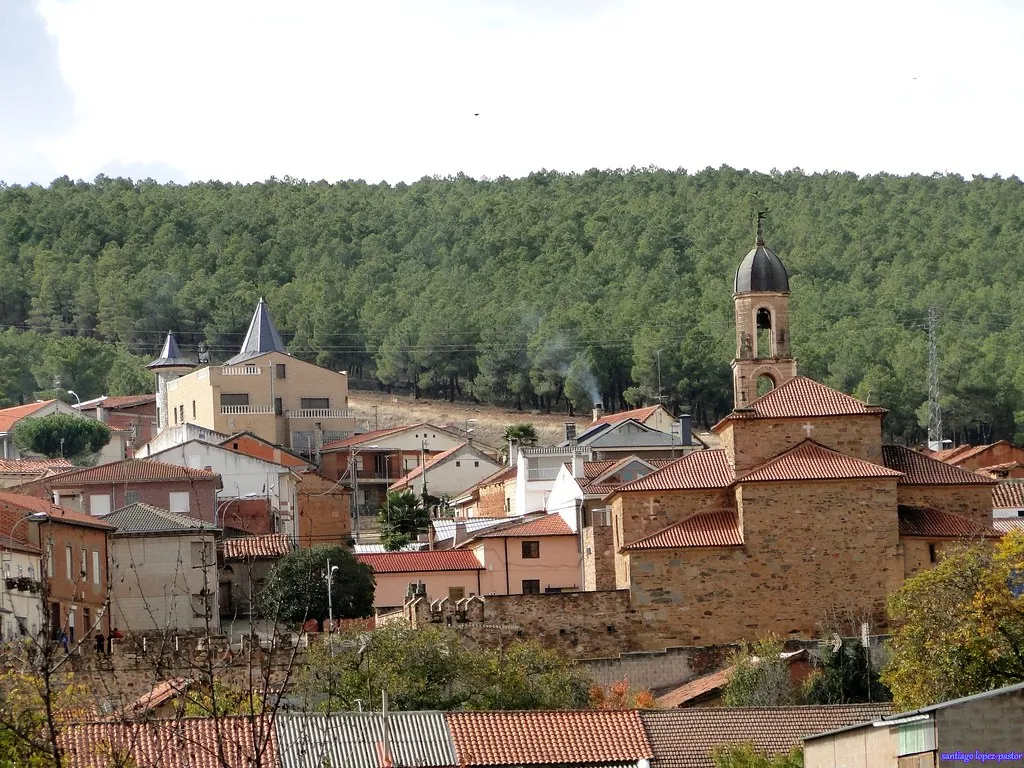
Vista aérea de Alcubilla de Nogales
Instituto Geográfico Nacional · CC-BY 4.0 scne.es
Castilla y León · Cradle of Kingdoms

Alcubilla de Nogales

At 770 m the air thins just enough to make the church bell sound sharper. Stand in the single square of Alcubilla de Nogales on a March morning and...

108 inhabitants · INE 2025
770m Altitude

Why Visit

Church of San Verísimo Fishing in the Eria River

Best Time to Visit

summer

San Verísimo (August) agosto

Things to See & Do
in Alcubilla de Nogales

Heritage

  • Church of San Verísimo
  • Bridge over the Eria River

Activities

  • Fishing in the Eria River
  • Riverside hiking

Festivals
& & Traditions

Fecha agosto

San Verísimo (agosto), Las Candelas (febrero)

Las fiestas locales son el momento perfecto para vivir la autenticidad de Alcubilla de Nogales.

Full Article
about Alcubilla de Nogales

Municipality in the Eria river valley, ringed by nature and farmland; it keeps the spirit of riverside villages, with traditional buildings and a river setting.

Ocultar artículo Leer artículo completo

At 770 m the air thins just enough to make the church bell sound sharper. Stand in the single square of Alcubilla de Nogales on a March morning and you will share the altitude with hen harriers gliding over wheat stubble; look north and the land unfurls like a rumpled tablecloth until it meets the Montes de León forty kilometres away. This is not a village that promises drama—there are no cliffs, no gorges, no postcard castle—yet the vastness of the meseta is suddenly legible here in a way that even seasoned Spain-travellers rarely encounter.

A horizon measured in combines

The name comes from the Arabic “al-qubba”, a nod to the domed cisterns that once collected snowmelt for medieval shepherds. The Moors did not linger long this far north, but their hydraulic memory stuck. Today the only domes are the sky and the corrugated tin roofs of the grain stores. Around 120 people remain, enough to keep one bar open in winter and to field a full football side on summer fiestas. The rest is grain: barley, wheat, sunflowers, vetches, following a rotation older than the diesel tractors that now work the 500-hectare cooperative.

Visitors arriving from the A-62—coaxed west from Madrid by tolls and tired service stations—swing off at Benavente and crawl the final 24 km on the CL-527. The tarmac narrows, hedges disappear, and the road begins to float. When the cereal stalks are high in late May you drive between two blond walls; after the July harvest the same route feels like a landing strip. In wet winters the clay turns to chewing gum and even locals think twice before driving home for lunch. Snow is infrequent but not impossible; when it comes, the village is effectively cut off for a day or two because the council’s single plough is stationed twenty kilometres away in Santa Cristina.

Stone, adobe and the sound of no souvenir shops

Park by the brick-and-stone trough that serves as a central fountain; no one will charge you, and no one will point you to a car park. The streets are barely two metres wide, designed for mules and shadow. Adobe walls bulge like well-fed stomachs, their straw flecks glinting in the sun. Some houses have been re-roofed with sharp terracotta tiles; others still wear the original slabs of slate hauled down from the Sanabria hills. A couple are crumbling quietly back to earth, swallowtails nesting in the rafters. There is no itinerary: walk for seven minutes and you will have seen every street twice. The pleasure is in the detail—an iron ring for tethering oxen, a datestone reading 1893 set slightly crooked, the smell of marjoram escaping a courtyard herb patch.

The parish church of San Miguel keeps its doors unlocked only on Sunday mornings. Inside, the single nave is cool enough to make you wish you had brought a jumper even in August. A sixteenth-century panel of the Last Judgement, paint flaking like sunburnt skin, reminds you that this region once sat on the knife-edge between Christian and Muslim Spain. The priest arrives from neighbouring Manganeses de la Lampreana once a week; if you want to climb the squat bell tower you must ask for the key at the house opposite the fountain—look for the green gate and the three-legged dog.

Walking until the path forgets itself

Footpaths strike out in four directions, all following the old drove-roads that took cattle south to Extremadura before rail replaced hoof. They are wide enough for a combine harvester, which means you can stride side-by-side rather than in single file. The SL-ZA 96 waymark appears sporadically—yellow paint fading on fence posts—but navigation is simple: keep the village silhouette behind you and stop when you reach the next settlement five kilometres away. In April the fields are a chessboard of green wheat and black-earth fallow; skylarks provide the soundtrack and you will meet more crested larks than people. By July the stubble glows bronze and every step raises a puff of dust; take two litres of water because the only shade is a line of poplars beside a dried-up stream.

Serious walkers can stitch together a 17-km loop north to Valdemerilla and back, crossing the railway that links Zamora with A Coruña exactly twice—look out for the weekly freight train that carries Audi cars to the port. Mountain bikers appreciate the hard-packed surface, but bring repair kits: the nearest bike shop is in Benavente and phone reception vanishes in every hollow.

What passes for lunch

There is no restaurant, no bakery, no corner shop. The bar opens at 08:00 for coffee and churros if María feels like it, shuts at noon, and may reappear at 20:00 for beer and crisps. Plan accordingly. The sensible strategy is to treat the village as a picnic pause: stock up in Benavente’s covered market (closed Monday) on local Arribes goat’s cheese, a fistful of chorizo from Carnicería Julián, and a loaf of the heavy, wheaty bread called pan candeal. The stone tables under the walnut trees beside the fountain are public property; the water is potable, though it carries enough iron to stain your bottle orange.

If you need a sit-down meal, drive twelve minutes to Villanueva de las Peras, where Casa Camila serves roast suckling lamb for €18 a quarter and will refill your water flask without being asked. Vegetarians face the usual Castilian challenge: soup made with ham bone, tortilla with extra chorizo, salad garnished with tuna. Explain yourself politely and you will get eggs, peppers and the excellent local piquillo pimientos roasted over beech wood.

When the village remembers it has neighbours

The fiesta mayor falls on the weekend nearest 15 August. Suddenly the population quadruples; grandchildren from Madrid and Valladolid inflate airbeds in granny’s front room. A sound system appears in the square, powered by cables that snake across the street like spaghetti. Saturday begins with a mass sung by a choir imported from Zamora, followed by a procession in which the statue of San Miguel is carried two circuits of the village—quite enough, given that the bearers have been up drinking orujo since dawn. At night there is a foam party for teenagers in the polideportivo (a concrete slab with one basketball hoop) and a dance that starts with pasodoble and collapses into reggaetón around 03:00. Outsiders are welcome but will be eyeballed until they buy a round; after that, someone’s uncle insists you taste his wife’s empanada and the deal is sealed.

Beds and other practicalities

The only formal accommodation is Casa Rural El Rincón de Alcubilla, a three-bedroom stone cottage with wood-burning stove and Wi-Fi that actually works (€90 per night, dogs accepted). Book through the provincial tourism portal; the owner, Pilar, leaves the key under a flowerpot and appears later with a bottle of homemade walnut liqueur. If it is full, Benavente has the nearest hotels—try the Parador de Benavente, a converted fifteenth-century palace where rooms start at €110 and the restaurant will serve you cocido maragato backwards (meat first, soup last) without blinking.

Petrol stations close early; the last reliable pump is on the Benavente ring road. Mobile coverage is patchy—Vodafone works better than O2 in the square, nowhere works in the lanes east of the church. Bring cash: even the fiesta bar struggles to take cards when the single terminal loses signal.

The anti-souvenir

Leave before sunrise in October and you might see combines crawling like glow-worms, their headlights sweeping the stubble. The air smells of diesel and chaff; a fox pauses at the field edge, weighing the risk against the grain spilled on the track. There is nothing to buy, nothing to queue for, no selfie frame. What you take away is the exact weight of silence once the engines stop, and the realisation that Spain’s empty quarter is not in Almería or the high Pyrenees but here, two hours from a Ryanair flight. Remember that next time someone tells you the country is full.

Key Facts

Region
Castilla y León
District
Benavente y Los Valles
INE Code
49004
Coast
No
Mountain
No
Season
summer

Livability & Services

Key data for living or remote work

2024
Connectivity5G available
HealthcareHospital 24 km away
Housing~5€/m² rent · Affordable
CoastBeach nearby
Sources: INE, CNMC, Ministry of Health, AEMET

Planning Your Visit?

Discover more villages in the Benavente y Los Valles.

View full region →

More villages in Benavente y Los Valles

Traveler Reviews