Full Article
about Ayoó de Vidriales
Located in the Vidriales valley near the Sierra de Carpurias; an area rich in wild mushrooms, with green landscapes watered by the Almucera stream.
Hide article Read full article
A place where time softens
Some villages make you slow down without really noticing. Ayoó de Vidriales is one of them. You arrive by car, park, look around, and the first thing that stands out is the quiet. Not total silence, there is usually a dog somewhere or a tractor in the distance, but a kind of stillness where no one seems in a hurry.
Ayoó de Vidriales sits in the Benavente y Los Valles area and has around 250 residents. Life here remains closely tied to the land. It is clear straight away: tractors moving in and out, vegetable plots behind houses, neighbours chatting in the street as if time were only a loose guide.
Reading the village through its houses
One of the most direct ways to understand Ayoó is simply to look at its homes. Many still have thick stone or adobe walls, large gateways once used for carts, and inner courtyards where animals or tools were kept. It is not a monumental setting, but it does show how houses were built when they were also workplaces.
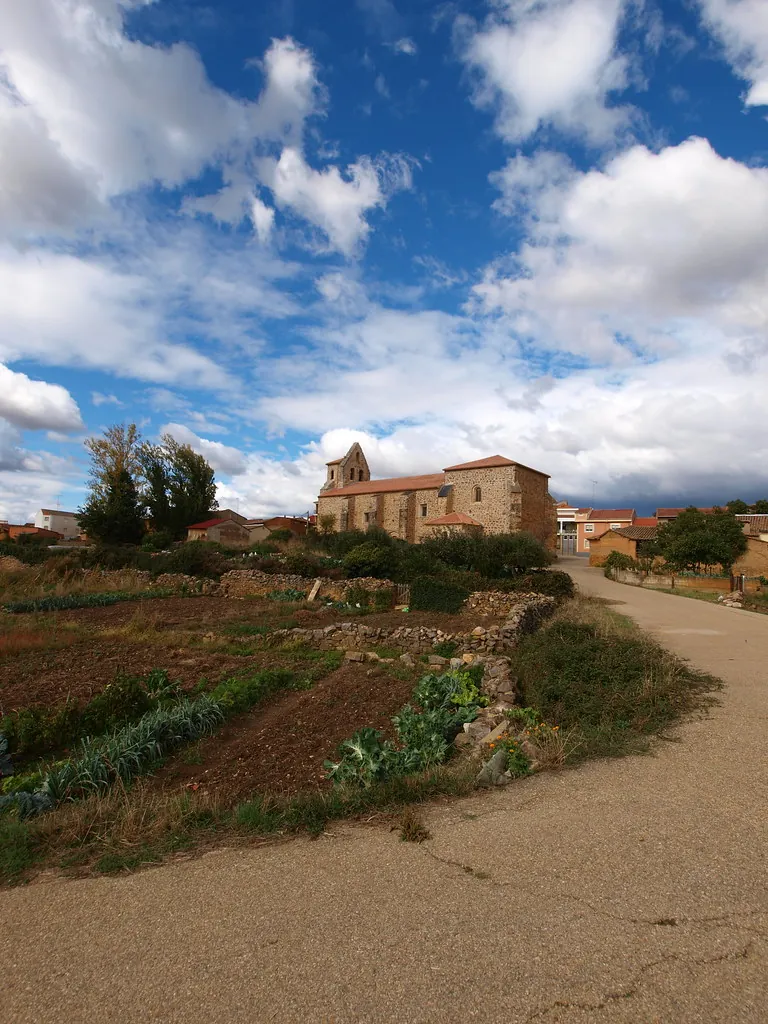
The parish church, dedicated to San Bartolomé, stands in the most recognisable part of the village. It is understated, the kind of building that does not try to draw attention from afar. It has been altered over the past century, and the interior is not always open, something quite common in small villages.
Details reward a slower look. Old bread ovens, small enclosures for livestock, the occasional carved wooden door, and auxiliary structures all hint at how daily life functioned not so long ago.
The Vidriales landscape: open land and holm oaks
The surroundings of Ayoó de Vidriales are typical of this part of Zamora. Fields of cereal crops stretch out across gentle rises, broken by patches of holm oak or oak trees that interrupt the uniformity. It is not a dramatic landscape, but it has that wide, open character associated with inland Castile, something best appreciated by simply standing still for a while.
On clear days, the horizon seems to go on almost indefinitely. When storms approach from the west, the sky takes centre stage. It is the sort of place where you begin to understand why people who work the land spend so much time watching the sky.
Walking out along the village paths
There are no heavily signposted routes here. Instead, rural tracks leave directly from the village and lead out between fields and small wooded areas. These are straightforward walks, with little change in elevation, usually manageable in an hour or two.
They are simple to follow: a dirt track ahead, the occasional encounter with a farmer or livestock in nearby plots, and little else. The appeal lies not in reaching a specific viewpoint, but in walking for a while without noise or distraction.
For anyone interested in wildlife, a bit of patience can pay off. Birds of prey often circle above these open fields. Harriers and kestrels are regularly seen in this kind of terrain.
Traces of everyday rural life
Around the village, small elements remain that were once part of daily routines: stone troughs used for watering livestock, wayside crosses at junctions, and older agricultural structures. They are modest features, but they help explain how life here was organised when almost everything revolved around farming.
They are not presented as attractions. They simply remain where they have always been.
Food rooted in tradition
The local cuisine reflects what you would expect in the interior of Castilla y León. Hearty dishes, slow-cooked legumes, and a strong presence of lamb in traditional cooking. Recipes like sopas castellanas, a robust garlic soup often eaten in colder months, are still typical.
In small places like this, good food is not always found on a menu. It often appears in private homes or in meals prepared during local festivities.
A place to pause, not to rush
Ayoó de Vidriales is not the kind of destination where you move quickly from one landmark to the next. It works better when taken at an easy pace: a walk through its streets, another along the surrounding paths, and some time sitting in the square as the afternoon passes.
It is a small village, clearly. Yet for anyone interested in understanding what everyday life is like in the Benavente y Los Valles area, it still offers a clear sense of that slower rhythm which has faded elsewhere.


