Full Article
about Maire de Castroponce
Northern village with a historic pottery tradition; set on the fertile Órbigo plain amid flat farmland.
Hide article Read full article
A village shaped by routine
Maire de Castroponce sits in the comarca of Benavente y Los Valles, at around 740 metres above sea level. It reflects the layout and atmosphere of many small villages in the province of Zamora, with a way of life that has changed little over the years. There is no attempt to reinvent itself for visitors, and that is part of its character.
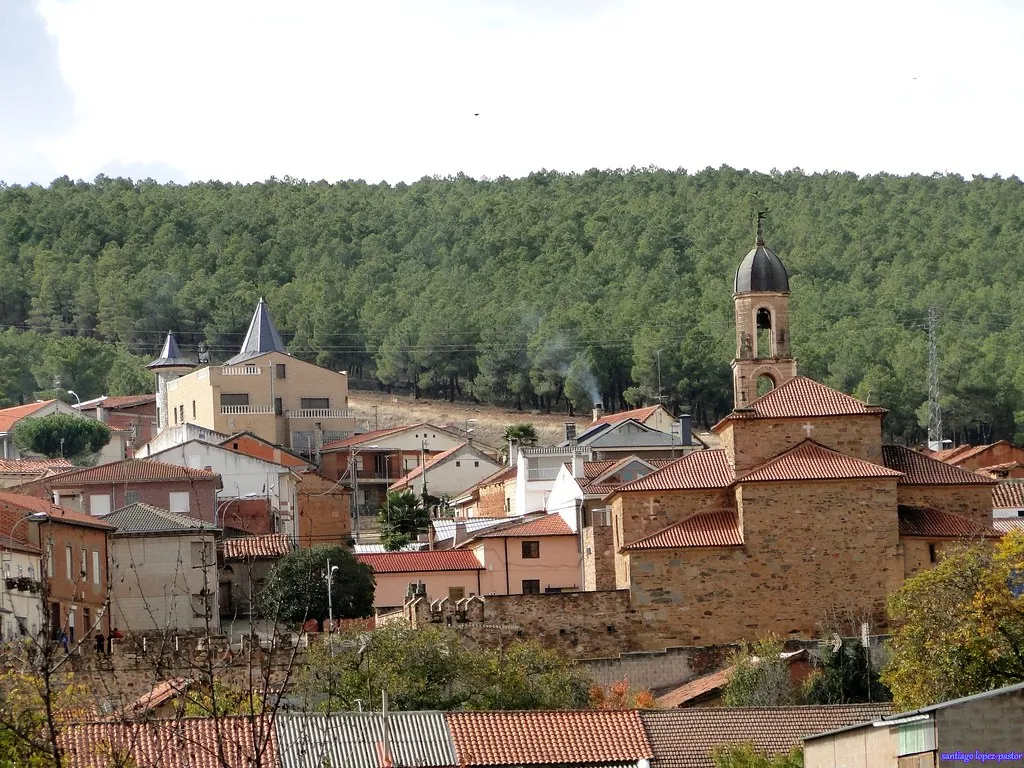
The streets are mostly unpaved, a mix of earth and stone that runs between low houses built with traditional materials. Wooden gates and wrought-iron balconies appear frequently, simple details that speak to long-established building styles. Life here follows a steady rhythm tied to agriculture and everyday tasks, without spectacle or display.
This is a place where the pace remains consistent. There are no obvious focal points designed to draw attention, and no sense of performance. What stands out instead is continuity, both in how the village looks and in how it functions.
The landscape of dry farmland
The surrounding area belongs to the dryland landscapes typical of this part of Castilla y León. Fields stretch out in gentle undulations, broken by scattered holm oaks and the occasional seasonal stream. There are no dense forests or dramatic elevations, only wide horizons that shift in tone as the seasons change.
From slightly higher ground, the view opens across expanses of cereal crops. Wheat and barley dominate, and their colours transform through the year. Late in the day, especially towards sunset, the light brings out warm tones across the fields, creating a quiet but noticeable shift in the landscape.
The openness defines the experience of the area. There are few interruptions to the line of sight, and the sense of space is constant. It is an environment shaped more by use than by design, where agriculture determines both appearance and activity.
The parish church and traces of the past
In the centre of the village stands the parish church, dedicated to the Natividad. It is one of the few buildings with a more defined presence. Its structure reflects different periods of construction, with additions and alterations that show how it has evolved over time.
Inside, a modest but well-preserved altarpiece offers insight into the forms of popular religious expression that have endured in the region. It is not grand, but it holds continuity with local traditions that have remained in place for generations.
Beyond the church, other elements of the past appear in more practical forms. Traditional auxiliary constructions such as dovecotes, underground cellars and corrals can still be found around the village. Some remain in good condition, making their original purpose easy to understand. Others have fallen into disuse or show signs of deterioration, marking the gradual shift in how rural life is organised.
Walking the fields and rural paths
The area around Maire de Castroponce is open and quiet, with agricultural tracks linking it to nearby villages. These routes are not marked as tourist trails, so anyone exploring on foot or by bicycle needs to rely on a map or GPS. They are working paths, used by tractors and other farm vehicles, and that shapes how they are used.
Even so, they allow for simple routes through the surrounding countryside. The lack of formal infrastructure means the experience remains informal and largely unchanged. It is possible to walk for some time without encountering more than the occasional sign of activity.
Birdwatching fits naturally into this setting. During migration periods, some species pass through these fields on their way south, making use of the open terrain. Observation does not require special facilities, only patience and attention to the landscape.
Silence, night skies and nearby contrasts
Maire de Castroponce has no organised activities or facilities aimed at tourism. A visit consists mainly of walking through its streets and taking in the agricultural surroundings. The nearby paths offer straightforward routes for those who prefer to move through the landscape rather than remain in the village itself.
The area suits those who appreciate quiet and dark skies. Light pollution is minimal, and clear nights provide good conditions for observing stars or using a telescope. The absence of artificial light reinforces the sense of distance from busier places.
Local food follows traditional Castilian patterns. Dishes are based on legumes, cured meats, hearty stews and, depending on the season, suckling lamb. There is no specific offer for visitors, but these recipes continue to be prepared in family settings and during celebrations, keeping culinary traditions in use.
A short distance away lies Benavente, a town with a more substantial historical heritage. Its medieval and Renaissance remains, along with its old quarter, offer a clear contrast to the simplicity of Maire de Castroponce. Visiting both places allows for a broader view of the region, moving from a quiet գյուղ setting to a town with a more visible architectural history.
Maire de Castroponce is best understood as a place to observe rather than to do. Its centre can be covered on foot in just over half an hour. For longer stays, it makes more sense as part of a wider route through the comarca rather than as a destination on its own. There are no scheduled plans or structured experiences, only an open landscape that encourages a slower look at how rural communities have lived and continue to live.