Full Article
about Villaferrueña
Small valley town with farming roots; known for its church and closeness to the Eria River.
Hide article Read full article
A brief detour that slows everything down
Tourism in Villaferrueña feels a bit like pulling off the road to stretch your legs and ending up somewhere that runs on a completely different rhythm. It gives the impression of stepping into a place where orientation takes a moment: short streets, quick turns, and the sense that in a couple of minutes you have already seen half the village.
Villaferrueña is small, very small. It has around a hundred residents, and that becomes clear straight away. The sounds are familiar and few: a tractor starting up in the morning, a dog barking when a car passes, two people chatting in the middle of the street as if they were in their own living room. It is the kind of place where, if you park and step out of the car, it feels like everyone notices a new arrival.
A handful of streets at its centre
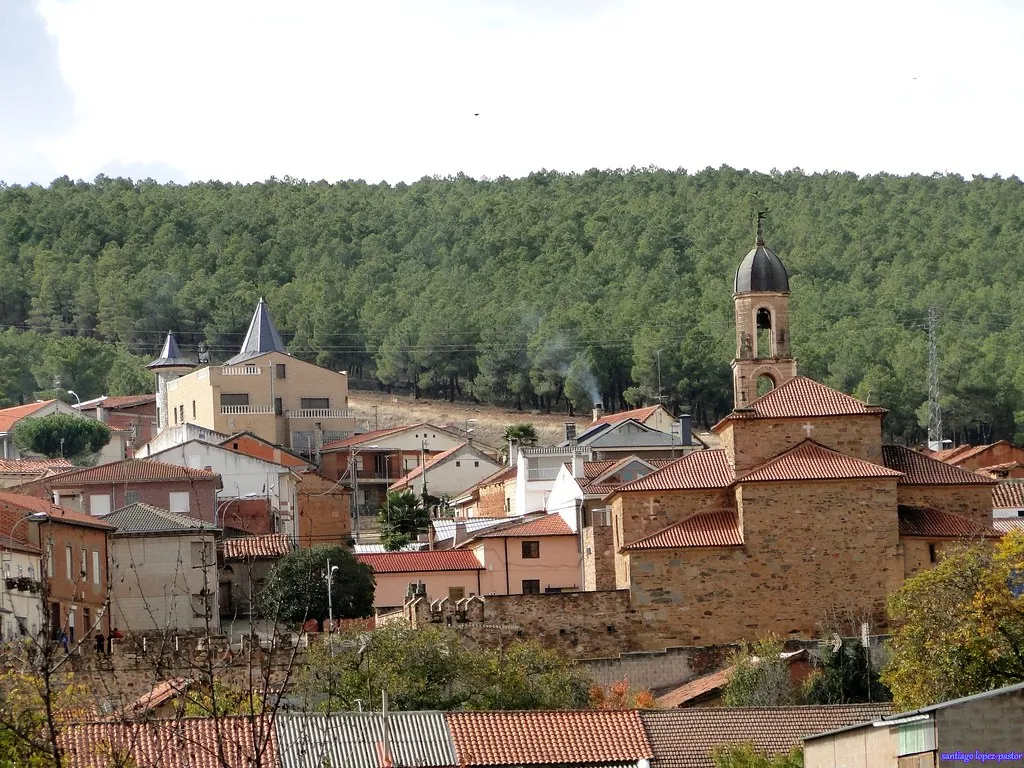
The village is organised around a small cluster of streets that meet near the square. Walking them is quick, almost like circling a single block in a quiet neighbourhood. The houses have thick stone walls and dark roofs that seem built to endure long winters. Some still keep inner courtyards and corrals, the kind that are barely visible from outside but open up into something much larger within.
The parish church, dedicated to San Miguel Arcángel, is the clearest landmark. Built of stone, it is simple and without elaborate decoration. Inside, there are old altarpieces and the figure of the patron saint, still central to local celebrations when the village festivities arrive.
Where the countryside begins at the last house
In Villaferrueña, something happens that is becoming less common elsewhere: you leave the village on foot and within two minutes you are in open countryside. There is no gradual transition. It is more like stepping out of a house and, just around the corner, finding yourself among fields.
Dirt tracks stretch between plots of cereal crops, wheat, barley, whatever is growing that year. The landscape shifts noticeably with the seasons. In spring it is green and soft. By summer, the fields turn golden and dry, with a brittle sound underfoot like crushed straw. Autumn brings more muted tones, with freshly worked land marking the change.
There are no built viewpoints or explanatory panels. The appeal lies in simply walking for a while and looking around. Now and then, an isolated dovecote appears in the middle of the land, or a small structure once used to store tools. These details quietly reflect how the land has been worked over generations.
Quiet walks through the surrounding area
Paths leave the village and link it with other nearby settlements in the comarca of Benavente y Los Valles, a rural district in the province of Zamora. These are easy routes, the sort taken more to clear your head than to track distance or time.
Along the way, it is common to see birds gliding above the fields or to cross paths with someone returning from their land in a van loaded with tools. The scenery is not dramatic in a postcard sense, yet it has a quality that feels steady and familiar, like entering a kitchen where the same dish has been cooked for years and everything works as it should.
When the village comes alive
The patron saint festivities in honour of San Miguel are usually held towards the end of September. During those days, the atmosphere changes noticeably. People who live elsewhere return, the streets fill with more movement, and the square becomes a gathering point with long tables where families share meals.
The food is simple and filling. Migas, a traditional dish made from fried breadcrumbs, and hearty stews are typical, the kind of cooking that fits the pace of agricultural life. The mood recalls long family meals that stretch on because no one is in a hurry to leave.
What you actually find here
Villaferrueña does not depend on tourism, nor does it seem to try. There are no visible accommodations or streets designed with visitors in mind, and that is part of its appeal.
Coming here feels like briefly stepping into the everyday routine of a village. You take a walk, listen to the quiet of the surrounding countryside, and return to your car with the sense of having seen how a small place in rural Zamora really functions.
It is not a destination for filling an entire weekend with activities. It works better as a short stop, the kind that reminds you that in many villages life still revolves around the same constants: the land, the weather, and the people who remain.