Full Article
about Barcones
Border village with Guadalajara in high moorland with harsh climate
Hide article Read full article
Midday on the Plaza
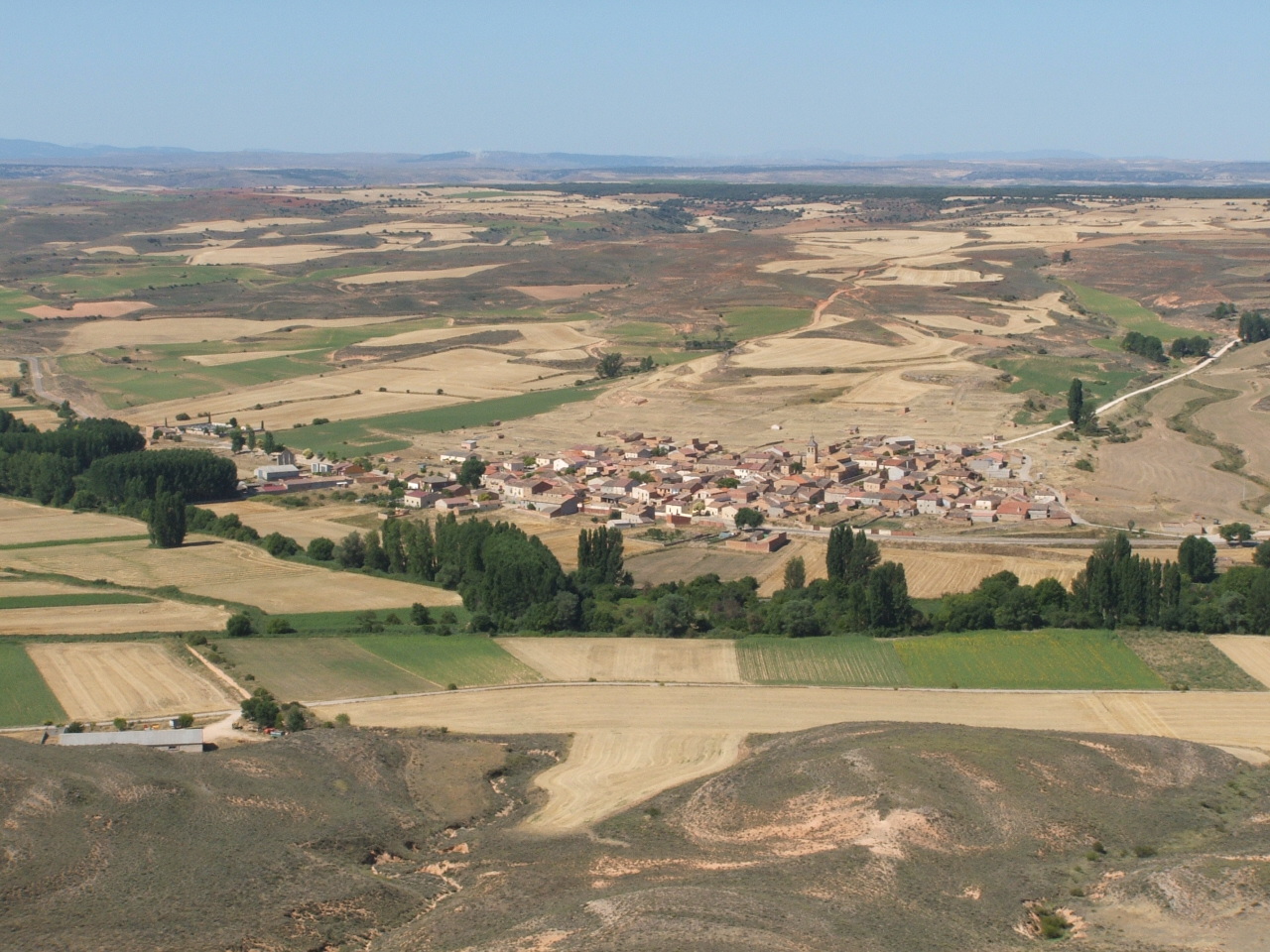
At midday, when the sun falls straight onto the square, the adobe walls of Barcones reveal every crack. The whitewash turns almost dazzling. Stones cast short, compact shadows. Hardly anyone passes through. In the distance there may be the sound of a yard gate closing, or wind moving through the tops of the elms.
Tourism in Barcones has little to do with organised routes or villages arranged for visitors. This is a small settlement in the comarca of Berlanga, more than a thousand metres above sea level, with around 25 residents. The climate sets the pace. Winters are long, with frequent frosts. Summers are dry, and the fields turn yellow early in the season.
The horizon opens in every direction. Cereal fields stretch out between patches of holm oak and dirt tracks that fade into low rises. On clear days the air is sharp and sound travels far: a tractor, a dog barking, a bird of prey circling above the open moorland.
It is best to come when the weather is settled. After several days of rain the unpaved access roads can become muddy, and in winter the wind at this height is keenly felt.
A Visible Past
At the centre of the village stands the church of San Pedro. Its origins are usually placed in the Romanesque period, though it has undergone several alterations over time. The walls are thick and slightly irregular. Inside there are altarpieces from different periods and traces of religious painting on the walls. The atmosphere is not grand or theatrical. It feels lived in, with simple wooden benches and the marks of passing years visible in the fabric of the building.
The streets branch out between houses of stone and adobe. Many still have darkened wooden gates and roofs of curved terracotta tiles, known locally as teja árabe. There are animal pens, conical chimneys and haylofts that recall the agricultural life that sustained the village for decades. Some houses are still occupied throughout the year. Others stand closed or partially collapsed, a common sight in this part of Soria since the mid-20th century.
Beyond the last buildings lies the Berlanga moorland, the páramo de Berlanga. In spring the fields fill with low flowers and yellow patches between the young cereal. In autumn, ochre tones dominate and the ground carries the scent of dry earth. Birds of prey are easy to spot. Kestrels hover motionless in the air. Harriers skim low over the fallow fields.
Unsignposted Tracks and Dark Skies
The tracks that lead out of Barcones are not marked as official walking routes. They are agricultural roads and old paths linking fields and small high points on the moor. Anyone setting out on foot would do well to carry a map or GPS, as some junctions offer no clear reference points.
A short distance from the village there are brambles, nettles and thyme bushes that scent the air when the ground is warm. In summer, fine dust rises from the path with each step. On still days the only sounds are insects and wind brushing through the cereal heads.
For those interested in birdwatching, the edges of the fields are rewarding. With binoculars it is possible to observe birds of prey hunting or following freshly ploughed furrows in search of movement.
At night the sky turns intensely dark. There is hardly any artificial light in the surrounding area. On clear evenings the pale band of the Milky Way can be seen distinctly. Even in summer it is worth bringing a jacket, as temperatures drop quickly once the sun sets.
Cultural Routes Nearby
Less than half an hour away by road is Berlanga de Duero. Its castle rises above the valley from a prominent height and can be seen from some distance when approaching along the regional road. The historic centre preserves arcaded streets and several stone buildings connected to its past as an important town in the area.
Rello is also relatively close. Part of its medieval wall still stands, enclosing a compact network of narrow streets within.
The wider comarca is dotted with Romanesque churches and hermitages. Some stand isolated among fields, others are integrated into small villages. Opening times are not always regular, so it is sensible to assume that visits may be limited to the exterior.
In Barcones itself there are no shops or bars. Anyone planning to spend the day here should bring water and food in advance or stop in one of the nearby towns beforehand.
Traditions That Continue
In summer, especially in August, the rhythm of the village shifts for a few days. Families who still maintain houses here return, and festivities dedicated to San Pedro are held. The streets fill more than usual, and the square regains a sense of movement.
For the rest of the year life remains quiet. Work linked to farming and livestock continues, alongside the steady tasks that come with any rural home: stacking firewood, tending vegetable plots, repairing roofs and walls that require constant attention.
Barcones does not attempt to draw attention to itself. It is a small place, open to the winds of the moorland, where the patterns of life that shaped many villages in this part of Castilla y León can still be sensed. Anyone who makes the journey will find exactly that, without embellishment.