Full Article
about Bayubas de Abajo
Set in a resin-pine forest with picnic areas along the Bayubas River.
Ocultar artículo Leer artículo completo
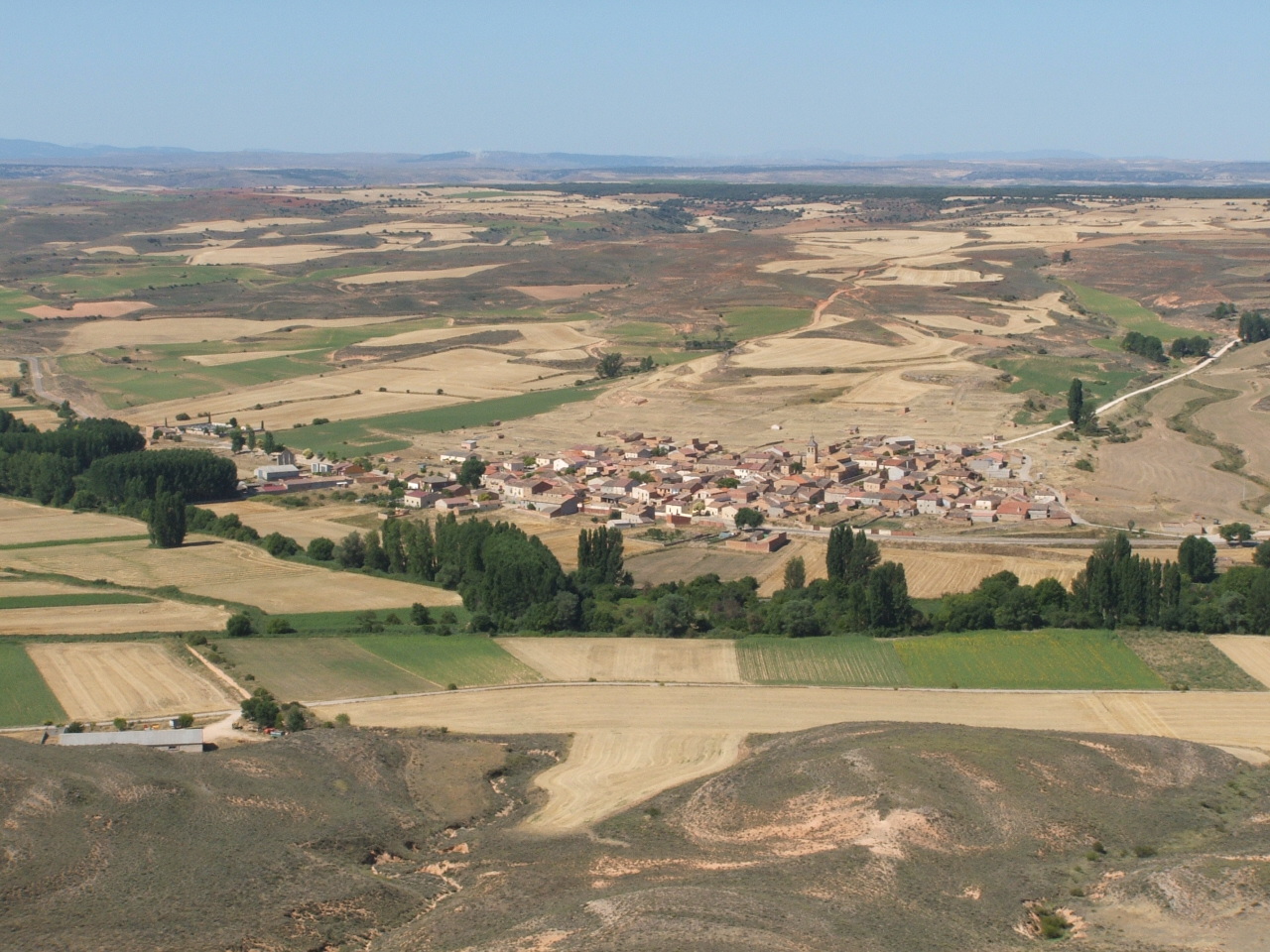
The church bell strikes noon and the only reply is a dog barking somewhere beyond the wheat stubble. At 921 metres above sea level, sound travels differently in Bayubas de Abajo; the air is thinner, the sky wider, and the traffic non-existent. This is Castilla y León’s high plateau at its most matter-of-fact: no postcard plaza, no boutique hotels, just 150 souls, stone-and-adobe houses and a single road that peters out into tractor tracks.
Stone, Sun and Silence
Bayubas sits 48 km east of Soria, the last kilometres threaded along the SO-116, a narrow stripe of tarmac that buckles over low ridges and suddenly deposits you in the village’s only street. Park wherever the verge is widest; no-one will mind. The houses are the colour of dry earth, their wooden doors painted the same ox-blood red you see all over the province. Look up and you’ll notice rooflines sagging like old saddles – a reminder that roofs here were once weighed down by snow rather than satellite dishes.
The village’s single monument, the parish church of Nuestra Señora de la Asunción, takes exactly five minutes to circumnavigate. Romanesque in outline, 18th-century in detail, it is kept unlocked only on Sunday mornings; the rest of the week the key hangs with a neighbour whose front door faces the porch. Knock politely. Inside, the air smells of candle smoke and sun-baked stone; the altarpiece is provincial Baroque, gilded but not extravagant. Light falls through a slit window onto pews polished by generations of Sunday best. It is enough.
Beyond the church the lanes narrow to footpaths that duck between vegetable plots and crumbling corrals. Adobe walls bulge like loaves left too long to rise; hollyhocks push through the cracks. The old communal laundry basin still fills from a pipe in the rock – village women stopped using it in the 1970s, yet the water still runs, clear and cold, even in August.
Walking the Dry Ocean
Leave the houses behind and you are immediately inside the cereal ocean that laps every side of the village. The camino that heads south toward Berlanga de Duero is wide enough for a tractor but carries no traffic; after ten minutes the only sound is your boots crunching on flint. This is not dramatic country – no crags, no river gorge – yet the scale is quietly astonishing. To the north the land rolls like a gentle swell until it meets the pinewoods of the Sierra de Berlanga; southwards the horizon is so distant that the curvature of the earth feels measurable.
Spring brings colour: crimson poppies stitched through the green wheat, purple viper’s bugloss along the verges. By July the crop is gold and the stubble scratches your ankles. Autumn is mushroom season; locals slip into the scattered pine groves at dawn with wicker baskets and knives kept razor-sharp. The rule is simple: if you can’t name it, don’t pick it. Guides can be arranged through the tourist office in Berlanga (€30 half-day) but you must book ahead – mycology here is treated as a private passion, not a commercial show.
Carry water. The plateau’s altitude means skies are huge, sun fierce and shade scarce. A four-kilometre loop east to the abandoned hamlet of Bayubas de Arriba and back takes an hour; add another hour if you detour to the stone cross on the ridge where vultures use the thermals to gain height without flapping.
Eating (and Not Eating) Locally
There is no restaurant in Bayubas de Abajo. The village shop opens from 09:30–11:00 and again at 18:00–19:30; bread arrives on Tuesdays and Fridays, cured meats hang behind the counter and the freezer holds locally-lamb labelled only with a felt-tip pen. Buy almonds and honey – both come from hives and groves you can see from the doorstep – and you have an edible souvenir that hasn’t travelled more than three kilometres.
For a sit-down meal you drive three kilometres to Berlanga and squeeze into Bar La Plaza before the Spanish lunch clock strikes two. Order migas – fried breadcrumbs with garlic, bacon and just enough chilli to wake the palate – and a glass of Soria’s own tempranillo, lighter than Rioja and easier on a hot afternoon. A plate for two costs €9; they’ll bring more bread if you ask. If you need cash, Berlanga’s solitary ATM is inside the petrol station – it still issues €50 notes, so buy a packet of biscuits to break them.
When to Come, Where to Sleep
May and late September are the sweet spots: mild mornings, 24 °C afternoons, nights cool enough for a jumper. July is furnace-hot (35 °C is normal) but the village fiestas on 15–17 July pull back every emigrant for music, mass and an outdoor paella that stretches the population to perhaps 400. Book a cottage then or accept that every bedroom within 20 km is taken.
Accommodation is thin on the ground. Las Casitas del Pinar has three stone cottages on the village edge, each with wood-burner, small pool and telescope for star-gazing (owners brag that light pollution is zero – they’re almost right). A five-night minimum applies in May–October, prices from £95 a night for two. Otherwise there are two village houses on Airbnb, both under £90, both with uneven floors and washing machines that sound like cement mixers. The nearest proper hotel is the Parador de Soria, 45 minutes away along empty roads – handy if you fancy a night of modern plumbing after three days of bucket showers.
The Honest Catch
Bayubas de Abajo will not change your life. There are no epic views, no Michelin stars, no ancient synagogue turned into a jazz venue. Mobile signal drops to 3G if a cloud passes overhead; the nearest traffic light is 35 km away. What the village offers instead is a calibration device for urban clocks: a place where the day is measured by shadow length and the night by star-rise over wheat stubble. Come if you want to remember how quiet the world can be. Leave before you need a haircut – the barber retired in 1998.