Full Article
about Bayubas de Arriba
Small hamlet surrounded by vast pine forests and complete quiet.
Hide article Read full article
A village shaped by land and scale
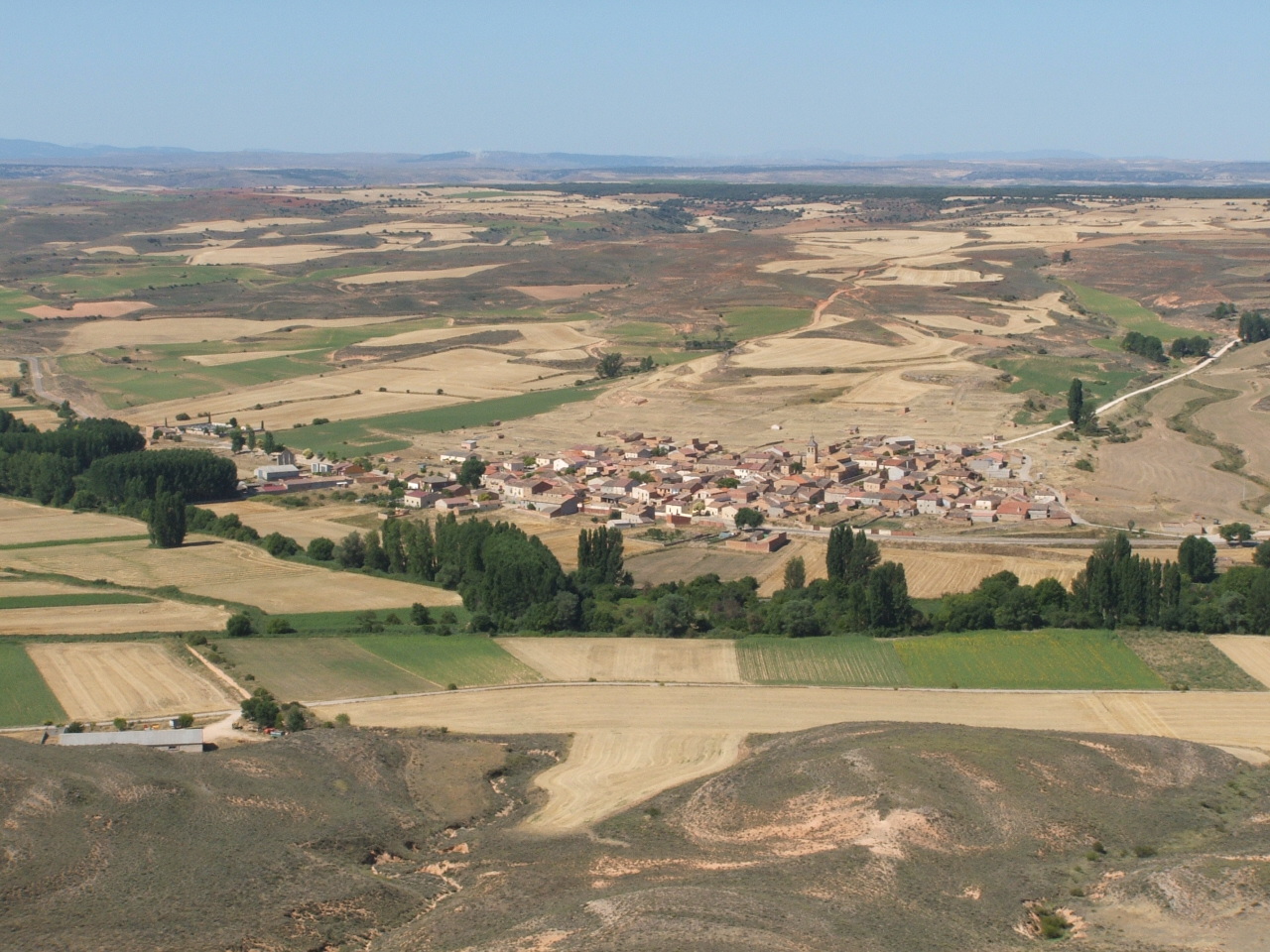
Tourism in Bayubas de Arriba is less about ticking off landmarks and more about understanding the land it sits on. This small municipality in the south of Soria province belongs to the comarca of Berlanga and stands on high plateau terrain, close to 1,000 metres above sea level. The setting is typical of this part of the province: wide cereal fields, large agricultural plots and very small villages spaced out along local roads.
Just over fifty people live here today. That scale explains almost everything encountered on arrival. There are no major buildings or tourist facilities. Instead, the village functions much as it has for generations, closely tied to farming and to the rhythms imposed by a continental climate.
The church at the centre
The most recognisable building in Bayubas de Arriba is the parish church of la Asunción, located in the middle of the settlement. Its construction reflects different periods. The origins are likely medieval, though the present appearance comes from later alterations, something common in small rural churches that have been adapted over time.
Stone masonry walls and a simple tower point to a structure built with locally available materials. The importance of the church lies less in decoration or scale and more in its role within the community. For centuries it brought people together for gatherings, celebrations and key moments in village life. It is not always open to visitors, but even from the outside it helps define the outline of the village.
Houses built for climate and work
Walking through Bayubas de Arriba offers a clear sense of how homes were organised in this part of Soria. Stone houses dominate, with tiled roofs and thick walls designed to withstand long, cold winters.
Some properties still show traces of their original uses. Old corrals, haylofts or small working spaces linked to domestic livestock can still be recognised. There are also wine cellars dug into the ground, or access points leading down to them from inside courtyards. This feature appears in many villages across Soria, where wine was traditionally made for personal consumption.
The overall layout is not a monumental historic centre. It is a mix of houses built at different times, with many having been updated in recent years. Even so, the underlying logic of traditional rural architecture remains visible in how buildings relate to one another and to the land around them.
The open plateau landscape
The surroundings of Bayubas de Arriba are open and restrained in character. Moorland areas and cereal fields dominate the view, with strong seasonal shifts. Winter brings muted, earthy tones, spring turns the fields a vivid green, and harvest time introduces gold across the landscape.
On clear days the horizon stretches far, which is a defining feature of this part of Soria. In the distance, the outlines of the Sistema Ibérico can be made out, though the agricultural plain around the village remains the main visual presence.
These cultivated spaces also support wildlife adapted to cereal-growing environments. With patience, birds of prey can be seen circling overhead. Smaller steppe birds are also common, well suited to this type of open terrain.
Walking the rural tracks
Anyone keen to explore on foot will usually follow agricultural tracks and traditional paths that link fields and nearby villages. There are no marked hiking routes as such, but the network of paths makes it possible to move around the area without difficulty.
It is advisable to carry a map or GPS when venturing further from the village. The landscape is very uniform, and many junctions look similar. Despite that, these routes are calm and quiet, with little traffic and long stretches of silence that reflect the pace of rural life here.
The wider Berlanga area
Given its size, Bayubas de Arriba is often visited alongside other places in the comarca of Berlanga. A short distance away lies Berlanga de Duero, a much larger historic town known for its castle and for the layout of its streets.
Travelling through this part of southern Soria allows several villages to be linked in a single day. They share a similar character: small settlements, rural churches and agricultural landscapes that have changed very little over recent decades.
Traditions that still bring people together
As in many villages with a small population, the main celebrations take place in summer. This is when people who live elsewhere for most of the year return, bringing renewed activity. Religious events, music and shared meals form part of these gatherings.
Some older customs continue through the winter months. One example is the bonfire of San Antón in January, when residents gather around the fire during the coldest part of the year.
Outside these occasions, Bayubas de Arriba is defined by quietness and a very slow rhythm. Life follows the pace of agricultural work on the high plateau, with little interruption.