Full Article
about Caltojar
Known for its striking Romanesque church in a quiet rural setting.
Hide article Read full article
A quiet start in Berlanga country
At nine in the morning, Caltojar’s main square still sits half in shadow. Cool air slips through the half-open church door, carrying the scent of damp stone and thick walls that have seen many winters. A couple of parked cars stand by the houses. Almost nothing moves. Now and then, a metal gate sounds somewhere nearby.
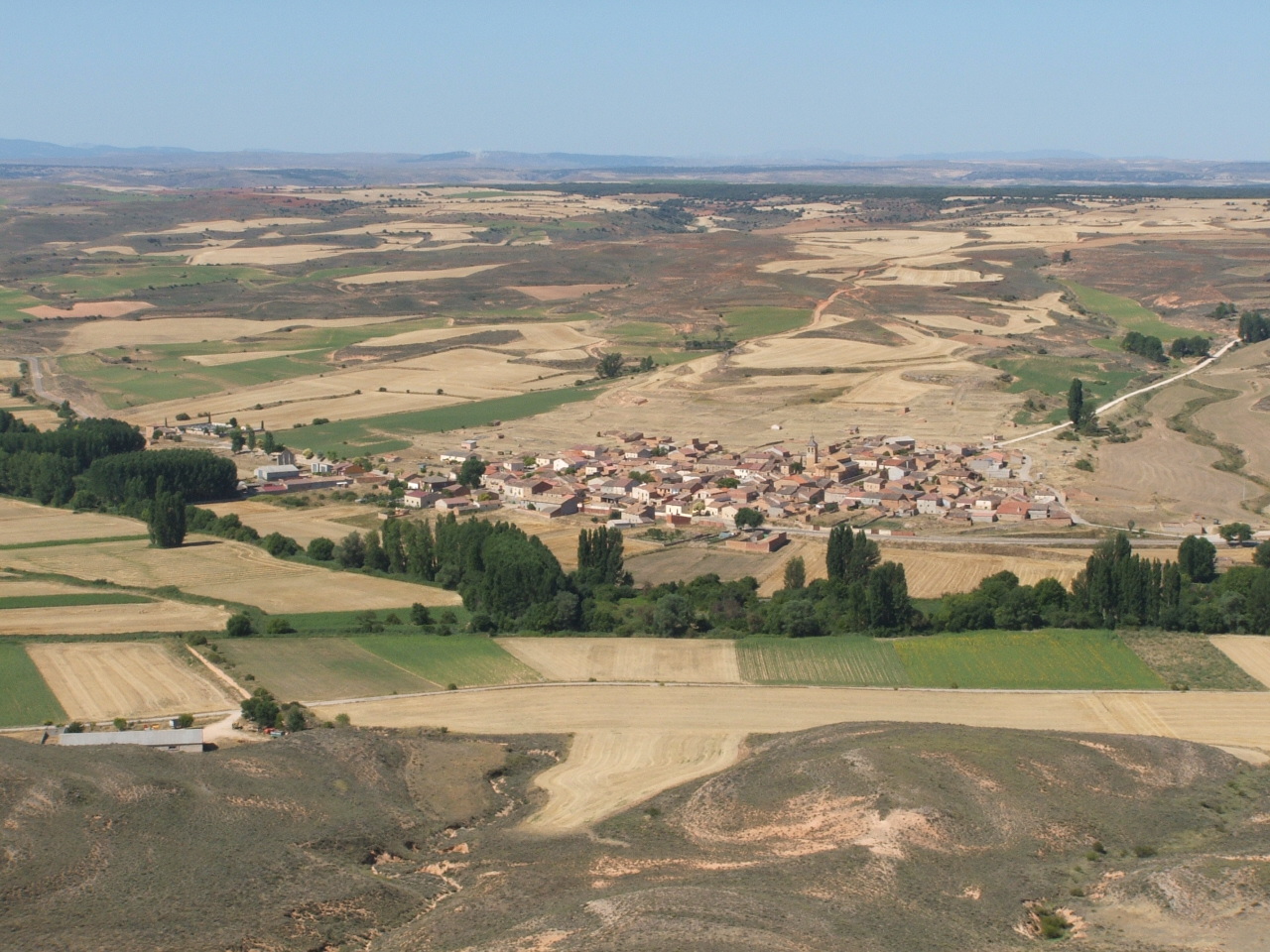
This is how the day begins in this small village in the Berlanga area of Soria, where just over fifty people live.
Anyone thinking about tourism in Caltojar should adjust expectations early on. There are no headline monuments or streets designed for visitors. This is a very small Sorian village that still works as a place to live, not as a backdrop.
The square and the church
The main square organises everything around it. Houses are built in pale stone, with dark wooden doors and small windows protected by iron bars. Some façades show clear signs of repair. Fresh cement sits over much older walls, practical fixes done when needed, with little concern for appearance.
The church of San Miguel takes up one side of the square. Its current form suggests an old origin. Some parts may date back to the late Middle Ages or to later alterations, although what stands today reflects many changes over time. Inside, there is usually an altarpiece and several religious images marked by age: darkened wood, dulled gilding, and fine cracks in the paint.
If the church happens to be open, it is worth stepping inside for a few minutes. If not, a slow walk around the building reveals plenty. The stonework is uneven and rough, with patches of lichen in areas that rarely catch the sun.
Streets shaped by use and weather
Several narrow streets lead away from the square, dipping or turning without much apparent logic. Their layout feels inherited rather than planned, shaped by plots of land, animal pens and stables over time.
Many houses still have wide gates that once opened into interior courtyards. Some are used to store tools. Others hold stacks of firewood or small agricultural trailers. Iron grilles, mixed stone and brick walls, and low roofs all hint at how people have lived here. Winters are long, winds sweep across the plateau, and keeping the interior protected has always mattered.
One of the streets has a stone fountain. On some days, buckets or large water containers can still be seen nearby. Activity is not constant, but when it happens it tends to be later in the morning.
The landscape beyond: cereal fields and open plateau
Step outside the built area and the landscape opens up immediately. Cereal fields stretch almost as far as the eye can see. Their colours shift clearly with the seasons: bright green in spring, pale yellow as the grain ripens, and ochre tones after the harvest.
At first glance, the surrounding plateau can seem empty. Give it a little time and details begin to emerge. A crow may pass overhead. Storks perch on rooftops in the village. In more open areas, birds typical of these steppe-like environments appear, though they keep their distance. Quiet helps. Sudden noise sends them off quickly.
The terrain is largely flat, so walking here is straightforward. Farm tracks lead out from the village in several directions. An easy, unhurried walk can fill an hour without difficulty.
Summer brings strong sun and very little shade. Early morning or the later part of the day offers more comfortable conditions for walking.
A very small village, with very few services
Caltojar’s size becomes obvious almost immediately. There are no bars or restaurants in the village itself. Anyone planning to spend the day should bring water or something to eat. For a sit-down meal or basic shopping, it is necessary to travel to nearby villages or to larger towns in the area.
In the wider surroundings, traditional Sorian cooking is easy to find. The food is hearty, with dishes such as lamb stews, migas and recipes linked to the hunting season, all common in this part of the province.
When the pace changes
For much of the year, the village remains very quiet. Summer, especially August, brings a shift. Many people who have ties to Caltojar return for a time, and the atmosphere changes. There are more voices in the streets, longer conversations towards the end of the day, and activities connected to the festivities of San Miguel, the village’s patron saint. These gatherings bring together those who still feel rooted here.
Outside that period, Caltojar settles back into its slow rhythm. A visit is likely to stay in the memory for its quiet, for the wind moving across the fields, and for the cool, clear light of the plateau. As evening approaches, that light makes the stone of the village appear even paler, almost glowing against the open land.


