Full Article
about Centenera de Andaluz
Small town with a Romanesque church and riverside setting on the Duero.
Ocultar artículo Leer artículo completo
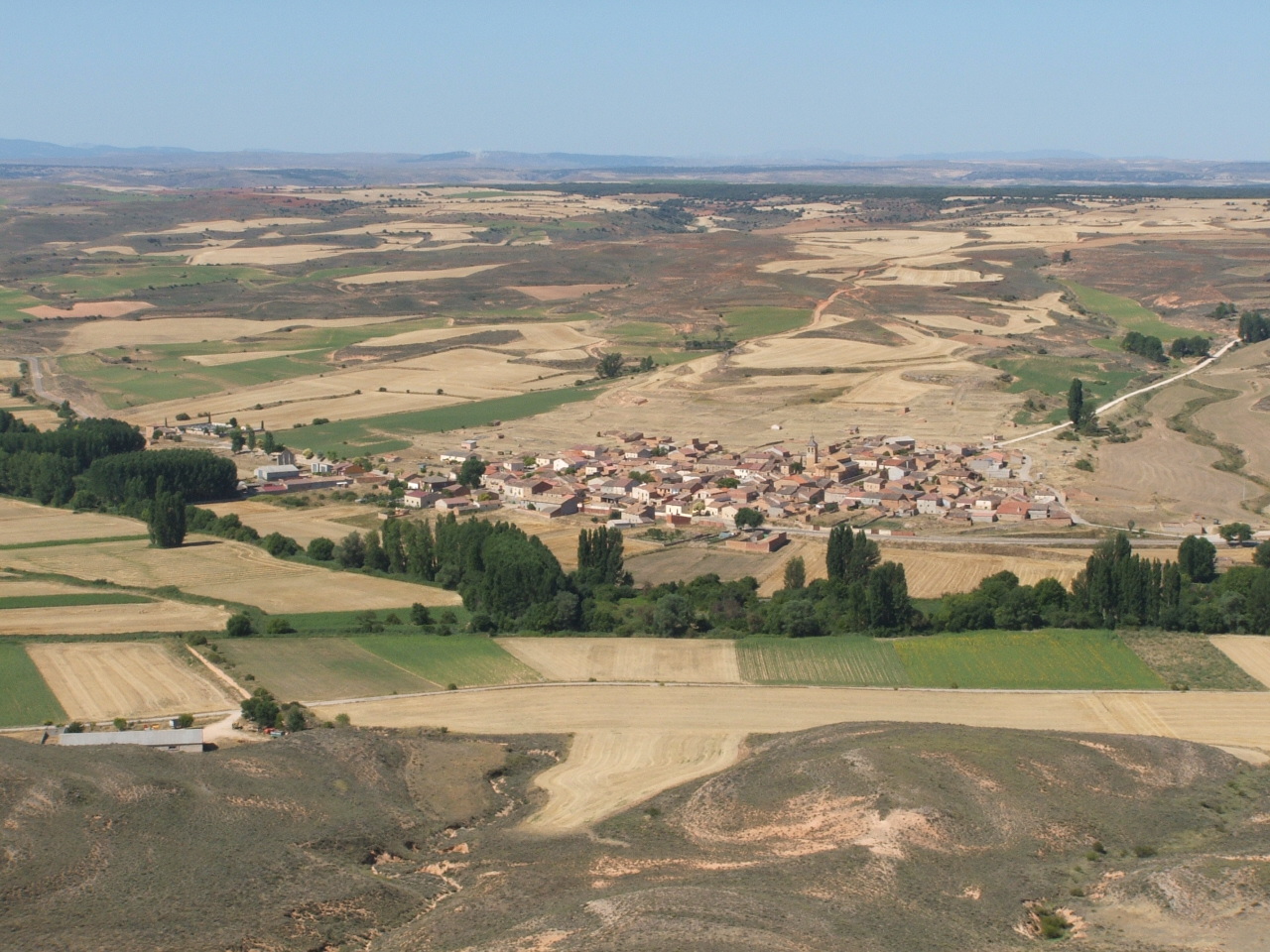
The church bell tolls exactly once at noon. Nobody appears. A dog barks somewhere beyond the stone walls, then thinks better of it. In Centenera de Andaluz the soundtrack is wind rattling dry thistle and your own boots on packed earth. Nineteen residents, 944 metres above sea level, a cluster of houses that looks as if it has been sketched rather than built—this is the Soria province’s open secret for travellers who measure value in breathing space rather than tick-box sights.
A Name That Travels Further Than Its People
The suffix “de Andaluz” puzzles most visitors. The village is closer to the Rioja wine region than to Andalucía, yet medieval links to southern repopulators after the Reconquest stuck to the place like burrs. The name is a reminder that Spaniards have always been internal migrants, carrying their memories northwards and grafting them onto Castilian stone. Walk the single main lane and you will still see timber doors numbered in fading white paint—old livestock tallies, family initials, the occasional 1930s date—evidence of hands that passed through and stayed just long enough to leave a mark.
What Passes for a Centre
There is no plaza mayor in the usual sense. Instead the village widens slightly around the parish church of San Juan Bautista, rough-hewn and lime-washed, its bell tower more agricultural than celestial. The door stands open; inside, the temperature drops ten degrees and the smell is of candle wax and sun-baked stone. No ticket desk, no donation box nailed to the wall—just a printed sheet taped to a pew giving the hours of Mass. If the caretaker sees you hesitate he will appear from a side gate, wipe his hands on work trousers and offer to unlock the sacristy so you can see the 17th-century carving of the Baptist. Tip him a couple of euros; it is the only entrance fee in town.
Beyond the church the streets shrink to footpaths. Adobe walls bulge outward like well-read paperbacks, their terracotta tones shifting from rust to biscuit depending on the hour. Keep an eye out for the iron rings set at waist height—medieval hitching posts for mules that once carried wheat to the communal threshing floors. One house still has a stone feed trough built into its façade; children now use it as a bench to tie football boots.
Walking the Invisible Map
Centenera sits on a shallow rise above cereal steppe that runs uninterrupted to the horizon. The GR-86 long-distance footpath skirts the village, but way-marking is erratic; a Spanish army survey map or the free Wikiloc phone app is more reliable than the occasional paint splash on a fence post. A useful short loop heads south-east along the farm track signed “Ermita del Cristo 3 km”. Twenty minutes out, the track dips into a dry ravine where bee-eaters nest in the clay bank. From the valley lip you can see the hamlet of Valdegeña—six roofs, no services—then circle back on the sheep path that joins the road from Retortillo. Total distance: 5.4 km; total elevation gain: 90 m; total humans encountered on an April morning: zero.
Summer walkers should carry more water than they think necessary. The thermometer brushes 35 °C by 11 a.m. and shade is theoretical. In winter the same landscape hardens: the wind arrives straight from the Meseta and can shave five degrees off the forecast. Sudden snow is rare but when it comes the village is cut off for a day or two; the regional plough prioritises the N-122 an hour’s drive north.
Eating When There Is No Restaurant
There is no bar, no shop, no Sunday market. Self-catering is mandatory unless you have arranged a half-board deal in one of the two village houses that take paying guests. Expect to pay €70-€80 per night for a two-bedroom cottage with firewood included. Hosts will, if asked in advance, leave a cold supper: tortilla de patatas, local chorizo, a bottle of Campo de Borja garnacha—total cost about €18 pp. The nearest supermarket is in Berlanga de Duero, 19 km away, so build a provisioning stop into the drive from Soria or Burgos.
Should you crave a proper menu, the roadside Venta de Goyo in neighbouring Valderrueda opens weekends and specialises in cordero lechal (milk-fed lamb) roasted in a wood oven. Three courses, bread and a simple rioja costs €24; service starts at 14:30 sharp and the dining room empties by 16:00 when Goyo closes so he can feed his own livestock.
When to Come, How to Leave
Spring brings colour fast: green wheat, red poppies, white cherry from isolated orchards. Birdlife is busiest then—calandra larks tumble over the fields and short-toed eagles ride the thermals above. Autumn trades flowers for copper tones and the grain harvest leaves geometric stubble patterns that photographers prize. Both seasons share daylight comfortable for walking and nights cool enough to justify lighting the cottage wood-burner.
Public transport is non-existent. From the UK the simplest route is a Ryanair flight to Madrid, two-hour hire-car drive up the A-2, then north on the CL-101 after Almazán. The final 12 km are on the SO-P-2024, a single-lane road where pheasants sprint ahead of the wheels. Fill the tank in Almazán; the village has no petrol station and the nearest 24-hour pump is 45 minutes away in El Burgo de Osma.
The Catch
Silence can tip into emptiness. Stay longer than two days and you may find yourself inventing errands—walk to the top lane to check if the church door is still open, photograph the same wall at 17:00 as at 07:00—simply to structure the hours. Mobile coverage is patchy; Vodafone drops to 3G, Movistar holds four bars, O2 is useless. Rain turns the lanes to slick clay that cakes boots and car mats alike. Most of all, Centenera offers no curated “experience”; you are left to make your own entertainment or surrender to the slower rhythm. Some visitors thrive on that freedom, others start the engine after a single night.
Drive out at dawn and the village shrinks instantly in the rear-view mirror, a dark spine against cereal gold. The bell tower is the last thing visible, a solitary exclamation mark on a page of horizontal sentences. Twenty minutes later the radio regains signal, traffic appears, coffee smells drift from roadside garages. The silence of Centenera de Andaluz stays behind, patient and unfillable, waiting for whoever wants to listen.