Full Article
about Fuentepinilla
Historic town with medieval bridge and stately mansions
Hide article Read full article
A village shaped by land and climate
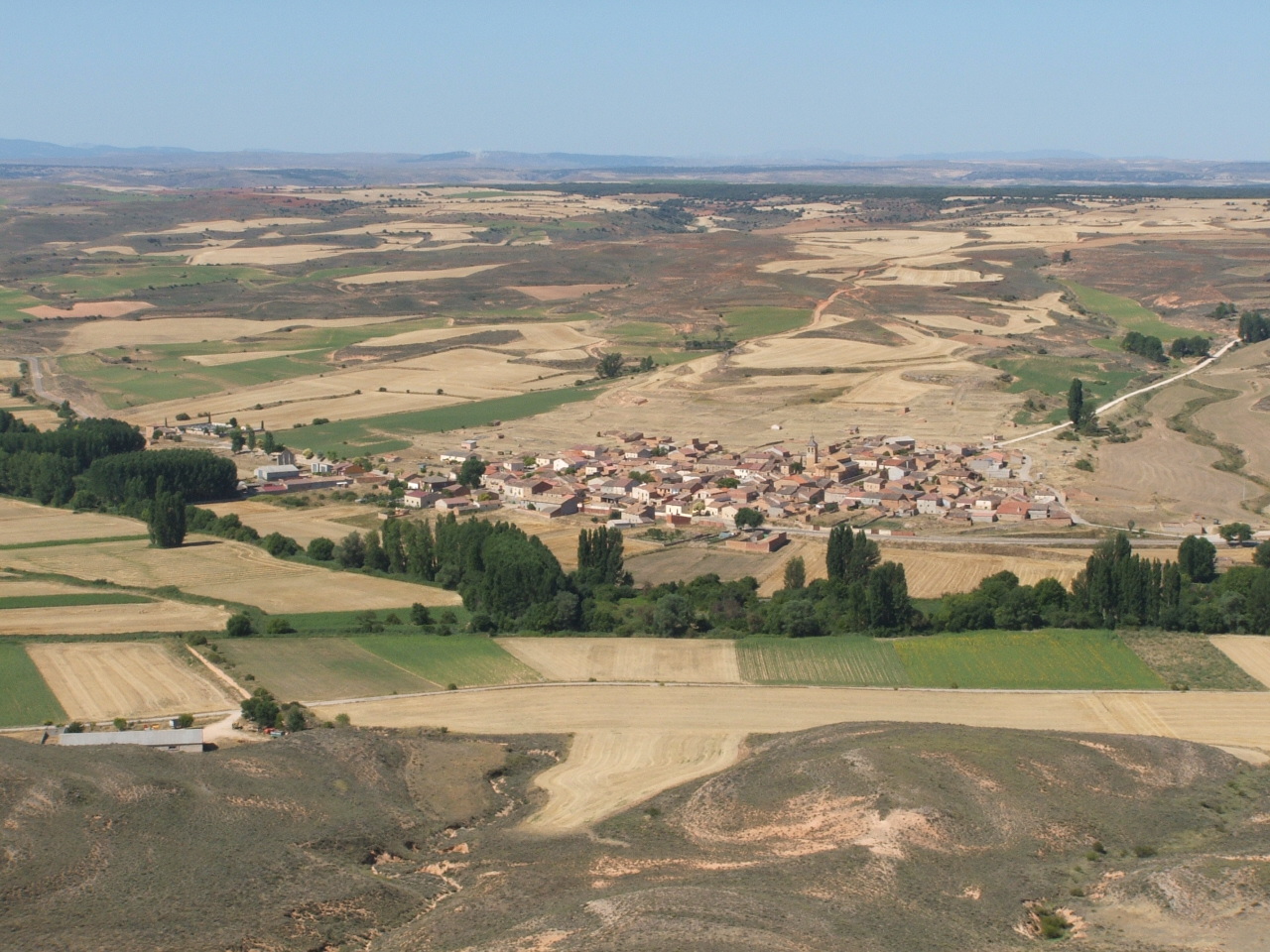
Fuentepinilla sits in the comarca of Berlanga, in the south-west of the province of Soria, on the high plateau that defines much of southern Soria. With just over fifty registered residents, it keeps the scale and layout of the region’s traditional farming villages. At around 900 metres above sea level, its buildings reflect a climate of long winters and dry summers: thick walls, low profiles and tiled roofs designed to hold off the cold.
The village is surrounded by open countryside made up of cereal fields, fallow land and patches of low scrub. This landscape follows the same pattern seen across the Berlanga area, where dry farming has shaped local life for centuries. Wheat, barley and some legumes have long been the main crops. In slightly higher areas, scattered pine woods appear. In autumn, some people head out to look for mushrooms, although there are no marked routes in the immediate surroundings.
The church and traces of everyday life
At the centre of Fuentepinilla stands the parish church of San Juan Bautista. The current building dates back to a 16th-century structure with later alterations, which is common among rural churches in the province. It is not large, but inside it houses a Baroque main altarpiece added in the 18th century. Beyond its decoration, its role matters more: for generations it served as the main meeting point for a small community whose daily life was spread across the surrounding farmland.
The village layout unfolds around the church, with short streets and a fairly compact arrangement of houses. Many of these homes still preserve the area’s traditional architecture. Stone is used on the ground floor, with adobe or rammed earth on the upper levels, and wide gateways that once opened into courtyards or stables. Some façades still show sun-facing galleries or corridors. These were used to dry grain, store tools or air products from the annual pig slaughter, a key part of rural subsistence.
On the outskirts, the old threshing floors can still be identified. These circular spaces were where cereal was processed before mechanisation arrived. They are modest features in the landscape, yet they help explain how the local economy functioned until relatively recently.
Across the open plateau
The area around Fuentepinilla is best explored on foot or by bicycle, following agricultural tracks. These are not signposted walking routes but working paths used by residents to reach their fields. The terrain is gentle, with long, rolling stretches of plateau that allow for wide views.
In these open spaces, birds of prey are a common sight. Kites and the occasional eagle can be seen riding the air currents above the fields. In autumn, after the first rains, mushrooms appear in nearby pine woods and also in the grasslands. The latter are traditionally known for setas de cardo, a type of wild mushroom associated with thistle-rich pastures. As in any such area, it is important to recognise species correctly and follow the rules governing mushroom picking in the province.
The landscape shifts noticeably with the seasons. Winter often brings persistent frost and occasional snowfall that can bring the village to a halt for a few hours. In summer, activity moves to the evening, when temperatures drop and residents come out into the streets or head towards their vegetable plots.
Summer as a turning point
As in many small villages in Soria, life in Fuentepinilla changes when summer arrives. People who maintain family homes here return for a few weeks, increasing the population and altering the rhythm of daily life. This is when the patron saint festivities in honour of San Juan take place. They usually include a mass, a procession and gatherings among neighbours, often held in the square or near the threshing floors.
Outside these dates, the village remains quiet. The permanent population is small and largely made up of older residents. Younger generations tend to live and work in larger towns within the comarca or in cities further afield.
Visiting a small rural settlement
Fuentepinilla is not an organised tourist destination. Services are limited, so it is sensible to arrange accommodation or meals in larger nearby towns. The village can be reached by local roads that connect the comarca with Berlanga de Duero or the city of Soria. In winter, if there is snow or ice, care may be needed on secondary roads.
A visit here is usually brief. Many travellers combine it with other places in the comarca of Berlanga, where there are more extensive historic centres and some medieval remains linked to the old Duero frontier. In that wider context, Fuentepinilla offers a quieter perspective: a place where the landscape, architecture and seasonal rhythms still reflect a long agricultural tradition.