Full Article
about Rello
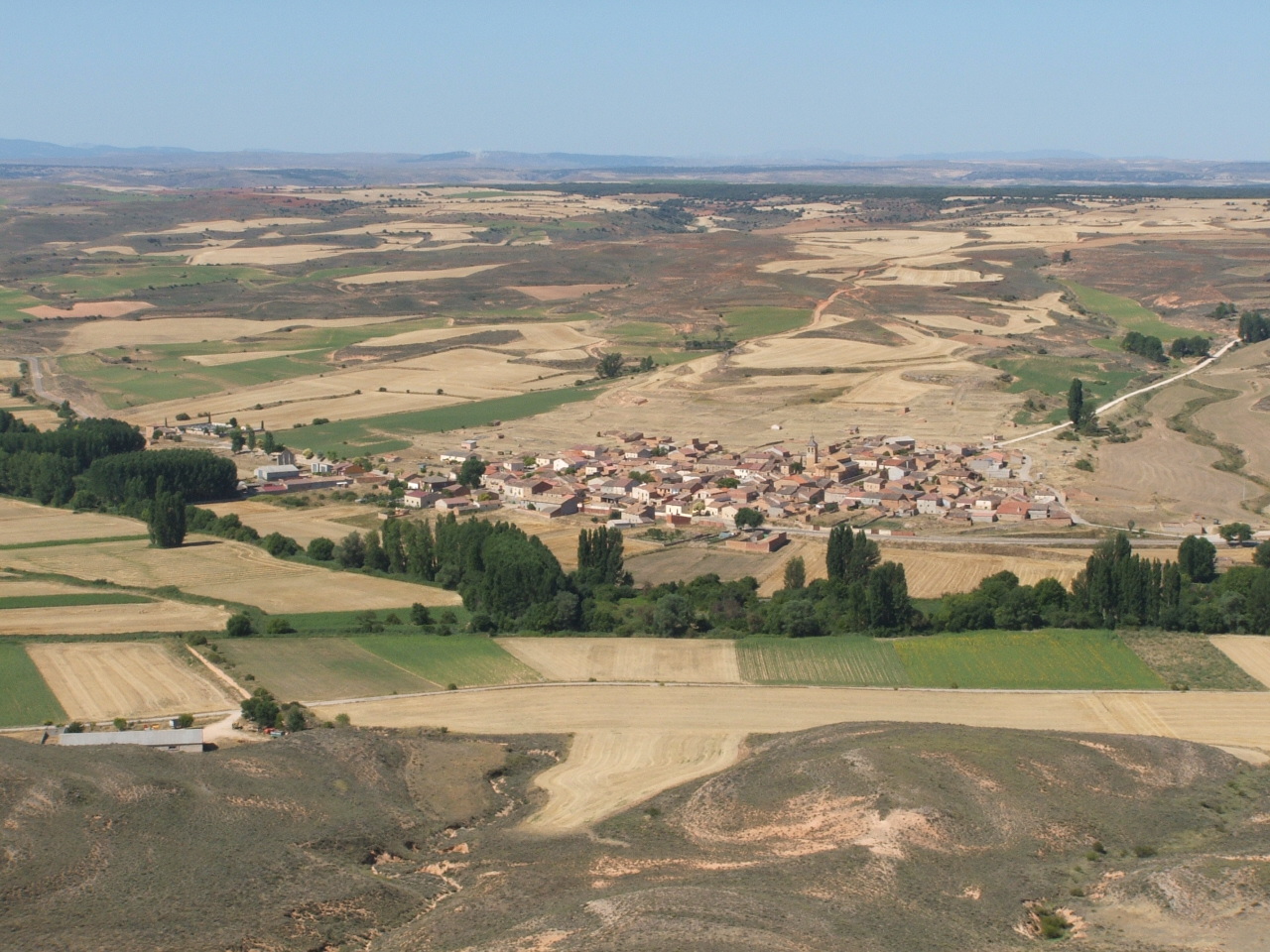
Spectacular walled medieval village perched on a limestone crag
Ocultar artículo Leer artículo completo
At 1,070 metres, Rello’s medieval wall catches the wind before it reaches anywhere else in Castilla. The gusts whistle through arrow slits and slam the single wooden door of the ayuntamiento, making the village sound twice its size. Twenty permanent residents live behind the 700-metre circuit of stone; on most afternoons you will meet more sheep than locals.
A Fortress That Forgot to Shrink
The fourteenth-century walls remain complete, rising straight from bedrock on a ridge above the river Escalote. Two gates—Puerta del Reloj and Puerta del Mercado—still close at dusk; the iron yett of the Mercado gate bears the gouge marks of Napoleonic bayonets, a detail the village baker (open Tuesday and Thursday only) points out while wrapping hogazas in brown paper. Inside, lanes are barely shoulder-wide, paved with granite setts polished by centuries of military boots rather than tourist trainers. Houses grow out of the battlements: attic beams slot into the wall walk, chimney stacks double as merlons. Planning laws here mean exactly what they did in 1385—nothing may break the skyline.
The castle keep, thirteenth-century and strictly private, stands roofless but intact to parapet level. Herrera-style cornerstones catch the sunrise ten minutes before the plateau below; photographers should set up opposite the tiny chapel of San Roque where swallows use the machicolations as launch pads. You cannot enter, yet the owner tolerates visitors who lean over the boundary chain to photograph the dovecote tower. Tread quietly: the courtyard is his vegetable garden.
Silence, Stone and Sudden Views
Walking the parapet takes twenty minutes if you stride; an hour if you stop to read every mason’s mark. The north wall has no handrail—just a 40-metre drop to oak scrub—so keep to the inner edge when the wind veers west. From the south-west tower you can clock Berlanga de Duero’s own fortress 12 km away, and on very clear days the white communications dome of Moncayo, 80 km distant, winks like a second moon.
Mid-afternoon silence is so complete that ear-ringing sets in. Then a tractor starts in the valley, the sound ricocheting off limestone like a distant drum. Bring water; no cafés exist inside the walls and the single drinking fountain by the church flows only at weekends when the municipality remembers to switch the pump.
Getting Up and Getting Stuck
The final 7 km of road SO-132 climb 400 metres via tight hairpins. Petrol gauges must read at least half: the last pump is in Barahona, 19 km back. Meeting a combine harvester on a single-track bend requires reversing to the previous cambio de sentido—Spanish for “passing bay carved into cliff”. In winter the same bends ice by 4 pm; snow-chains are obligatory from December to March and the Guardia Civil turn away cars without them. Summer brings different hazards: the tarmac softens and lorries delivering heating oil leave ruts that grab low-profile tyres.
Public transport? One school bus departs Berlanga at 07:10, returns at 14:00. Miss it and a taxi costs €35—if the driver feels like leaving the county. Most Britons fly Ryanair Stansted to Zaragoza, collect a hire car and reach Rello in under two hours via the A-2 and the ghostly plain of Toro.
What to Do After You’ve Circled the Walls Twice
Rello is a comma, not a chapter. Stay two hours, or stay overnight and use it as a base for meseta walks where the only footprints belong to wild boar. A signed but unpublicised 8 km loop drops from the Mercado gate, crosses the stone bridge of Escalote and climbs to the abandoned village of Trayuco—roofless, chimney-stacked, still smelling of hearth smoke from the 1950s. From Trayuco the path continues along a medieval drove road to Berlanga; allow three hours, carry 1½ litres of water per person, and expect no phone signal for the middle hour.
Cyclists with gravel bikes rate the track south to Retortillo as one of the emptiest in Spain: 22 km of rolling paramo, zero traffic, golden eagles overhead. The return leg requires leg-warming layers even in May; altitude plus wind-chill can drop the perceived temperature ten degrees within half an hour.
Eating (Elsewhere) and Sleeping (Rarely)
Inside the walls nothing is for sale. The nearest menu is in Villar del Campo, 9 km down the hill, where Mesón de la Villa serves judiones—butter beans the size of conkers, stewed with clams and bay leaf—followed by cordero asado that falls from the bone at the prod of a fork. Half a ración feeds two; ask for “medio” and the price drops to €14. Their wine list begins with Ribera del Duero crianza at €16 a bottle, less than the London price of a house wine you’d actually want to drink.
Accommodation within Rello itself is limited to two restored houses. El Mirador de Rello sleeps eight across four stone bedrooms, has under-floor heating and a roof terrace that hangs above the gorge; prices start at €180 per night for the whole house, cheaper per head than many provincial Travelodges. Casa Rural La Muralla is smaller—three rooms, beams blackened by 600 years of hearth smoke—and opens directly onto the wall walk; book through the Berlanga tourist office because the owner, María Jesús, refuses to answer emails and relies on word-of-mouth and a battered diary.
When to Come, When to Leave
April brings almond blossom that flicks pink against grey stone; the wind softens and larks drown out the tractors. October is equally gentle, with the added theatre of cattle being walked down from summer pastures—cowbells echoing through the streets at dawn like mobile church towers. Mid-July to mid-August is relentless: 32 °C by 11 am, zero shade, and the stones radiate heat until midnight. If summer is your only slot, arrive before 09:00, leave by 13:00, spend the afternoon in the air-conditioned cloisters of Berlanga’s Colegiata.
Winter can be magical when snow sits on the merlons, but check the Soria road report the evening before: the N-122 closes when articulated lorries jack-knife, and the diversion adds two hours via Almazán.
Parting Shot
Rello offers no gift-shop fridge magnets, no sunset yoga, no craft beer. It gives you instead the sound of your own boots on a wall that once kept kings out, a view that stretches two provinces, and the realisation that twenty people still call this sky-high fortress home long after its military purpose vanished. Arrive expecting to fill an hour, leave understanding why some visitors park the car and simply listen to the wind rewriting medieval history in their ears.