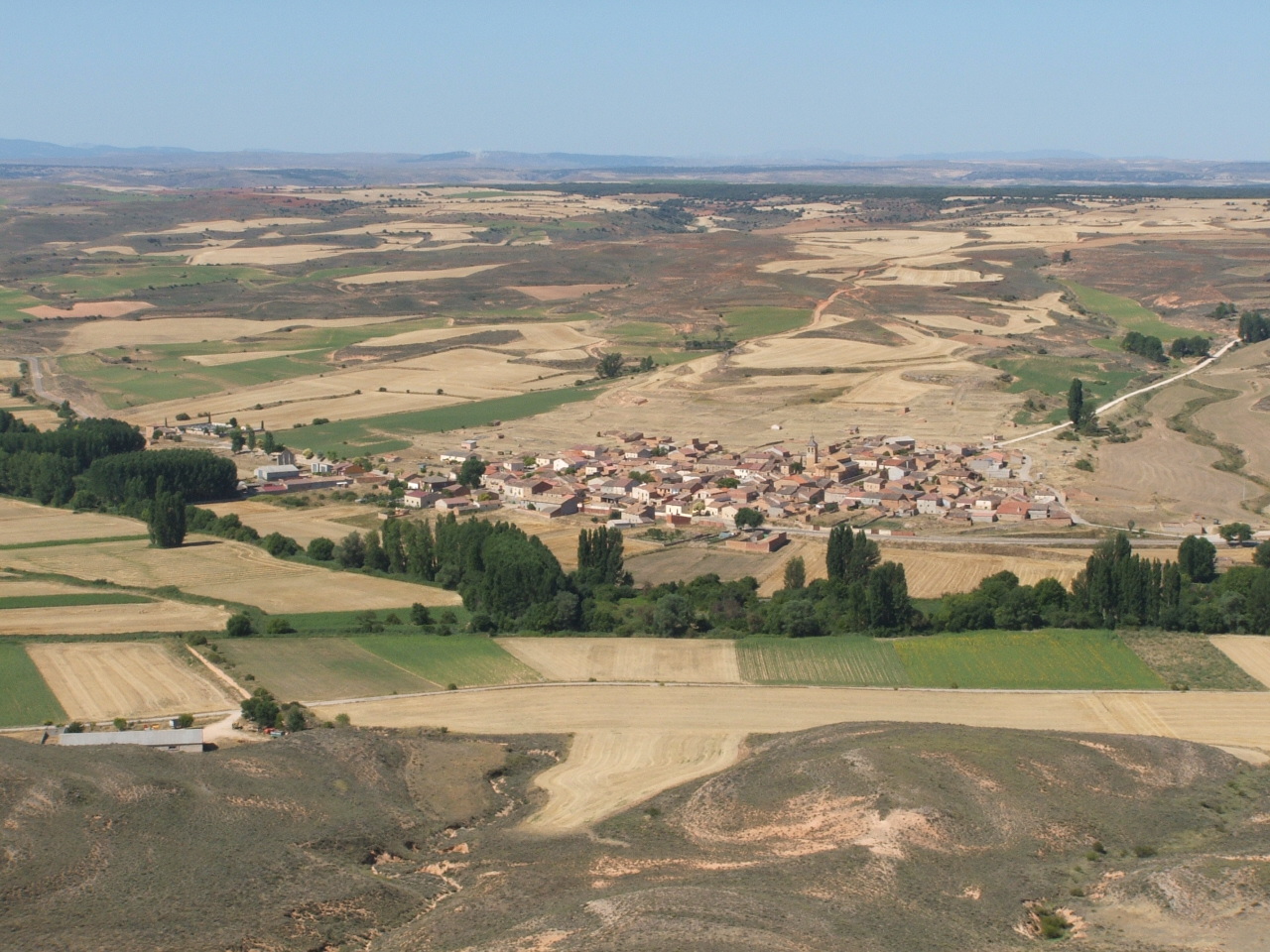
Vista aérea de Valderrodilla
Instituto Geográfico Nacional · CC-BY 4.0 scne.es
Castilla y León · Cradle of Kingdoms

Valderrodilla

The church bell strikes noon, yet only a tractor's distant rumble answers back. This is Valderrodilla at 936 metres above sea level, where the popu...

59 inhabitants · INE 2025
936m Altitude

Why Visit

Mountain Church of San Pedro Walks

Best Time to Visit

summer

San Pedro (June) agosto

Things to See & Do
in Valderrodilla

Heritage

  • Church of San Pedro

Activities

  • Walks

Festivals
& & Traditions

Fecha agosto

San Pedro (junio)

Las fiestas locales son el momento perfecto para vivir la autenticidad de Valderrodilla.

Full Article
about Valderrodilla

Village whose church retains Romanesque remains

Ocultar artículo Leer artículo completo

The church bell strikes noon, yet only a tractor's distant rumble answers back. This is Valderrodilla at 936 metres above sea level, where the population hovers around sixty souls and time moves to the rhythm of agricultural seasons rather than tourist timetables.

The Village That Refuses to Perform

Most visitors speed past the turn-off on the SO-900, bound for Berlanga de Duero's castle or the prehistoric ruins of Tiermes. Those who do swing left find themselves on a narrow road that climbs through wheat fields and oak scrub, ending in a place that makes no concessions to tourism's expectations. There's no souvenir shop, no café terrace with views, not even a proper car park. Just stone houses huddled around a modest church, their weathered wooden doors painted in the same blue-grey that church authorities once mandated across rural Spain.

The name itself tells the story: "valley of small oak groves" in a dialect that predates modern Spanish. These aren't the manicured holm oaks of Andalucían estates, but tough, gnarled specimens that survive on rainfall alone. Their presence shaped everything here, from building materials (timber beams, charcoal for heating) to the local diet (acorn-fed pigs still roam small holdings behind the houses).

Walking the single main street takes five minutes if you dawdle. Houses built from local limestone and adobe cluster together, their shared walls creating a microclimate that keeps interiors cool during Soria's bitterly cold winters. Many still sport bread ovens in their courtyards, though these days they're more likely to store garden tools than bake daily loaves. Peer through iron gates and you'll spot traditional wine presses, their heavy wooden screws now ornamental rather than functional.

What Passes for Attractions

The Iglesia de San Andrés won't feature in any guidebook's must-see list. Small, sturdy, rebuilt more times than locals can remember, it represents the pragmatic faith of rural Castile. Step inside during opening hours (essentially whenever someone's around to unlock it) and you'll find a single nave with a simple baroque altarpiece. The real interest lies in details: stone fonts worn smooth by centuries of baptisms, wooden pews carved with initials dating back to the 1800s, and fresco fragments revealed during recent restoration work.

More revealing are the abandoned houses. Unlike Spain's coastal villages, where foreign buyers transform ruins into holiday homes, Valderrodilla's empty properties remain stubbornly empty. Their stone walls crumble gradually, roofs collapse inward, and wildflowers colonise interior spaces. It's honest decline, unvarnished by romantic narratives about "authentic Spain." Some structures date to the 16th century, when the village supported perhaps 400 inhabitants—its peak before rural exodus began.

The surrounding landscape offers what marketing departments might call "360-degree views of unspoilt Castilian countryside." In practice, this means rolling plains stretching towards distant mountain ranges, the occasional ruined farmhouse breaking the horizon, and skies that seem impossibly vast. During spring, green wheat creates undulating waves that shift colour hourly as clouds pass overhead. Come July, the same fields turn golden-brown, their wheat harvested by combines that work through the night to avoid daytime heat topping 35°C.

Walking Without Waymarks

Serious hikers should stop reading now. Valderrodilla offers no official trails, no difficulty ratings, no wooden signposts pointing towards scenic viewpoints. Instead, a network of agricultural tracks and livestock paths radiate outward, their routes determined by field boundaries rather than tourist boards. This presents both opportunity and challenge.

Heading north towards the Ermita de la Soledad (a ruined hermitage three kilometres distant) involves following a track that degenerates into two tyre ruts through cereal fields. The walking's easy—gently undulating terrain on firm soil—but navigation requires attention. Mobile phone coverage exists but proves patchy in valleys; downloading offline maps beforehand prevents wrong turns that could add hours to a simple stroll.

Wildlife rewards patience. Golden eagles ride thermals above the ridges, while partridge explode from cover in heart-stopping bursts. Dawn and dusk bring the best chances of spotting roe deer grazing field edges. The birdwatching proves excellent year-round, though spring migrations (March-May) transform ordinary morning walks into moving spectacles as flocks follow ancient flyways north.

Summer walks demand early starts. By 10am, temperatures reach uncomfortable levels with zero shade available across treeless plains. Winter brings the opposite problem: Siberian winds sweep across exposed terrain, making even short walks bitterly cold despite bright sunshine. Spring and autumn provide the sweet spot, though sudden weather changes remain possible year-round at this altitude.

The Reality of Eating and Sleeping

Let's be blunt: Valderrodilla offers no accommodation and no restaurants. The nearest hotel sits fifteen minutes away in Berlanga de Duero, a medieval town with fortress walls and several decent eating options. Casa Cándido serves robust Castilian cooking—roast lamb, hearty stews, local cheeses—at prices that seem absurdly low to British visitors (mains €12-16). Their wine list features robust Toro reds that complement the region's protein-heavy cuisine.

For day-trippers, picnicking presents the only realistic option. The small shop in neighbouring Recuerda (five kilometres) stocks basics: bread, cheese, tinned goods, cold beer. Buy supplies, find a stone wall to sit on, and lunch alfresco while watching farmers work distant fields with machinery their grandparents couldn't have imagined.

Those determined to stay locally face limited options. One house offers rudimentary rural accommodation through word-of-mouth arrangements—basically a spare bedroom with shared bathroom, breakfast featuring strong coffee and tostadas with local olive oil. It costs €30 nightly but requires Spanish language skills to arrange. More comfortable bases lie in Berlanga or the Parador at Berlanga castle, where historic surroundings come with modern amenities and corresponding prices.

When the Village Comes Alive

August transforms everything. The fiesta patronale brings back families who left decades ago, swelling the population to perhaps 200. Suddenly, silence shatters completely: brass bands parade through streets, children chase footballs between parked cars, and neighbours who haven't spoken since last summer embrace with genuine emotion. The church hosts evening services followed by communal meals where whole lambs turn on spits over vine-root fires.

These celebrations aren't staged for tourists—they're family reunions that happen to welcome outsiders. Visitors who time their arrival right experience something increasingly rare: authentic rural Spain without entry fees or souvenir stalls. But timing proves tricky. Dates shift annually, usually falling around Assumption Day (15 August), though confirmation requires phoning the ayuntamiento in Berlanga during the preceding week.

Winter visits reveal a different truth. When temperatures drop below freezing and north winds howl across the plateau, Valderrodilla feels abandoned even by its residents. Many elderly inhabitants relocate to family homes in larger towns, leaving perhaps twenty people to maintain the village through months when water pipes freeze and snow blocks access roads. Photography enthusiasts prize these conditions—low sun creates dramatic shadows, frost transforms abandoned buildings into sculptural studies—but casual visitors find the experience frankly depressing.

Valderrodilla offers no Instagram moments, no tick-box attractions, no luxury experiences. What it provides instead is increasingly precious: space to think, walks without crowds, and an unvarnished view of rural Spain's ongoing struggle for survival. Come prepared for self-sufficiency, bring realistic expectations, and you'll discover that sometimes the most interesting destinations are those that make no effort to interest you at all.

Key Facts

Region
Castilla y León
District
Berlanga
INE Code
42197
Coast
No
Mountain
Yes
Season
summer

Livability & Services

Key data for living or remote work

2024
TransportTrain 14 km away
EducationElementary school
Housing~5€/m² rent · Affordable
Sources: INE, CNMC, Ministry of Health, AEMET

Planning Your Visit?

Discover more villages in the Berlanga.

View full region →

More villages in Berlanga

Traveler Reviews