Full Article
about Aldeanueva del Codonal
Wine-growing municipality on the Verdejo route, known for its vineyards and traditional wineries in the countryside.
Hide article Read full article
A pause in the Segovian countryside
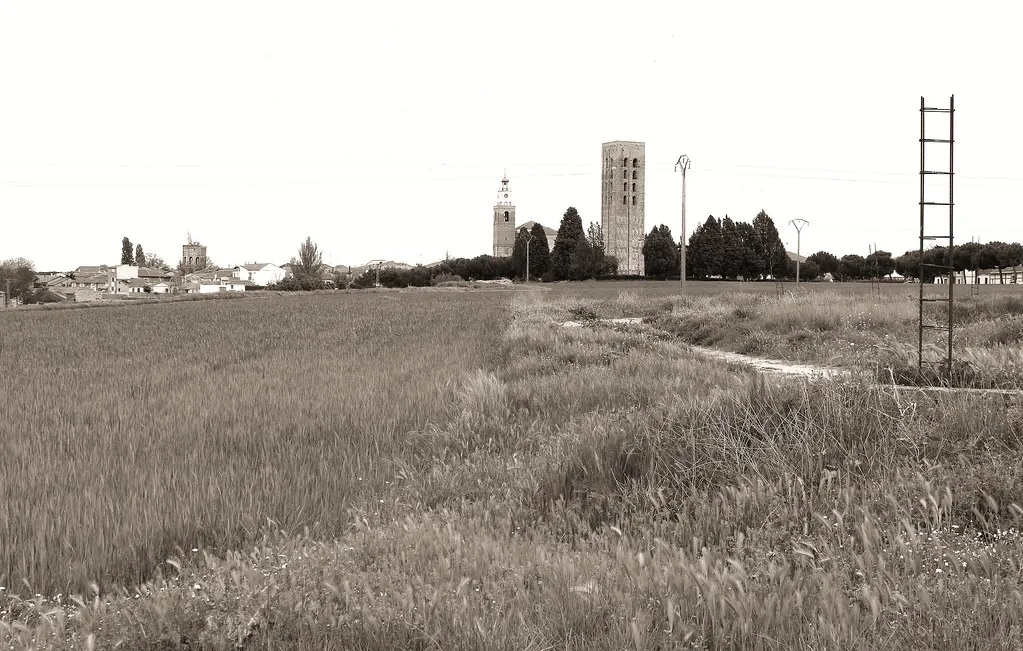
Some places feel like a pause. The road through the Campiña Segoviana runs between wide cereal fields, and then Aldeanueva del Codonal appears without much warning. A small cluster of houses, very little noise, and a sense that time moves differently here. This small municipality has around a hundred residents and its daily life is closely tied to the land that surrounds it.
There are no grand landmarks or streets designed with tourism in mind. What you see is exactly what exists: low houses, many built with adobe, enclosed yards, and tracks that lead out in every direction towards farmland. The name “del Codonal” is often linked to the broom shrubs that once grew in the area. Today the landscape feels more open, shaped by fields of wheat and barley that shift in colour with the seasons. Summer brings a near golden hue, while spring turns everything green.
Quiet streets and rural architecture
The centre of the village revolves around the parish church, the Iglesia de la Invención de la Cruz. It is a simple building that sits naturally within its surroundings rather than drawing attention. Stone walls, a bell gable, and a restrained interior define its character. In places like this, the church serves more than a religious role. It also acts as a point of reference for the village itself.
A slow walk through the streets reveals traditional homes built with adobe or rammed earth. Some still have large wooden gates that once opened into yards or storage spaces. In several cases there are also underground wine cellars beneath the houses, a feature that reflects a time when vineyards played a bigger role in the local economy than they do now.
This is not a destination built around major monuments. Attention naturally shifts to smaller details: a well-preserved मिट्टी wall, an old wooden door, or a threshing floor on the edge of the village. These elements offer a quiet sense of continuity with the past.
The open landscape of the Campiña Segoviana
Leaving the village on foot is one of the most rewarding things to do here. Agricultural tracks begin almost at the last houses and stretch straight into the plain.
The landscape is flat and expansive. Fields of cereal dominate, with the occasional holm oak breaking the horizon. Lines of poplars appear near streams or damp ground. Wind is a regular presence on the plateau, and when it moves through the wheat, the fields ripple like water. It is a simple image, but one that holds attention if you stop to watch it for a while.
This setting also suits birdlife that thrives in open countryside. Partridges are common, as well as kites and other birds of prey circling high above. Early morning and late afternoon tend to bring more activity, although the sense of space is constant throughout the day.
Night brings a different kind of clarity. With very little artificial light nearby, the sky appears far brighter than in towns or cities. The stars stand out in a way that feels increasingly rare.
Walking the rural tracks
There are no signposted walking routes with frequent panels or markers. The usual approach is simple: follow the agricultural tracks and connect one to another.
These routes are easy and mostly flat, linking Aldeanueva del Codonal with nearby villages across the Campiña Segoviana. The terrain suits unhurried walks that last an hour or two, with no real need to keep track of time.
Autumn introduces another activity for those familiar with the area. After the rains, some locals head out to look for mushrooms in the small patches of woodland that remain in the region. As in any rural setting, this requires proper knowledge before attempting it.
Food rooted in the land
The food in this part of Segovia follows the logic of rural life: filling dishes, straightforward preparation, and ingredients tied to the land. Roast lamb is part of Segovian culinary tradition and appears across many villages in the area. Alongside it come legumes, homemade cured meats, and simple sweets prepared at certain times of year.
In some households, traditional recipes for roscas and other baked goods are still made using basic ingredients such as flour, eggs, oil or lard. These are flavours more closely linked to family kitchens than to restaurant menus, shaped by habit rather than presentation.
Festivities and everyday rhythm
As in many small municipalities, the festive calendar concentrates in summer. That is when people with family roots in the village return, and Aldeanueva del Codonal becomes noticeably livelier. The square fills with more activity, music carries into the night, and gatherings stretch outdoors for hours.
For the rest of the year, the village returns to its usual pace. Tractors come and go, neighbours greet each other from their doorways, and silence settles over the surrounding fields.
Aldeanueva del Codonal is not a place for packed itineraries or major attractions. It offers something quieter: a walk through its streets, a view across the plains of the Campiña Segoviana, and a glimpse into how life unfolds in this part of Segovia. For many visitors, that is enough.