Full Article
about Aldehuela del Codonal
Small settlement ringed by crop fields and pine woods; perfect for quiet retreat and simple living.
Hide article Read full article
A village that appears among the fields
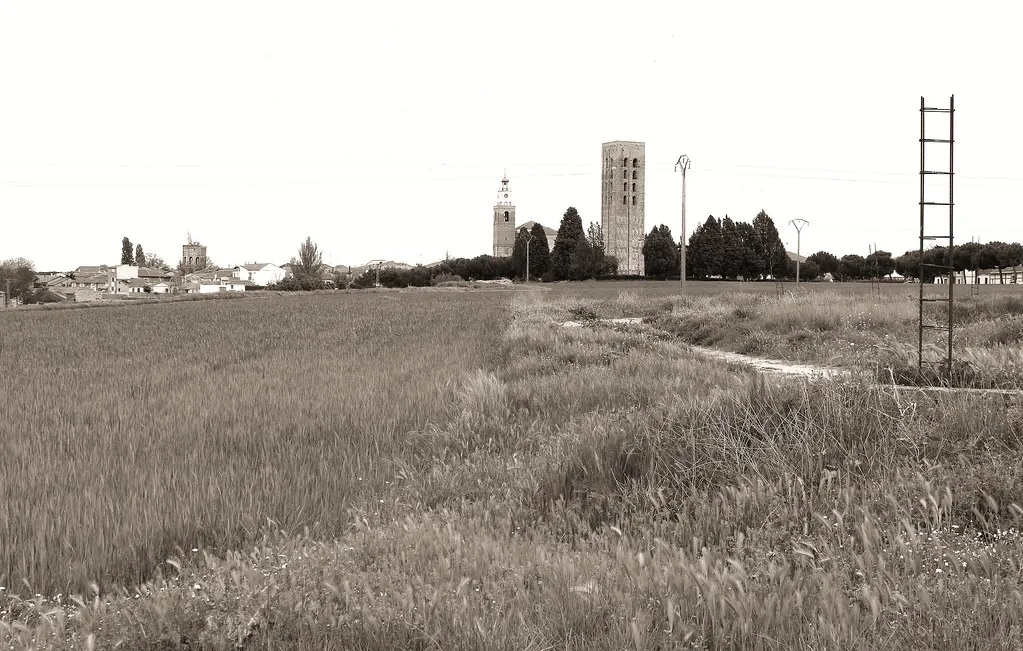
Early in the morning, when the air still carries the smell of cold earth and straw, Aldehuela del Codonal comes into view almost without warning among the cereal fields of the Segovian countryside. A small cluster of low houses appears first, built with a mix of stone and adobe, their reddish roofs visible from the road before the first street begins.
Tourism in Aldehuela del Codonal has little to do with monuments or marked routes. This is a place defined by quiet, open land and a very small village that continues at its own pace. It sits less than an hour’s drive from the city of Segovia, yet feels far removed from anything busy or structured.
Only around two dozen people live here today. They are spread across a handful of short streets where everything can be taken in at a glance. The scale is such that the village reveals itself almost instantly, without the need to search for anything in particular.
Houses gathered around the church
The layout becomes clear as soon as you enter. The houses cluster loosely around the parish church, which acts as the centre point. It is a simple building, constructed in brick with some wooden elements, and topped by a small bell gable that barely rises above the surrounding roofs. Beside it lies the cemetery, pressed close to the residential area, with stone crosses just visible above its wall.
The houses themselves show layers of time and repair. Cement sits over adobe, newer bricks meet much older walls. Many façades reflect practical upkeep rather than aesthetic concern. Windows tend to be small, designed more to retain warmth during the cold months than to let in light.
At several corners, old agricultural tools remain in place. A threshing board leans against a wall, a rusted metal wheel rests nearby. These objects serve as reminders that life here has long followed the rhythms of the harvest rather than any external timetable.
The landscape: cereal fields to the horizon
From any edge of the village, the land opens out without obstruction. This is characteristic of the Campiña Segoviana: large plots of farmland, colours that shift with the seasons, and very few trees interrupting the view.
In spring, the fields turn a deep green. By summer, the dominant tones are the gold of dry cereal crops and the pale dust of the tracks that cross the plain. The landscape changes gradually, but always retains its sense of breadth and exposure.
Here and there, small limestone formations break through the cultivated earth. They are not large outcrops, but irregular mounds that interrupt the otherwise uniform terrain. Their presence adds slight variations to a landscape that is otherwise defined by continuity.
On clear days, looking southwards, the distant outline of the Sierra de Guadarrama appears on the horizon. It shows as a faint bluish line far away. There are no designated viewpoints or platforms. Any of the dirt tracks leading out of the village provide the same wide perspective.
Walking the agricultural tracks
Several agricultural tracks connect Aldehuela del Codonal with neighbouring villages. These are broad dirt paths, intended primarily for tractors rather than walkers, yet they can be followed on foot or by bicycle without difficulty.
There is no signage or information panels along the way. Walking here simply means following the line of the track and orienting yourself by the surrounding fields. The experience is straightforward and unstructured.
Summer requires some care. The central hours of the day bring strong heat, and shade is scarce across the open plain. The sun falls directly across the fields, with little relief.
With patience, the soundscape begins to emerge. Skylarks and corn buntings can be heard, along with other birds typical of open farmland. Birds of prey often circle above freshly worked plots. This part of Segovia is also home to steppe birds such as great bustards and little bustards, although spotting them depends heavily on the season and distance.
A village without services
Aldehuela del Codonal is extremely small, and that has practical consequences. There are no shops or bars, and public fountains are not easy to find within the village. Anyone planning to spend time walking in the surrounding area should bring water and something to eat from a nearby town.
Parking is uncomplicated. A car can be left along any of the प्रवेश streets without issue. Traffic is minimal, usually limited to a resident’s vehicle or occasional agricultural machinery.
When to come
The most pleasant times to visit tend to be spring and early autumn. During these periods, the fields shift in colour and temperatures allow for unhurried walks. Summer can be intense, with heat that hardens both the landscape and the experience of moving through it.
Even so, early morning and late evening in summer offer a different atmosphere. The light over the fields takes on a softer quality that can feel almost hypnotic as it stretches across the plain.
Aldehuela del Codonal works best not as a place to tick off sights, but as a brief pause in the middle of the countryside. A short walk between old houses, the sound of wind moving through the cereal, and the sense of being in a village that remains inhabited, even as it barely registers on the map.