Full Article
about Anaya
A town near the capital, surrounded by ash groves and farmland; it still has the quiet appeal of country life.
Hide article Read full article
A pause in the Campiña Segoviana
Some villages are the sort you drive through and assume very little happens there. Anaya gives that impression at first glance. Yet stopping briefly can turn into something longer without much effort. Tourism in Anaya is not about monuments or carefully planned itineraries. It is about easing your pace and paying attention to what is around you.
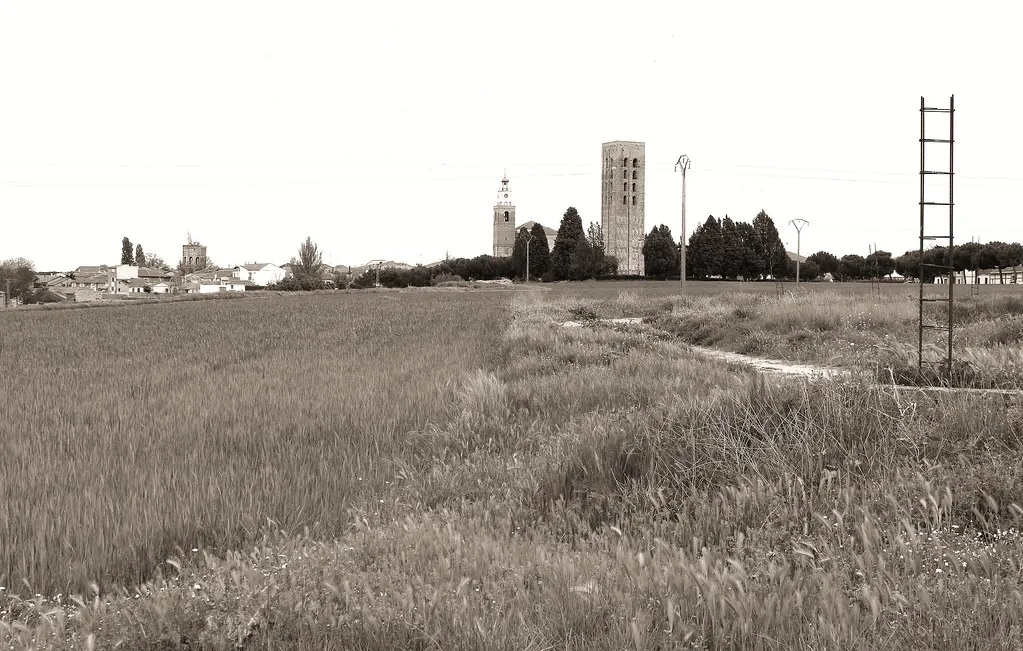
Anaya sits in the Campiña Segoviana, a wide agricultural area in the province of Segovia, surrounded by cereal fields. The landscape is so open that at times the village seems to float in the middle of it. There is no sense of staging or decoration. Stone and adobe houses line the streets, small vegetable plots appear here and there, chickens move about in enclosed yards, and the quiet is only broken by tractors when work calls.
Life at its own pace
With just over a hundred residents, Anaya moves to a different rhythm. The day begins early, shaped by agricultural routines that still define the calendar. It is not a place designed with visitors in mind. That, in itself, is part of its appeal.
The streets are narrow and without elaborate detail. Facades are simple, wooden doors show the wear of time, and behind them are courtyards where tools or stacks of firewood can be glimpsed. A short walk rarely stays short. Small details slow you down, whether it is a worn threshold, a half-open gate or the quiet sense of daily life continuing without interruption.
The church and the village centre
The clearest landmark in Anaya is the church dedicated to Santiago Apóstol. It does not dominate the skyline in the way churches do in some nearby towns, but it works as a reference point as you move through the streets.
Around the church and the small square is where most of the village’s limited activity gathers. There may be a bench, neighbours talking if the weather allows, and a calm atmosphere that feels lived-in rather than arranged for display. It is the kind of place where nothing much appears to happen, yet time passes easily.
The surrounding countryside
What truly defines Anaya lies just beyond its edges. Within a couple of minutes of leaving the built-up area, you are on agricultural tracks. Long straight paths stretch across compacted earth, and the fields shift in colour with the seasons.
Spring brings green across the landscape. In summer, cereal dominates, turning everything a deep golden tone that seems to extend endlessly. There are no marked viewpoints or explanatory signs. Still, walking up even a slight rise along one of the paths is enough to see how the countryside spreads out, with other villages appearing only occasionally on the horizon.
Walking without a set plan
The tracks connecting Anaya with nearby villages are straightforward and mostly flat. They lend themselves to walking or cycling without difficulty. Setting out early in the day increases the chance of seeing birds moving above the fields. A kestrel may hover in place, or other birds of prey circle on the air currents.
This is not a destination known for famous walking routes. It suits a simple outing: an hour on foot, the sound of wind moving through the cereal, then a return to the village as the heat builds.
After dark
Night changes the feeling of Anaya quite noticeably. With very little artificial light in the surrounding area, the sky appears clearer than in most towns or cities. There is no need to go far. Stepping slightly away from the village streetlights is enough to notice the difference.
It is the sort of place where sitting quietly and looking up becomes the main activity. The number of visible stars can be striking, especially for anyone used to more built-up environments.
Before you go
Anaya is small, and it is worth keeping that in mind. Services are not always available within the village itself, so many people pass through nearby towns for meals or supplies.
It works well as a calm توقف within the Campiña Segoviana. You arrive, take a walk through the streets, head out along the tracks, and in a short time you get a sense of the place. There is no spectacle here, but there is a steady calm in a village that continues to live in its own way.