Full Article
about Añe
Town on the vega of the Moros river; known for its riverside landscape and quiet.
Hide article Read full article
A Village Where the World Goes Quiet
There are villages where it feels as though someone has turned down the volume of the world. You arrive by car, park, close the door, and the soundscape changes. That is what happens in Añe, in the Campiña Segoviana, the open agricultural plain in the province of Segovia.
It is not a place that appears on many lists or demands attention. It simply exists, set among cereal fields, going about its quiet routine with only a few dozen residents. The first impression can be misleading. There are only a handful of streets, silence hangs in the air, and hardly anyone is in sight.
Yet the feeling is not one of abandonment. Instead, there is a sense that life here runs at a different pace and has no intention of adjusting to the rhythm elsewhere.
What Añe Is Like
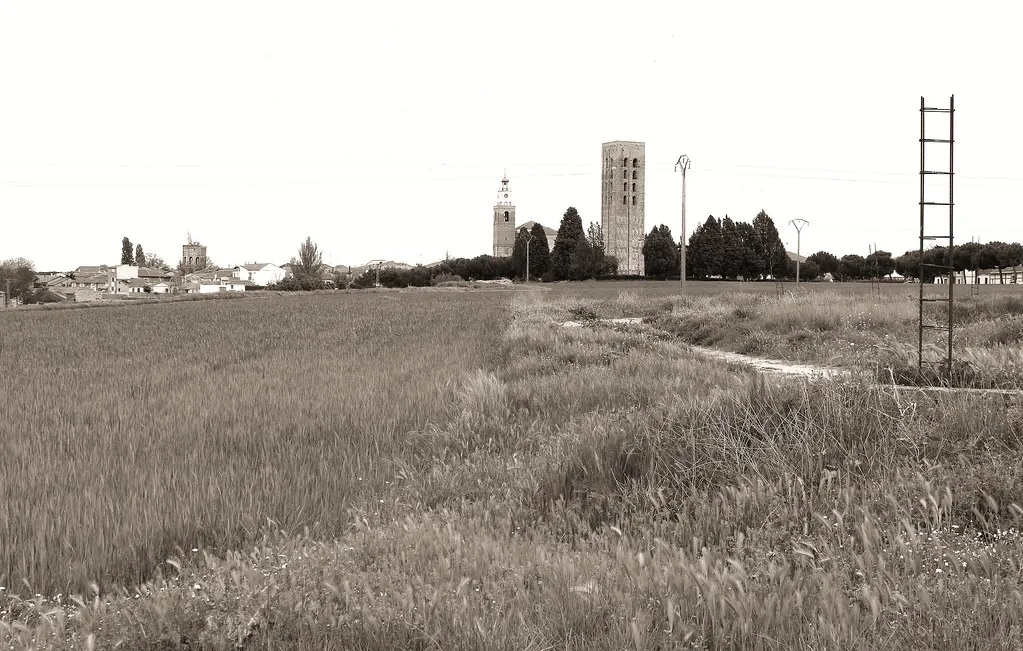
Añe is small, even by the standards of the Segovian plateau. A cluster of houses gathers around a square, and that is almost the whole settlement. Beyond it stretch open fields that shift in colour with the seasons: green in spring, golden when the cereal ripens, muted tones when the cold sets in.
The houses combine stone and adobe, with later alterations made when circumstances allowed. Nothing follows a perfect line. Some façades are carefully maintained, others show the wear left by many winters of wind sweeping across the plain.
This is the sort of place where you still see corrales, pajares and large wooden gates, reminders of what these homes were built for in the first place: living and working. The architecture reflects function more than display. Practical spaces once used for animals and storing grain remain part of the village landscape, even if their purpose has changed over time.
Everything feels compact. The square acts as the natural centre, with buildings arranged in a way that suggests gradual growth rather than a single plan. Añe does not present itself; it simply carries on.
The Church of San Juan Bautista
In the middle of the village stands the parish church, dedicated to San Juan Bautista. It is not monumental and does not attempt to be. Thick walls, restrained lines and a simple espadaña, the bell gable typical of many rural Spanish churches, rise above the structure with its bells.
Inside, older elements sit alongside later repairs. This is common in villages across the province of Segovia: buildings adapted over centuries without grand gestures, only the necessary work to keep them standing and in use.
From the square, it is worth walking over for a closer look. The interest lies less in any single feature and more in how the church fits into the whole. Its proportions, materials and modest presence match the scale of Añe itself. It anchors the centre without dominating it.
The church also reflects the continuity typical of small Castilian villages, where structures evolve gradually. Layers of time are visible, though never presented as spectacle.
Short Streets, Rural Details
A walk around Añe does not take long. In half an hour it is possible to cover every street without realising how quickly the time has passed.
The appeal lies in small details. Old metal grilles on corrales, wooden doors that have faced decades of winter weather, small windows set to protect interiors from the wind. There are houses being repaired and others that seem to be waiting for someone to return.
In certain corners, traces of former eras can still be made out. Eras, traditional threshing floors where grain was once processed, or open spaces linked to agricultural work hint at how life functioned here before most tasks were mechanised. These are not preserved as museum pieces. They remain part of the everyday fabric of the village.
Walking slowly makes these elements more apparent. The surfaces tell their own story through texture rather than explanation. Stone worn smooth in places, adobe patched over time, timber darkened by age. The village does not spell anything out, but it leaves clues.
Silence is part of the experience. There are no crowds to navigate, no obvious route to follow. The layout invites wandering without purpose, turning a corner simply to see what lies beyond it.
Paths Through the Cereal Fields
Step beyond the last houses and agricultural tracks begin almost immediately. These are long-established dirt paths linking villages across the Campiña Segoviana. For generations they were used by farmers with carts and later tractors.
There are no steep climbs or complex routes. The terrain is flat, typical of this stretch of the Meseta, Spain’s high central plateau. The pleasure comes from walking for a while and looking around. The landscape is completely open, and the horizon seems to move further away the more you advance.
Fields dominate in every direction. In spring they bring fresh colour; in summer the ripened cereal turns the land gold; in colder months the tones fade. The sky feels expansive, uninterrupted by woodland or hills.
Shade is scarce. When the heat builds, carrying water is advisable, as the sun falls directly on the plain with little to block it. Conditions shape how long a walk feels comfortable, and the environment leaves little room for improvisation.
These tracks are practical routes rather than marked trails. Their simplicity is part of their character. They connect one small settlement to another, reflecting the agricultural logic that has structured this region for centuries.
What to Expect From a Visit
Añe is not a place to fill an entire day with activities. It works better as a short stop, the kind made out of curiosity while travelling through the province of Segovia.
A stroll around the square, a look at the church of San Juan Bautista, a brief walk along the surrounding tracks. That is enough to understand how this part of the Meseta functions: very small villages, agriculture all around, and a calm that has become rare elsewhere.
There are no grand attractions and no attempt to reinvent the village for visitors. Añe remains what it is, without decoration and without trying to resemble anything else.
For those who enjoy observing small details and walking at an unhurried pace, it offers a clear example of rural life on the Segovian plain. The experience is understated. The value lies in the atmosphere, in the way the settlement sits among its fields and keeps to its own rhythm.
In Añe, the world does not stop. It simply moves more quietly.