Full Article
about Armuña
Municipality with paleontological sites and farming tradition; it preserves a notable Renaissance church.
Ocultar artículo Leer artículo completo
The church bell strikes noon, yet nobody stirs. Not because Armuna's inhabitants are tardy, but because they're scattered across wheat fields that stretch beyond sight, working to a rhythm set centuries before British summer time. At 905 metres above sea level, this Segovian village operates on agricultural hours, where the sun's position matters more than any clock.
Armuna sits suspended between earth and sky, high enough that Madrid's heat feels like someone else's problem. The altitude brings clarity: on good days you can watch tractors crawling across neighbouring hills like mechanical beetles, their engines reduced to faint buzzes by distance. Winter arrives early here, sometimes bringing snow that isolates the village for days. Summer afternoons bake the limestone houses white-hot, while nights cool enough to warrant a jumper even in August.
Stone, Straw and Silence
The village architecture tells its own straightforward story. Local limestone walls, thick enough to moderate the extreme temperatures, support terracotta roofs weathered to the colour of autumn soil. Wooden balconies, practical rather than ornate, project over narrow lanes where passing cars must fold their mirrors to proceed. Some doorways still bear the carved heraldic shields of families who prospered during Spain's wheat boom decades, though their descendants have mostly departed for Valladolid or Madrid.
Walking these streets reveals Armuna's honest dimensions. The population hovers around 244 souls, sufficient to maintain the bakery and the bar, insufficient to justify a petrol station or cash machine. Locals nod politely at strangers, neither effusive nor hostile, carrying on conversations about rainfall predictions and the price of barley. The pace matches the landscape: unhurried, methodical, sustainable.
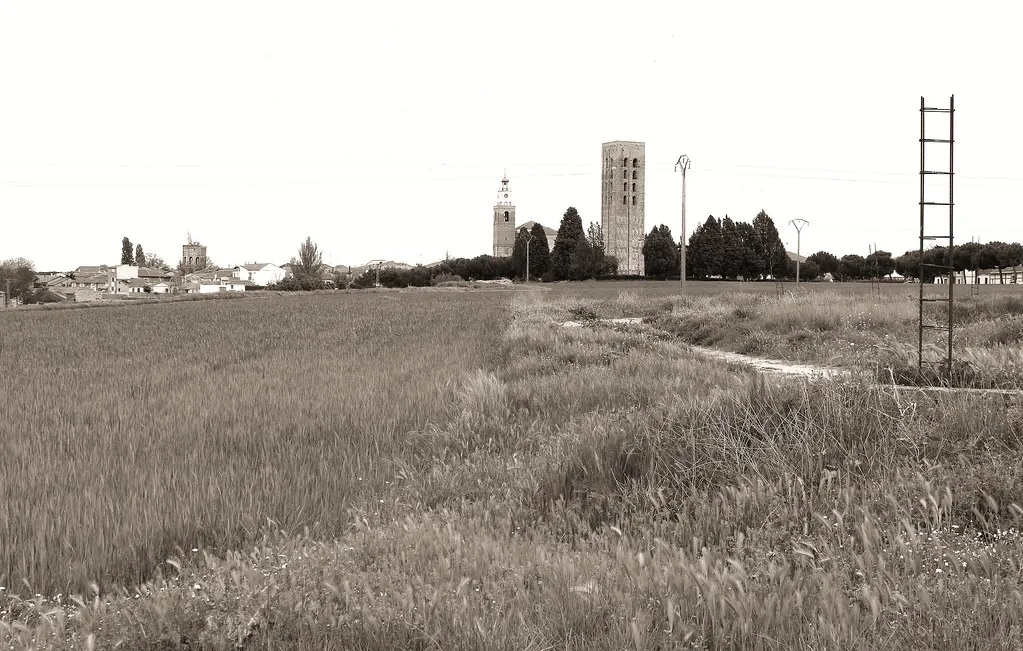
The parish church anchors everything, its squat tower visible from every approach road. Built in phases between the sixteenth and nineteenth centuries, it shows practical adaptations to changing circumstances. Where funds ran short, brick replaced stone. Where the congregation shrank, side chapels were sealed off to reduce heating costs. These modifications tell more truth than any guidebook about rural Spain's economic cycles.
The Geometry of Wheat
Armuna's real monument lies outside the village proper. The surrounding agricultural mosaic, divided into small plots by dry-stone walls and hedgerows, creates a pattern that shifts colour with the seasons. Spring brings an almost violent green that seems too vivid for the muted landscape. By July, the wheat ripens to gold that ripples like water when the wind crosses it. Autumn reveals the soil itself: rich browns and ochres that painters have tried and failed to capture accurately.
These fields aren't scenery for tourists; they're someone's livelihood. The footpaths that thread between them follow ancient rights of way, marked by granite posts bearing barely legible initials. Walkers share these routes with farm vehicles and the occasional shepherd moving sheep between pastures. The going underfoot varies from compressed earth to fist-sized stones that turn ankles easily. Proper boots aren't affectation here; they're essential.
Birdlife rewards the patient observer. Steppe species, pushed out of more intensively farmed areas, persist in the field margins. Grey harriers quarter the ground methodically, while great bustards occasionally reveal themselves as unexpected shapes among the wheat stubble. Dawn and dusk provide the best opportunities, when the birds are active and the light turns the landscape photographic without improving it beyond recognition.
Eating What the Land Provides
The village bar serves as social hub, information exchange and informal employment centre. Opening hours remain flexible, theoretically 8am-10pm but practically whenever the owner's family commitments allow. The menu reflects local agriculture without pretension: migas (fried breadcrumbs with garlic and pork belly) appear frequently, utilising yesterday's bread. Lamb features heavily, slow-roasted until it yields to a fork's pressure, served with potatoes that taste definitively of soil rather than supermarket uniformity.
For vegetables, you're mostly out of luck. The high, dry climate favours cereals and grazing animals over market gardens. What grows here grows tough: cardoon thistles that require dedicated tools to harvest, beans that need overnight soaking, potatoes small and waxy from short growing seasons. This isn't poor cooking; it's cooking adapted to environmental reality over centuries.
Those requiring vegetarian options or fancy coffee should drive to Segovia, thirty kilometres east. The journey takes forty-five minutes on roads that demand attention; Spanish drivers treat speed limits as suggestions rather than rules. Segovia offers the full range of dining options, from Michelin-starred establishments to chain restaurants that taste identical to their British counterparts, for better or worse.
When to Arrive, When to Leave
Spring brings the village to life, when overnight temperatures finally stay above freezing and wildflowers colonise the field margins. April's weather remains unpredictable: bright sunshine can collapse into hail within an hour. The village's elevation means even May mornings require layers that peel off by lunchtime. This season suits walkers perfectly, before the intense summer heat that renders midday activity impossible.
Autumn offers perhaps the best compromise. September maintains summer's long daylight while losing the brutal temperatures. The harvest creates constant activity as combines work into darkness, their headlights creating theatrical scenes across the fields. October brings mushroom foraging opportunities for those who know where to look; the local varieties require careful identification but reward knowledge with flavours that make supermarket fungi taste like cardboard.
Winter visits demand specific reasons. The landscape becomes monochromatic, beautiful in its severity but offering little shelter from weather that arrives straight from the Meseta's heart. Snow isn't guaranteed but neither is it remarkable when it comes. The village's single plough clears main roads eventually, though "eventually" operates on a timescale that frustrates British expectations of prompt service.
Summer works for those content to adopt Spanish rhythms: activity before 11am, siesta until 5pm, evening pursuits until midnight. The altitude moderates temperatures compared to Madrid's furnace, but July afternoons still hit 35°C in the shade. Accommodation within Armuna itself doesn't exist; visitors base themselves in neighbouring villages or Segovia, commuting in for day visits.
Armuna offers no Instagram moments, no souvenir shops, no curated experiences. It provides something increasingly rare: a place where agriculture continues because it makes sense, not because it photographs well. The village rewards those comfortable with their own company, content to walk without destination, happy to sit in silence watching wheat grow. Everyone else should probably stick to the coast.