Full Article
about Bercial
Small municipality near the abbey of Párraces; quiet cereal plain setting
Hide article Read full article
Evenings on the Campiña Segoviana
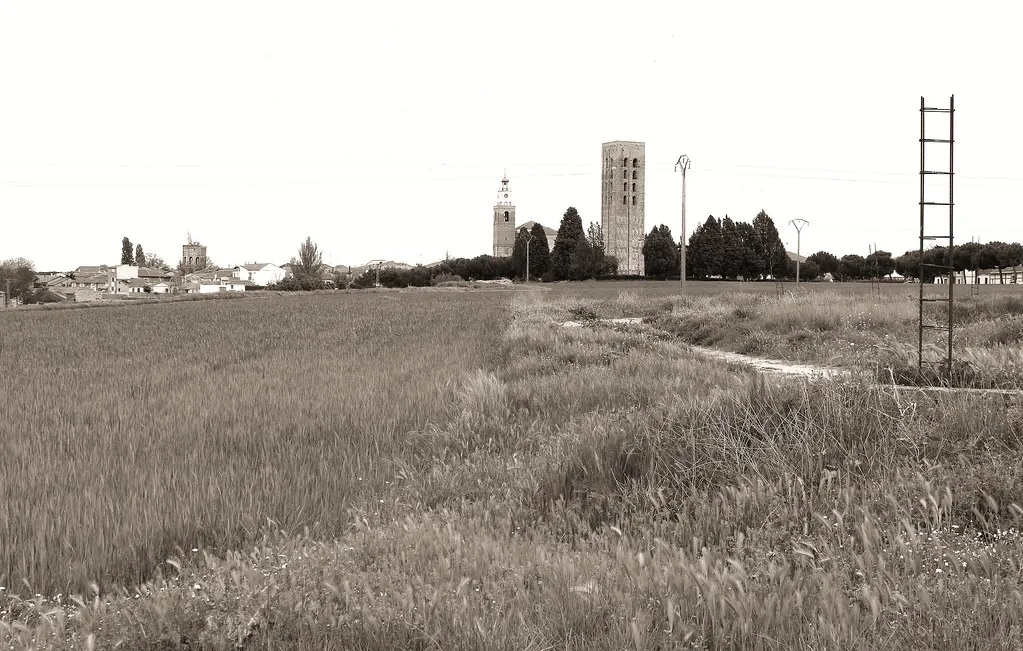
At sunset, the land around Bercial turns ochre, almost dusty, and the light falls sideways across the cereal fields. From the small square, more an open space between low houses than a formal plaza, there are moments when the only sounds are the crack of a dry branch or the engine of a tractor returning slowly along the track. It is then that tourism in Bercial makes sense. Silence here is not a selling point. It is simply the normal way of being.
Bercial lies just over 11 kilometres west of Segovia, in the heart of the Campiña Segoviana, a wide agricultural plain in Castilla Leon. The village stands on flat ground at around 980 metres above sea level, surrounded by fields that shift dramatically with the seasons. In spring the landscape turns green and damp after the rains. By July it flattens into an unbroken sweep of gold, moving softly in the wind.
This is farming country. The horizon is broad, the sky feels close and the rhythm of life follows the fields.
A Small Village, Nothing Superfluous
The centre is compact and can be crossed in a matter of minutes. Stone houses sit alongside adobe walls, with curved clay roof tiles and yards where tools or a few animals are still kept. Some homes have been restored in recent years. Others retain the sober look typical of cereal-growing villages, with small windows and black iron grilles that heat up under the sun.
The parish church, dedicated to San Juan Bautista, occupies one of the central points of the village. It is a simple building, in keeping with the size of the community. Inside, the atmosphere is calm and slightly cool even in summer. The altarpiece seen today is generally dated to the 18th century, yet what stands out most is the care with which residents maintain the space.
There is no long checklist of sights. Time here is better spent walking slowly and noticing details: a worn wooden gate, an old cart propped against a wall, the hollow sound of the bells if they happen to ring on the hour.
Tracks Through the Cereal Fields
The landscape around Bercial is open. There are no dense woods or dramatic slopes, but a succession of gentle rises and cultivated plots stretching towards the horizon.
Several agricultural tracks leave from the edges of the village, linking Bercial with other small settlements across the plain. They are not signposted as official routes, yet they are easy to follow, having been used for decades for farm work. Walking along them has a repetitive, steady quality: pale earth underfoot, the smell of dry straw once the cereal has been harvested and, from time to time, a solitary holm oak breaking the line of the fields.
To the north, a few old dovecotes still stand, some half-ruined. Built from mud and brick, they were part of the rural economy for centuries. Many are now abandoned, but they continue to mark the landscape.
Anyone coming to walk or cycle would do well to avoid the middle hours of summer. Shade is scarce and the heat falls directly on the tracks.
Light, Wind and Long Horizons
One of the defining features of this area is the sense of space. From the small rises near the village, the land stretches out with barely any interruption. On cloudy days the sky turns pale grey and seems even larger. When the sun is low, the stubble fields reflect an almost metallic light.
Spring is a good time to explore the tracks at an unhurried pace. The fields show different shades of green and birds typical of open country are often heard. In autumn, the tones become more muted and the wind lifts fine dust from the paths.
Cycling works well here because the agricultural tracks are usually compacted. After rain, however, muddy stretches can appear and make progress slower.
Food and Practicalities
Bercial is small and services are limited. Occasionally there may be a place open on certain days of the week, but this does not always coincide with a visit. It is sensible to arrive with water and something to eat if planning to spend several hours in the area.
The cooking associated with this part of Segovia follows the traditions of inland Castile: hearty dishes, pulses, bread-based soups and, when there is the opportunity, roast meats. In nearby villages it is easier to find somewhere to sit down for a proper meal.
Festive Days and Everyday Calm
The festive calendar remains closely tied to religious celebrations. San Juan Bautista is honoured at the beginning of summer, and there are also days dedicated to the Virgen del Rosario around September. During these periods the rhythm of the village shifts. Relatives who live elsewhere return, long tables are set up in the street and music is heard later than usual.
Outside those dates, Bercial quickly returns to its everyday calm.
Visitors expecting major monuments or a packed programme of activities may not linger long. Bercial works differently. It offers a chance to observe how an agricultural village in the Campiña Segoviana organises itself today: tractors coming and going at different hours, houses closed through the winter, fields that set the pace of the year.
There is little spectacle, but plenty of space. And in the wide light of the Castilian plain, that is the point.