Full Article
about Bernardos
Known for its slate quarries and archaeological remains; a town with an industrial and historic identity.
Hide article Read full article
Arriving and first impressions
Anyone planning a visit to Bernardos should think about the car first. It is the most practical way to get there and to move around. Parking is simple: wide streets at the entrance to the village usually have space, and there are also spots near the main square. There are no regulated parking zones or large car parks. During local festivals, the centre fills up quickly, so it may be necessary to leave the car a little further out and walk down.
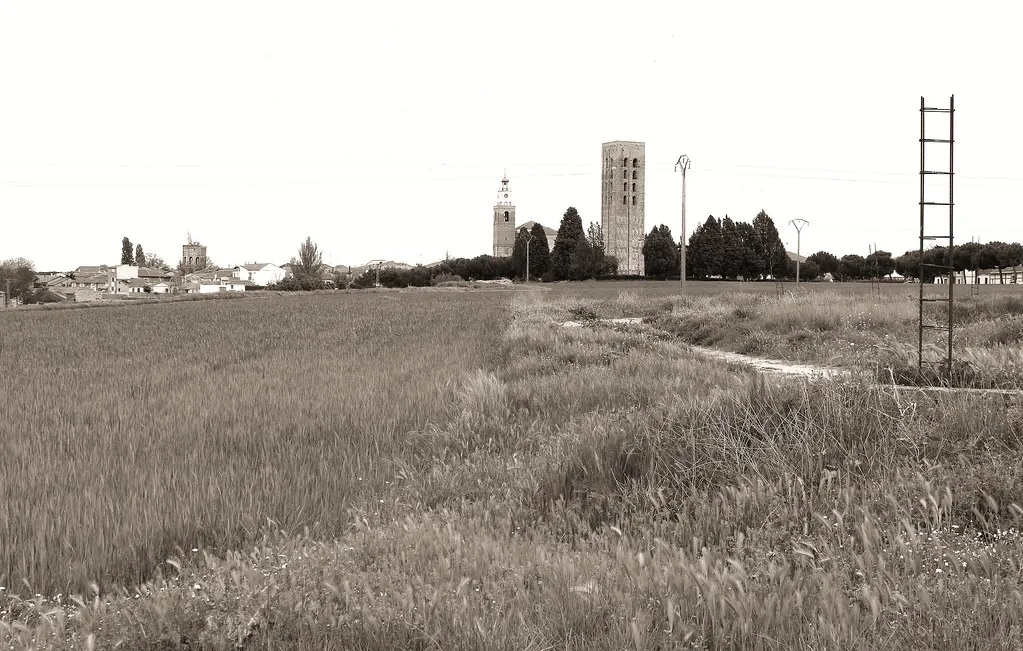
Bernardos lies about 25 minutes from Segovia and has just over four hundred residents. The dominant sound here is agricultural machinery rather than traffic. The surroundings are defined by cereal fields and wide, open sky, with little to interrupt the view.
Getting around the village
The village is small enough to explore in a short time. Streets are short and mostly flat, apart from the uphill stretch towards the church. Half an hour is enough to get a clear sense of the place.
There is no tourist signage and no marked routes within the village. It does not really need them. A simple wander without a fixed plan works just as well.
The church and the urban layout
The Iglesia de San Juan Bautista stands on the higher part of the village. It is the one building that rises slightly above the rooftops and draws the eye. Opening hours are often limited, so anyone hoping to go inside should check in advance.
Beyond the church, the layout reflects what is typical in many villages across the Segovian countryside. Houses are built in stone or adobe, often with large gates and interior courtyards. Several properties still have underground cellars. Some remain in use, others have fallen out of use over time.
There are no grand buildings or monumental squares. Bernardos is an agricultural village, and that character shapes its appearance.
Paths through open fields
Agricultural tracks begin as soon as you leave the built-up area. They are wide and easy to follow, with no technical difficulty.
The landscape is completely open. Cereal fields dominate for most of the year. In spring, the colour turns greener; in summer, it quickly shifts to gold. Anyone who enjoys walking without the sound of passing cars will find the setting suits that well.
At night, the sky is often clearly visible. Artificial light in the surrounding area is limited, which helps keep the darkness intact.
Festivals and daily life
The main local festivities usually take place in August, although the exact dates vary each year. They include processions, activities in the square and gatherings among neighbours. This is when the village feels most lively.
For the rest of the year, life moves at a calm pace. Agricultural work, houses opening up when the weather is good, and not much else define the rhythm of daily life.
Getting there and local services
The road from Segovia to Bernardos runs along secondary routes. The surface is generally in good condition, but this is farming country. Tractors and trailers are a common sight, so it makes sense to drive without rushing.
The village has basic day-to-day services. There may be a small shop and a few bars where locals meet. Anyone looking for a wider range of services or a fuller day of activities will usually head elsewhere in the surrounding area.
A simple approach works best here: arrive without a fixed plan, walk for a while, take in the landscape, then continue through the Segovian countryside. Bernardos does not aim to offer more than that, and it does not need to.