Full Article
about Cantimpalos
World-famous for its chorizo; an industrial town with a strong sausage-making tradition.
Hide article Read full article
Early in the morning, when the air still carries a chill even in spring, tourism in Cantimpalos begins with a very specific smell: paprika and meat curing slowly. It drifts out from the drying sheds and lingers in the village’s narrow streets. This is not an occasional scent. It forms part of the landscape just as much as the cereal fields that surround the settlement.
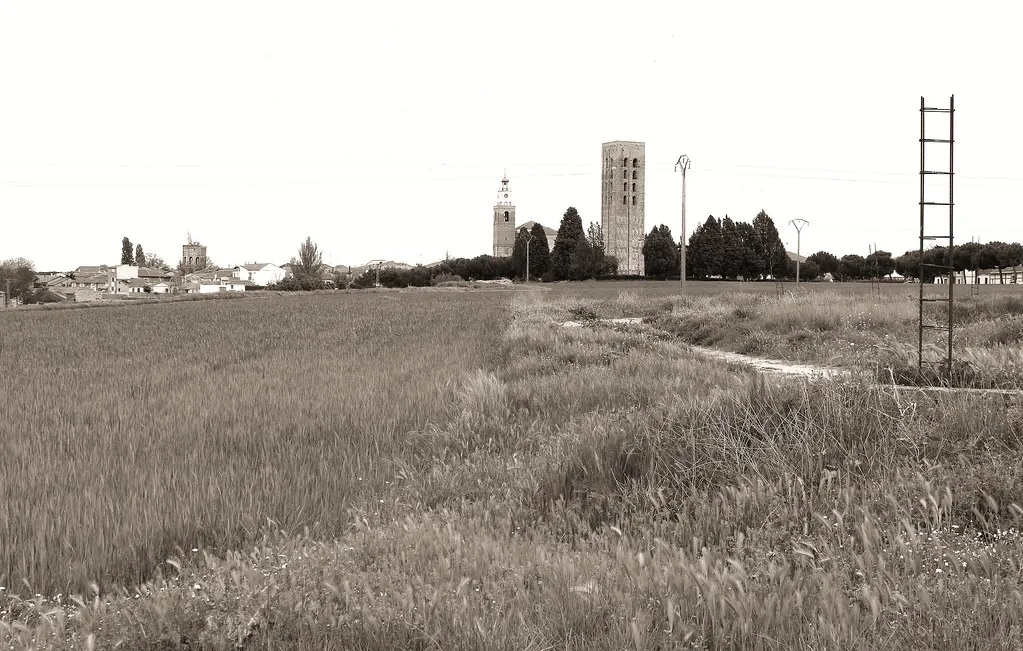
Around thirty kilometres from Segovia, in the heart of the Campiña Segoviana, Cantimpalos stands on a wide plain of long horizons and muted colours for much of the year. At roughly 900 metres above sea level, the climate is usually dry, with cold winters. Those conditions have historically helped with the curing of cured meats. The link between climate, landscape and trade is still visible in everyday life here.
Quiet streets on the Meseta
A walk through Cantimpalos follows a simple layout of straight streets and low houses. Brick and adobe dominate, along with ochre tones that blend into the surrounding plain. The Plaza Mayor preserves its traditional arcades, with stone columns and wrought-iron balconies looking onto the central space where much of daily life unfolds.
By mid-morning there is the sound of a delivery van, neighbours greeting each other from doorways, and the sharp clatter of a metal shutter being raised. This is not a place designed for rushing around. The rhythm is set by working hours and the demands of the fields.
The setting belongs firmly to the Meseta, Spain’s high central plateau. The architecture reflects that environment, practical rather than ornate, shaped by weather and agricultural routines. Life here moves at a steady pace that mirrors the open land beyond the last houses.
Chorizo and the drying sheds
To speak of Cantimpalos is to speak of its chorizo. The Indicación Geográfica Protegida, a protected designation that guarantees origin and production standards, was created here and remains central to the local economy. Small drying sheds still operate, curing the sausages with the help of the cold, dry air of the plateau.
From the outside, these buildings are often recognisable by windows covered with slats or latticework. They are designed to let air circulate while limiting direct light. On cold winter days, when the air descends clear from the nearby sierra, the smell of paprika intensifies in certain streets.
For anyone curious about this craft, it is best to ask at the town hall or speak to local residents. Some facilities can occasionally be visited, although they are not always open to the public. Production continues to be a working activity rather than a staged attraction, which shapes how and when it can be seen.
The presence of the chorizo industry is not confined to workshops. It influences conversations, schedules and the local economy. The identity of Cantimpalos is closely tied to this product, and that connection is evident without the need for explanation boards or visitor centres.
The landscape of the Campiña Segoviana
Step beyond the built-up area and the cereal fields appear almost immediately. In spring, green covers most of the landscape. By summer, the dry yellow so typical of much of Castilla takes over. Isolated holm oaks remain between plots, along with small pine groves that interrupt the flat horizon.
There are agricultural tracks suitable for walking or cycling, with no significant slopes. They are not marked as official routes, yet many residents use them daily. On clear days, especially after a cold night, visibility stretches for miles. The dominant sound is the wind moving through the grain.
Shade is scarce across the plain. In summer it is wise to avoid the middle of the day, when the sun falls hard and the open terrain offers little protection. The landscape may appear simple at first glance, but its variations in light and colour become more apparent the longer one spends there.
The Campiña Segoviana has a quiet character. Its wide views and open skies define the experience as much as any building within the village. The sense of space is constant, whether standing in the Plaza Mayor or following a dirt track between fields.
Eating in Cantimpalos
Local cooking revolves around products from the matanza, the traditional pig slaughter that has long structured rural food culture in this part of Spain. Chorizo features in many dishes, yet it is not the only thing on the table. In the surrounding area, judiones, large white beans typical of the province, are common. Sopas castellanas, a garlic-based bread soup, and cordero asado, roast lamb, also appear frequently.
These are hearty plates suited to a climate where winters can be long. Portions tend to be generous, and the style of cooking remains closely linked to what has been prepared in local homes for generations. Recipes prioritise substance and flavour over presentation.
Food here reflects the agricultural setting. Ingredients are shaped by what the land supports and by preservation techniques developed for colder months. The result is a cuisine that makes sense within its environment.
A pause near Segovia
Cantimpalos lies about a thirty-minute drive from Segovia, making it an easy detour from the provincial capital. Many visitors come precisely in this way: a morning stroll through the village, the purchase of some local produce, and then a return to the city.
Its proximity to Segovia means it works well as a short stop rather than a long stay. The appeal lies in slowing down for a few hours and experiencing the atmosphere of the Campiña Segoviana without travelling far from more frequented destinations.
Fiestas de San Pedro
At the end of June, the fiestas in honour of San Pedro take place. During those days, the atmosphere changes noticeably. Open-air dances, activities in the square and extended family gatherings fill the summer nights.
Anyone seeking complete quiet might prefer a different week. Those interested in seeing the village with streets full of residents and a livelier mood will find this the right moment. The contrast with the usual calm underlines how closely community life is woven into the public spaces of Cantimpalos.
In every season, the defining elements remain consistent: the dry air of the plateau, the broad fields of the Campiña Segoviana, and the scent of paprika that marks the village out from afar.