Full Article
about Donhierro
Municipality bordering Ávila; flat landscape with irrigated crops
Hide article Read full article
Donhierro: Cuando el GPS dice que hay un pueblo, pero tus ojos dudan
Cruzas la Campiña Segoviana y el paisaje es una repetición de rectas, campos de cereal y cielo. Es el tipo de carretera donde pones el piloto automático mental. De pronto, aparece un grupo de casas tan compacto que parece un error en el mapa. Eso es Donhierro. No hay rotonda de entrada con cartel fotogénico; solo un desvío que tomas si no te distraes.
Aquí viven unas setenta personas. La agricultura no es una postal, es lo que hay: tractores aparcados en la calle como si fueran coches, corrales con sonidos de gallinas, puertas de maderas viejas que dan a patios con herramientas. El ritmo es el del campo, punto. No busques tiendas de souvenirs; busca el silencio entre las labores.
Un paseo de diez minutos (y ya está)
Dar una vuelta completa te lleva lo que un café largo. Las calles son anchas y tranquilas, con casas de adobe y ladrillo, muchas con paredes encaladas. No es un conjunto histórico monumental; es un pueblo funcional donde se ve cómo se ha vivido aquí siempre. La gracia está en los detalles que pasan desapercibidos: un majano de piedras amontonadas al lado de un campo, una antigua palomera reconvertida en trastero, las persianas verdes de una casa que contrastan con el ocre de la tierra.
No hay prisa. Lo más rápido que verás moverse será quizá un gato cruzando la calle.
La torre que todo lo vigila
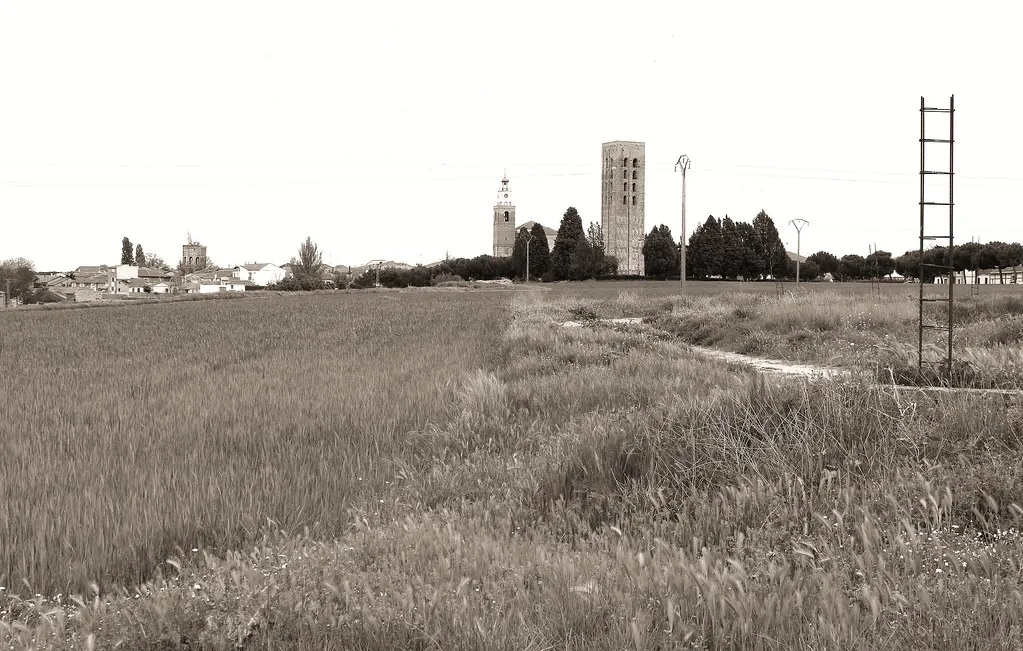
El único edificio que rompe la horizontalidad es la iglesia de San Andrés. Su torre sobresale entre los tejados bajos y la ves desde cualquier punto. Es del siglo XVI, dicen, con esa sobriedad de piedra que parece surgir del mismo terreno.
Por dentro no te vas a llevar un soplo artístico. Es austera. Pero entiendes su función al instante: en un lugar así, la iglesia es el punto físico y social donde se junta todo el pueblo. Es el ancla. Si pasas y está abierta (cosa rara), entra un momento. Se nota el uso diario, no el turístico.
Los campos: eso es todo
Olvida bosques o barrancos. El paisaje aquí son llanuras inmensas de cereal. Es lo único que hay hasta donde alcanza la vista. Puede sonar monótono, pero tiene su aquel si le das tiempo.
En primavera es un mar verde ondeante; en verano, se convierte en oro puro antes de la cosecha; en invierno, se vuelve una planicie marrón y despejada donde el viento silba sin obstáculos. La belleza está en la escala y en la luz. Los atardeceres aquí no tienen montañas que los corten; son franjas limpias de color sobre un horizonte perfectamente recto.
Andar sin rumbo (el mejor plan)
No hay rutas señalizadas ni paneles informativos. Lo que hay son caminos agrícolas—de tierra compactada—que salen del pueblo hacia ninguna parte en concreto. Son para los tractores, pero tú también puedes usarlos.
Elige uno y camina. No te perderás porque ves el campanario a kilómetros. A veces encuentras restos del pasado rural: un chozo medio derruido donde guardaban herramientas, o algún nido de cigüeña en un poste eléctrico solitario. Si tienes paciencia y buenos prismáticos, puedes avistar avutardas o aguiluchos sobre los campos abiertos.
Es caminar por caminar, sin más pretensión que estirar las piernas y sentir la inmensidad plana.
Comer: tienes que moverte
En Donhierro no hay bares ni restaurantes. Cero. Para comer algo típico hay que ir a pueblos cercanos más grandes dentro de la provincia.
La cocina segoviana manda: lechazo asado al horno de leña, judiones, embutidos de la zona… Es comida contundente para gente que trabaja el campo. Si vas en otoño y ha llovido bien, pregunta por los níscalos. Suelen saber dónde cogerlos.
Verano: cuando el pueblo respira
Durante gran parte del año, Donhierro parece dormido. Pero en agosto, cambia. Llegan los hijos del pueblo que viven fuera y se llena de vida familiar. Las fiestas patronales de San Andrés caen en este periodo. Hay procesión, música en la plaza y comidas comunales. No es un espectáculo para forasteros; es como estar invitado a la reunión familiar de otra persona. Auténtico, sin comillas.
Mi consejo final
¿Vale la pena venir expresamente? No, si buscas emociones fuertes o checklist turístico. Pero si estás recorriendo la Campiña Segoviana y quieres entender cómo late realmente esta tierra, para aquí una hora. Aparca junto a la iglesia, date ese paseo corto por las calles, sal al campo por uno de los caminos y mira al horizonte. Luego sigue tu ruta. Donhierro no te va a sorprender; te va a explicar, sin palabras, por qué Castilla es así de ancha y así de tranquila