Demografía Santa Cruz (España).PNG
Wikimedia Commons · Public domain
Castilla y León · Cradle of Kingdoms

Fuente de Santa Cruz

The wind arrives before anything else. At 825 metres above sea level, on the rolling plateau of Segovia's cereal belt, it sweeps across fields of w...

105 inhabitants · INE 2025
825m Altitude

Why Visit

Mountain Church of the Exaltación de la Cruz Cultural visits

Best Time to Visit

summer

Feast of the Exaltación de la Cruz (September) septiembre

Things to See & Do
in Fuente de Santa Cruz

Heritage

  • Church of the Exaltación de la Cruz
  • Cloister

Activities

  • Cultural visits
  • Walks through the countryside

Festivals
& & Traditions

Fecha septiembre

Fiestas de la Exaltación de la Cruz (septiembre)

Las fiestas locales son el momento perfecto para vivir la autenticidad de Fuente de Santa Cruz.

Full Article
about Fuente de Santa Cruz

Agricultural municipality with a church that belonged to the Order of San Juan; history and quiet.

Ocultar artículo Leer artículo completo

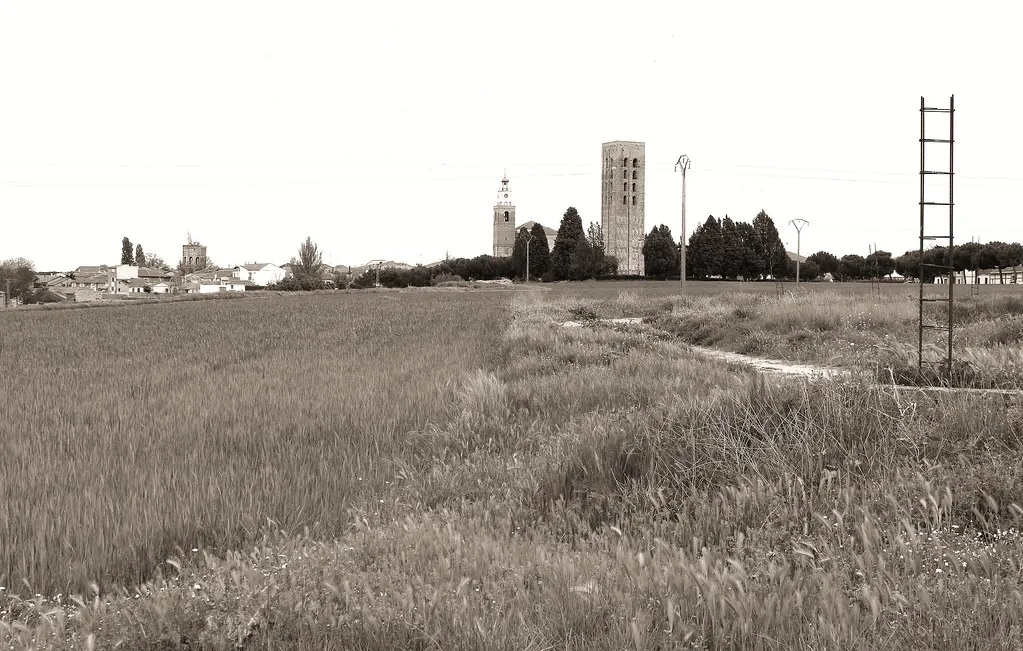
The wind arrives before anything else. At 825 metres above sea level, on the rolling plateau of Segovia's cereal belt, it sweeps across fields of wheat and barley with nothing much to stop it. Stand on the single main street of Fuente de Santa Cruz and you'll feel it tugging at your jacket, carrying the scent of dry earth and distant rain. This is a village where meteorology matters more than monuments, where the horizon stretches so wide that clouds cast shadows the size of towns.

With barely a hundred residents, Fuente de Santa Cruz doesn't so much occupy the landscape as politely interrupt it. The houses—stone below, adobe above—huddle together as if for warmth against the continental climate that delivers freezing winters and furnace-hot summers. At dawn in January, frost feathers across every surface; by August midday, the asphalt softens underfoot and the only sensible place is the single bar's dim interior, where elderly men discuss rainfall figures with the precision of accountants.

The village takes its name from a medieval fountain that once guided pilgrims across these austere plains. That same spring still flows—though you'd be forgiven for missing it, tucked beside the modern water trough where farmers fill containers for their livestock. There's no interpretive board, no gift shop selling miniature replicas. Just water, stone, and the collective memory of centuries.

Walking Through Horizontal Country

Maps here require mental recalibration. The countryside around Fuente de Santa Cruz operates on what locals call "horizontality"—an almost Dutch flatness punctuated by gentle swells rather than proper hills. It's walking country, but not as British ramblers understand it. There are no stiles, no waymarked paths, no reassuring yellow arrows. Instead, a grid of agricultural tracks extends from the village like spokes, wide enough for combine harvesters, bordered by rough stone walls and the occasional holm oak.

These tracks connect to neighbouring villages—Tabanera la Luenga lies 4 kilometres east, Fuentepiñel 6 kilometres south—but signposts appear sporadically, sometimes pointing to places that no longer exist. The prudent carry GPS, or at minimum, download offline maps. Morning walks deliver the best conditions: temperatures remain manageable even in July, and the low sun transforms wheat stubble into fields of beaten gold. Return by eleven o'clock or risk exposure that would make a Mallorca beach seem temperate.

Birdlife provides constant distraction. Crested larks rise from furrows with mechanical wing-beats; hen harriers quarter the fields methodically, like aerial sheepdogs. On fence posts, little owls stare back with expressionless concentration. The absence of traffic noise—perhaps three vehicles per hour—means every sound carries: the distant bleat of sheep, the hydraulic hiss of a tractor three fields away, the cry of a buzzard circling so high it's barely visible.

Stone, Mud and Practical Realities

The parish church of Our Lady of the Assumption squats in the main square like a weathered toad. Built from the same honey-coloured limestone as the houses, it exemplifies rural Castilian architecture: thick walls, small windows, a bell tower that serves more as lookout than campanile. The interior, when open, reveals a single nave with a wooden roof blackened by centuries of candle smoke. The altar piece dates from the 17th century, though restorations in 1897 and 1974 have left it with the aesthetic consistency of a much-patched quilt.

Don't expect guided tours. If the church is locked—as happens frequently—knock at the house opposite. The owner keeps the key and will open up for anyone showing reasonable interest, though conversation remains limited to agricultural topics regardless of your Spanish vocabulary. Photography is permitted; donations are not expected but gratefully received, particularly if offered in coins rather than the increasingly useless five-euro note.

Around the church, village architecture tells a story of continuous adaptation. A 16th-century house sports modern PVC windows; next door, a family has inserted a garage door into what was clearly once a stable. Rooflines sag under terracotta tiles replaced piecemeal over decades. Some properties stand abandoned, their wooden balconies collapsing inward like broken birdcages. Others have been restored by weekenders from Madrid, who've painted their shutters an alarming shade of municipal blue that clashes magnificently with the ochre walls.

Eating, Sleeping and the Art of Forward Planning

Practicalities require military precision. Fuente de Santa Cruz contains no hotel, no guesthouse, not even a village shop. The solitary bar opens at 7 am for coffee and serves lunch from 1:30 pm sharp; arrive at 3 o'clock and you'll find the metal shutters already descending. The menu offers precisely three options: lentils with chorizo, roast lamb, or migas (fried breadcrumbs with garlic and grapes). All cost €12 including wine, bread and coffee. Vegetarians should adjust expectations or travel with emergency rations.

For supplies, Cuéllar lies 18 kilometres north on the CL-601—a drive that feels longer than it is through featureless grain fields. The supermarket there stocks everything from local cheese to British teabags, though why anyone would travel to rural Castile for Yorkshire Gold remains unexplained. Fill up with petrol while you're there; the village pump closed in 2008 and the nearest fuel is now 25 kilometres away in Carbonero el Mayor.

Accommodation options cluster around the medieval town of Cuéllar, where the Parador hotel occupies a restored castle (doubles from €120, book well ahead for weekends). Simpler rural houses in surrounding villages rent for €60-80 nightly, often with minimum two-night stays. Wild camping is technically illegal though tolerated if you're discreet—park well away from tracks, carry out everything, and don't even consider lighting fires during the tinder-dry summer months.

Seasonal Mathematics

Timing matters more here than almost anywhere else in Spain. Winter brings crystalline skies and the possibility of snow, turning the landscape into a study of black and white: dark tree lines against bleached fields, white houses against leaden clouds. Temperatures drop to -10°C at night; heating in rural houses runs on expensive butane bottles that empty with alarming speed. Rental properties often charge extra for fuel—check before booking.

Spring delivers the region's finest moments. From mid-April to late May, green wheat ripples like ocean waves, poppies splash red across field margins, and the air carries a sweetness impossible to bottle. This is also when village life emerges from hibernation—neighbours stop to chat instead of hurrying inside, and the bar extends its afternoon hours to accommodate workers celebrating the end of pruning season.

Summer demands strategy. By July, shade becomes currency; the wise plan activities for dawn or the long evening light that lingers past 9 pm. Afternoons are for siesta or escape to higher ground—the Sierra de Guadarrama lies 40 kilometres south, where altitude provides relief. Autumn brings harvest and the smell of burning stubble, plus the annual agricultural fair in Cuéllar featuring livestock competitions that attract serious breeders and curious visitors in equal measure.

Leaving Fuente de Santa Cruz requires similar forward planning. The daily bus to Segovia departs at 6:15 am and returns at 8 pm—miss it and you're hitchhiking or calling an expensive taxi. The train from Segovia to Madrid takes 28 minutes on the high-speed service, making day-trips theoretically possible though exhausting. Most visitors come by car, navigating the CL-601 that slices across the plateau with hypnotic straightness. Watch for wild boar at dusk; they emerge from the oak groves to raid wheat fields and have minimal road sense.

This is not a destination for ticking off sights. Fuente de Santa Cruz offers instead what mass tourism has largely erased: the chance to experience rural Spain as functioning reality rather than folkloric performance. Come prepared for silence, for vast skies, for conversations that begin with weather and end with soil composition. Pack patience alongside your walking boots. The village gives little readily—but for those willing to adjust to its rhythms, it provides something increasingly rare: space to think, room to breathe, and the slow revelation that horizontal country contains vertical depths for anyone prepared to look.

Key Facts

Region
Castilla y León
District
Campiña Segoviana
INE Code
40082
Coast
No
Mountain
Yes
Season
summer

Livability & Services

Key data for living or remote work

2024
Connectivity5G available
HealthcareHospital 18 km away
Housing~5€/m² rent · Affordable
CoastBeach nearby
Sources: INE, CNMC, Ministry of Health, AEMET

Planning Your Visit?

Discover more villages in the Campiña Segoviana.

View full region →

More villages in Campiña Segoviana

Traveler Reviews