Full Article
about Garcillán
Growing town near the capital; known for its chapel and festivals
Hide article Read full article
Morning light in the Campiña Segoviana
At nine in the morning in Garcillán, the air still holds a trace of damp earth. From the main square, light filters slowly between balconies and settles on façades of adobe and stone, where muted ochres sit alongside greys. Little disturbs the stillness at that hour. A door opens, a car starts, and beyond it all lies the low murmur of the surrounding fields, a broad cereal plain that shifts in colour with the seasons.
Garcillán sits in the Campiña Segoviana, about 900 metres above sea level, with just over five hundred residents. It is a small, agricultural settlement where the layout of many streets responds more to working life than to any visitor-friendly plan. There are no large monumental landmarks. Interest lies instead in quieter details: the mix of adobe, brick and timber in older houses, or the courtyards that still open out behind them.
San Andrés and the village centre
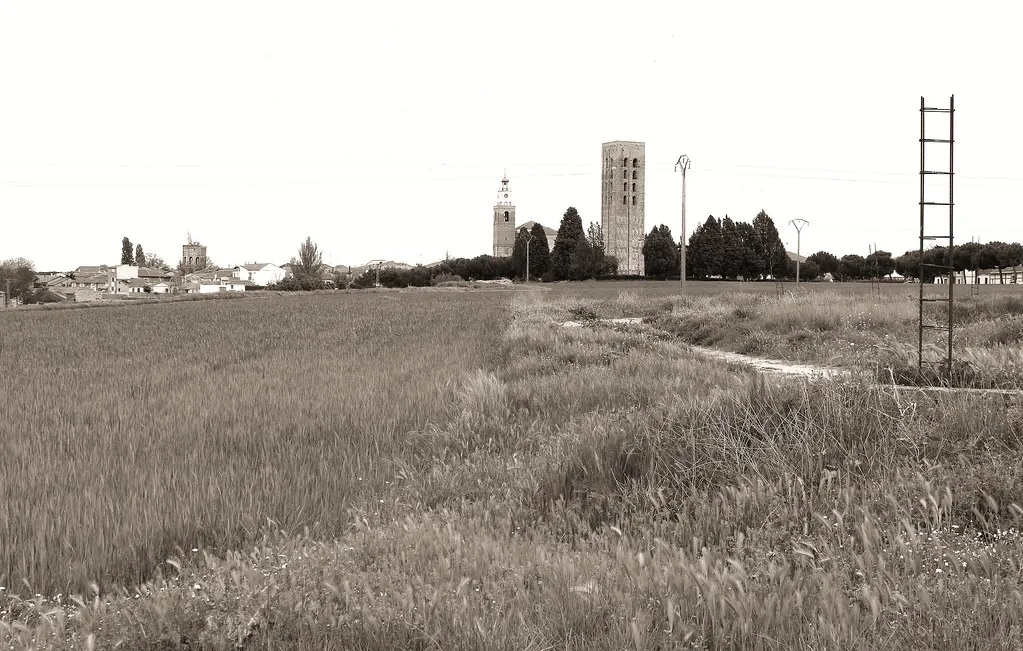
The parish church of San Andrés marks the centre of the village. Its tower rises above the reddish rooftops and can be seen from several points around Garcillán. The present building stands on earlier structures and has been altered over the centuries, which is common among churches in this part of Segovia’s countryside.
The square around it reflects the village’s daily rhythm. By mid-morning, there is a brief spell of activity as neighbours pass through or pause to talk, then calm returns. Towards sunset, the light softens and slides across the stone of the tower, casting long shadows over the ground.
Short streets, old walls
A walk through Garcillán tends to be about noticing small things rather than seeking out major sights. A section of timber framing peeks out beneath plaster. A heavy iron gate opens onto an inner courtyard. Stone steps show the wear of decades of use.
Houses stand close together, which is typical in villages on the Meseta where winter winds can be strong. Many façades are whitewashed, while others keep their earthy tones. It is common to see animal pens attached to homes or small sheds that once stored farming tools.
At certain times of day, the smell of firewood or dry straw drifts through the streets, more noticeable in winter. These details give a sense of how closely daily life has been tied to the land.
Tracks through the cereal fields
Beyond the village, agricultural tracks stretch out in different directions between cultivated plots. These are simple dirt paths, compacted by use, shared by tractors and by those who go out walking.
In spring, the landscape turns vividly green and the cereal crops are still low. Early summer brings a gradual yellowing, and after the harvest the fields settle into a flat golden tone that seems to extend the horizon even further.
Walking slowly makes it easier to notice the wildlife. Small birds of prey, especially kestrels, can often be seen hovering in place before dropping down towards the fields. In winter, flocks of cranes sometimes pass overhead at height, their deep calls heard before they come into view.
Many of these tracks offer little or no shade. In the hotter months, early morning or late afternoon tends to be more comfortable for walking.
Food shaped by land and season
The cooking associated with this area belongs to inland Castilian traditions, based on hearty dishes closely linked to livestock and local produce. Roast lamb, known as lechazo asado, appears during celebrations or family gatherings. Other typical foods include Castilian soups, slow-cooked pulses, and cured meats prepared during the colder months.
In private homes, the custom of the matanza del cerdo, the traditional pig slaughter, still survives when winter arrives. For generations, this practice has marked the domestic calendar in many villages across the province, providing meat and preserved products for the months ahead.
When the village shifts pace
Early spring is often a good time to explore the surroundings on foot. The fields are full of life, the air remains fresh, and the wind carries less dust than it does later in the year.
July and August bring intense midday heat. The rhythm of the village changes accordingly. More people appear in the streets as evening approaches, conversations linger at doorways, and short walks replace longer outings once the sun begins to drop.
Winter feels quieter. Some mornings bring low fog over the fields, and frost settles along the edges of paths and roads. A walk at that time of year comes with the clear crunch of frozen ground underfoot.
A pause in the countryside
Less than an hour by car from the city of Segovia, Garcillán forms part of a network of villages where life remains closely tied to agriculture. There are no major attractions or infrastructure designed to draw visitors in large numbers.
What exists instead is something simpler: wide horizons, quiet tracks, and a cluster of houses that still reflect farming routines, long winters and dusty summers. Sitting for a while in the square and watching the morning pass can be enough to understand how the place works.