Full Article
about Labajos
A stop on the N-VI; known for its traditional food and a favorite travelers’ break.
Hide article Read full article
A Pause in the Campiña Segoviana
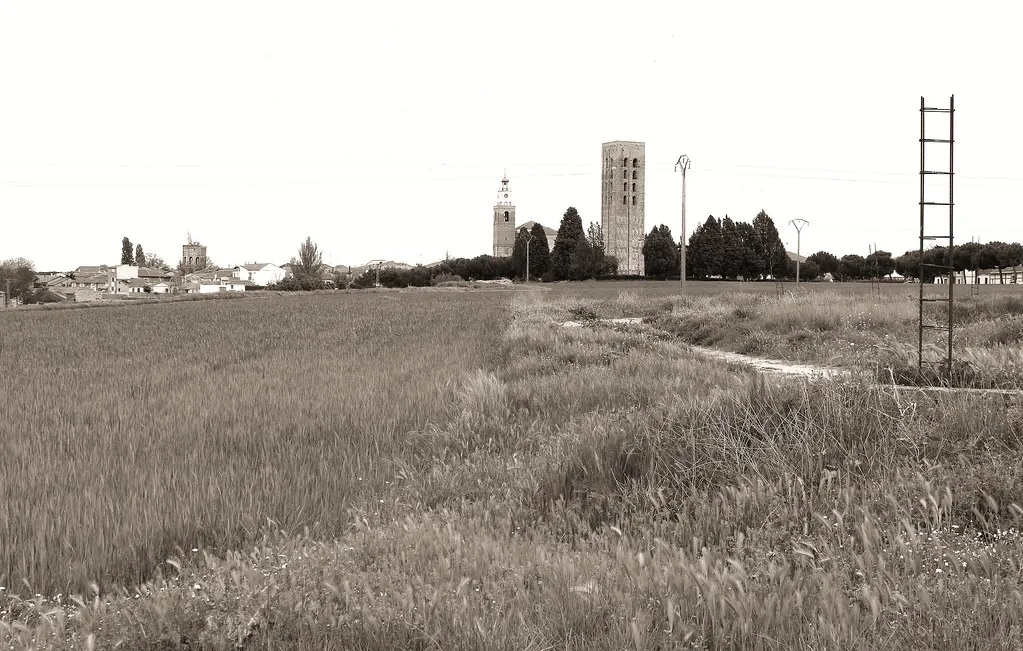
Some villages feel like a pause button. You pull over, look around, and realise that time moves differently here. Labajos, in the Campiña Segoviana, has that effect. Open fields stretch as far as the eye can see, there is real silence, and daily life still revolves around the land.
This is not a place for a packed itinerary. Labajos is small, with around a hundred residents, and that becomes clear after a short wander through its streets. Stone and adobe houses line the lanes, some with small vegetable plots pressed up against their façades. There are pens and farm buildings, and the calm atmosphere typical of many villages in this part of the province of Segovia, where agriculture and livestock continue to set the rhythm of the year.
The appeal lies in its simplicity. There are no big attractions competing for attention. Instead, the experience is about slowing down and observing how a rural Castilian village goes about its day.
A Brief Walk Through the Centre
The village centre is straightforward and compact. It takes very little time to walk from one end to the other. The streets are narrow and quiet, and some still have unpaved stretches. When a car passes through, the sound carries from one end of the village to the other.
The clearest landmark is the church of San Pedro. The current building is old, medieval in origin and later altered, according to local accounts. If you approach at an unhurried pace, you will notice a doorway with a Romanesque feel. It is not a monumental church, yet it suits the character of Labajos: sober, restrained, without excess decoration.
The small square acts as a meeting point. In villages of this size, the pattern is familiar. There are benches, conversations taking place in the sun, and the steady coming and going that shapes daily life. Nothing appears rushed. Much of what happens here is simply the continuation of routines that have changed little over time.
Walking Out Into the Fields
For anyone who enjoys uncomplicated walks, Labajos makes things easy. Agricultural tracks lead straight out from the village into the flatlands of the Campiña. There are no technical trails or serious climbs to worry about, just dirt paths cutting between barley fields, scattered holm oaks and cultivated plots.
Within an hour on foot, you can find yourself completely surrounded by open countryside. This is the wide-horizon landscape of Castile, where the sky feels immense and the clouds seem larger than expected. As the sun drops, the colours of the crops shift quickly. The fields take on warmer tones, and the view changes from one minute to the next.
Every so often a flock appears in the distance, or a tractor heads back towards the village. Those who pay attention may spot kestrels hovering in mid-air, apparently motionless as they scan the ground below. With a bit of luck, a great bustard can sometimes be seen in the more open fields around the area. Wildlife here is part of the everyday scene rather than a staged attraction.
The overall impression is one of space. There are no dramatic landmarks on the horizon, just a broad sweep of farmland under an expansive sky. That simplicity is precisely what gives the setting its character.
Dark Skies and Winter Cold
When night falls, another aspect of Labajos becomes clear. There is very little artificial light in the surrounding area. On a clear evening, the stars are visible with notable clarity from almost anywhere in the village. The darkness feels complete, uninterrupted by the glow that surrounds larger towns and cities.
Winter brings a different kind of intensity. The cold on the plateau is dry and penetrating. It is not a mild chill but the sharp, unmistakable cold of the Meseta, Spain’s central high plain. Within minutes, hands retreat into pockets and breath hangs in the air. The seasons make themselves felt here in a direct way, without much to soften their edges.
Eating and Staying Nearby
Labajos is very small, and the usual arrangement is to look to nearby villages or larger towns in the area for places to eat or stay overnight. The advantage of being in the province of Segovia is that the surrounding cuisine follows well-known regional traditions.
Expect dishes rooted in the land: locally grown pulses, roast lamb and sheep’s cheeses, along with other substantial fare designed to sustain long days outdoors. The food culture reflects the agricultural setting, shaped by what is produced in the fields and on local farms.
The Fiestas of San Pedro
The moment when Labajos shifts its pace tends to arrive in summer, during the celebrations dedicated to San Pedro. These are traditional village festivities: a procession, music in the evening, and the return of many former residents who no longer live here throughout the year.
For visitors, this is a good opportunity to see the village with more movement than usual. The streets that are typically quiet fill with familiar faces catching up, and the small square becomes busier. The celebrations follow patterns common across rural Spain, rooted in religious tradition and community ties.
Outside those dates, Labajos returns to its habitual calm.
Is It Worth Stopping in Labajos?
Labajos is not a destination for grand monuments or an extensive historic centre. It works better as a peaceful stop while exploring the Campiña Segoviana, or as a place to spend an hour walking through open fields without any particular plan.
In half an hour, it is possible to see the essentials. The church of San Pedro, the small square, the narrow streets and the surrounding farmland quickly reveal what the village is about. Yet that brevity is part of the appeal. After seeing everything, there is little to do except sit on a bench, look out towards the fields and let the stillness settle.
Labajos offers a reminder that travel does not always need a checklist. Sometimes it is enough to pause in a small village of the Segovian countryside, watch the light change over the crops and listen to the quiet that defines life on the Castilian plain.