Full Article
about Marazoleja
Small farming village in the countryside; known for its quiet.
Ocultar artículo Leer artículo completo
The bread van arrives at ten. Its arrival is the loudest thing that happens all morning, unless you count the click of the level crossing two kilometres away. By half past, the driver has finished his round, the village has its daily quota of crusty loaves, and the only sound left is the wind combing through wheat stubble. This is Marazoleja, population ninety-two, altitude 910 metres, and it does not do hurry.
A Plain That Breathes
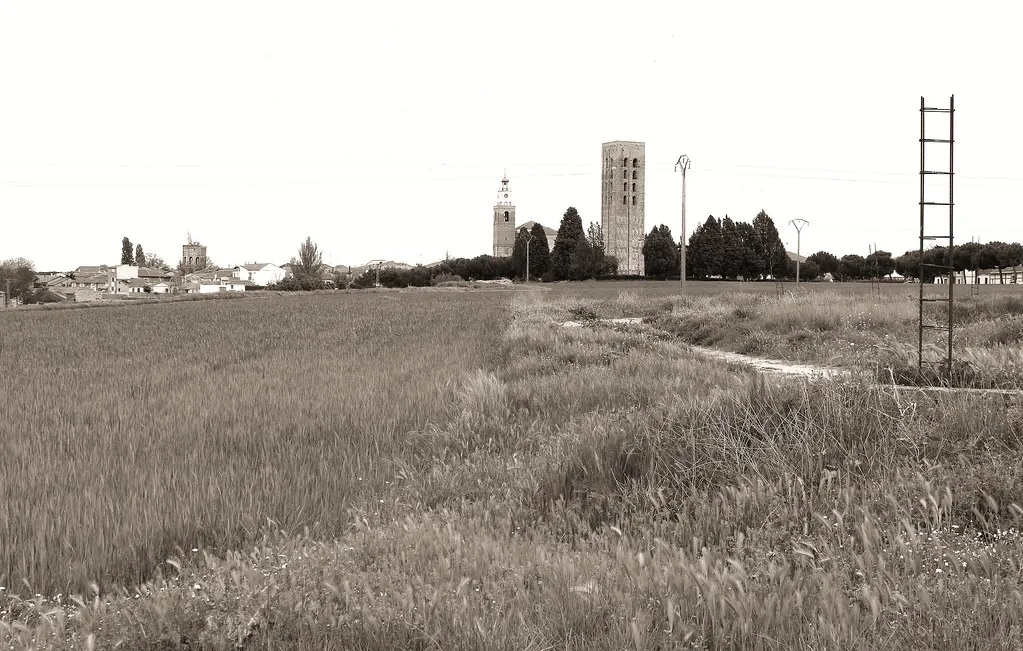
The Campiña Segoviana rolls like a gentle sea, each swell a shade greener or yellower than the last depending on the month. In April the fields glow emerald; by late June they have bleached to biscuit gold; after the combine passes they resemble close-cropped tweed. Marazoleja sits on one of these swells, its houses aligned to the slope so every roof catches the same breeze. From the northern edge you can see the Sierra de Guadarrama etched in chalk, sixty kilometres off, while behind you the land keeps folding south until the sky swallows it.
The architecture is what builders here call “lo que hay”: what there is. Adobe walls half a metre thick, timber painted the colour of ox blood, roof tiles the shade of burnt toast. A few newer homes have sprouted polystyrene balustrades and Miami-blue shutters, but they look embarrassed about it. The church tower, blunt and square, doubles as the village time-piece – swallows weave round it at dusk, and when they fall silent you know supper is overdue.
What Passes for a High Street
There isn’t one. Instead, three lanes meet at the stone drinking trough where donkeys once queued. One lane drifts past the bakery (open three mornings a week), another past the social club whose door handle is tied with a hair-band to stop it banging, and the third simply dissolves into stubble. The weekly grocery van parks here on Thursdays; if you need milk on a Sunday you’ll be offered UHT by whoever answers first.
Yet the village is not asleep. Someone is always whitewashing a wall, or stripping a ruined hayloft for beams, or coaxing tomatoes in soda bottles on a window ledge. The council – manned, part-time, by the mayor who also drives the school bus – has installed fibre-optic cable thicker than the water main. The result is the Spanish paradox: houses whose Wi-Fi could stream Champions League yet whose front doors still sport iron latches the size of a shoe.
Walking Without Signposts
No gift shop sells glossy maps, so take the gravel track that starts opposite house number 22. Within ten minutes the cereal gives way to a belt of holm oak where crested tits argue overhead. Cross the drystone wall – it is allowed – and you reach the Cañada Real Segoviana, a drove road wide enough for five hundred sheep. The stone mile-markers still show the distance to Segovia in leagues; Roman numerals have weathered to gentle bruises.
Carry on north-west for an hour and the plain tilts imperceptibly downward until you hit the river Eresma, little more than a braid of water in September. Turn south instead and after five kilometres you reach Carrascal del Río, where the bar serves grilled pork that tastes of acorns and smoke. The return can be made in a loop along the farm track used by the combine harvesters; keep an ear out for their radio static so you can step aside before the dust cloud arrives.
Roast Lamb and Other Certainties
Marazoleja itself has no restaurant, but twenty minutes away in Turégano the Asador Las Órdenes will sell you a quarter of lechazo for €18, crisp skin bubbled like parchment, served on a plate hot enough to keep the gravy twitching. Pair it with local red from Nieva – the garnacha here pre-dates the phylloxera plague – and you understand why Castilians trust few things they cannot either eat or pray to.
Back in the village, buy a round loaf from the van and you will probably be given a wedge of tocino de cielo, the egg-yolk custard made with surplus yolks after the whites were used to clarify wine in the monastery at El Espinar. The exchange is wordless: money in one hand, pudding in the other, a transaction older than the euro.
Seasons That Argue
Winter arrives overnight, riding the wind that the locals call el ventarrón. Night-time temperatures drop to –8 °C; the adobe walls keep interiors warmer than London flats, but pipes freeze if you forget to let the tap drip. Snow is brief but theatrical, lying long enough to photograph the church roof white, then melting into mud the tractors spray like coffee grounds.
Spring is the briefest season, sometimes only three weeks. Suddenly the plain is striped green and yellow by different wheat varieties, hoopoes arrive from Africa, and elderly residents re-appear on folding chairs outside their front doors. Summer is a furnace: 35 °C by noon, cicadas so loud they mask the combine engines. Afternoons belong to siesta; sensible visitors walk at dawn or dusk, when the light turns the stubble fields the colour of whisky and foxes trot along the irrigation ditches.
Autumn smells of crushed fennel and diesel. The harvest festival, held on the second Sunday of September, fills the lanes with vintage tractors polished for the occasion. There is no parade as such – the machines simply drive to the sports field, park in rows, and their owners drink beer while comparing tyre wear.
How to Arrive, and Why You Might Leave Again
The village lies 105 km north-west of Madrid. Take the A-6 to Villacastín, then the CL-601 north for 12 km; turn right at the wind turbine that looks like a solitary white rocket. There is no bus on Sundays, and the weekday service from Segovia matches the school timetable. A car is simpler; leave it on the waste-ground by the football pitch – nobody locks, nobody pays.
Accommodation is scarce. The nearest rooms are in Turégano (Hostal El Rincón, doubles €55, breakfast €4). Marazoleja’s own houses can be rented by the week through word-of-mouth: ask in the bakery, or Whatsapp the number painted on the water-tank. Expect stone floors, a wood-burning stove, and neighbours who bring you lettuce because they have too much.
Stay a night and you will have heard every dog bark, counted every star, and learned the exact time the bread van returns. Stay two and you may find yourself oiling a gate that hasn’t squeaked since Franco died. Stay a week and someone will explain which field their grandfather seeded with saffron before the price collapsed, and you will realise the plain remembers even when the maps forget.
Marazoleja offers no postcards, no fridge magnets, no audio guides. It offers instead the sound of wheat stubble scratching itself in the breeze, and a horizon so wide you remember the earth is curved. That is enough, and sometimes more than enough, which is precisely the point.