Full Article
about Marazuela
Quiet village with a notable church; perfect for switching off.
Hide article Read full article
A village shaped by the plains
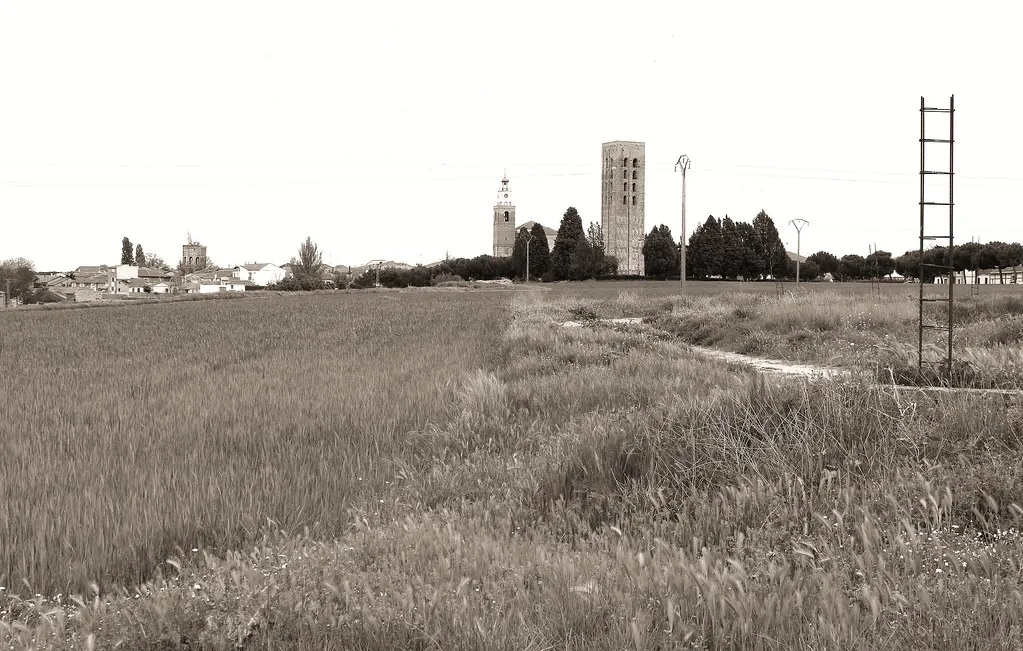
Marazuela sits in the Campiña Segoviana, a wide agricultural area in the province of Segovia defined by open cereal fields and long distances between villages. With just over fifty inhabitants, it remains close in scale to the rural settlements that took shape here after the medieval repopulation of the region. That period reorganised the landscape into broad grain fields dotted with small, scattered communities.
The village today is still very small and notably quiet. There are no large buildings or monumental streets, yet the layout offers a clear sense of how these agricultural settlements have functioned over centuries. Homes are closely tied to working spaces such as yards and corrals, streets are short, and everything is oriented towards the farmland that surrounds the village.
The landscape itself explains much of Marazuela’s character. Cereal fields stretch across the horizon, with only gentle undulations in the terrain. In spring the fields turn a vivid green, shifting to golden tones at the start of summer as the harvest approaches. This is an open environment where the sky carries as much visual weight as the built surroundings.
The church and village architecture
At the centre of the settlement stands the parish church. It is a simple structure built from masonry and stone, with little in the way of decorative detail. In villages of this size, the church has long served more than a religious purpose. It also functioned as a meeting point and helped organise the surrounding streets.
Around it are several traditional houses typical of the Campiña Segoviana. Their construction reflects the materials available locally: stone combined with adobe, large gates that once opened onto corrals, and occasional wrought-iron window grilles. These buildings do not form a monumental ensemble, but they offer a clear picture of how people built and lived here well into the 20th century.
The arrangement of these homes is worth noting. Many combine domestic living areas with spaces for storing tools or keeping small livestock. This blending of uses was common across agricultural villages on the Spanish plateau, where daily life and work were closely intertwined.
Paths through farmland
A number of agricultural tracks lead out from the village into the surrounding countryside. They are not marked as hiking routes, yet they have been used for generations to reach the fields. Walking along them reveals how the landscape is organised: large plots of farmland, boundaries defined by paths, and occasional isolated agricultural buildings.
In these open environments, birdlife is often visible if approached quietly and with some distance from the crops. The Campiña Segoviana is known for steppe birds, and it is common to see birds of prey gliding over the fields. At certain times of year, species associated with cereal-growing areas also appear. Binoculars can be useful, though moving carefully and unobtrusively matters more.
Seasonal rhythms and local life
As in many very small villages, life in Marazuela changes with the seasons. Summer brings a noticeable increase in activity when residents who live elsewhere return. This is also when the patron saint festivals are usually held, bringing together much of the community.
The celebrations tend to follow a familiar pattern found across rural Spain. There are religious processions, shared meals, and evening festivities, all on a modest, local scale. These events are less about spectacle and more about maintaining social ties in a place where the population is otherwise very small.
For the rest of the year, the pace of life remains slow and closely linked to agriculture in the surrounding area. The fields, rather than the village centre, set the rhythm.
Visiting Marazuela
Marazuela can be explored in a short amount of time. The main interest lies in walking through the village at an unhurried pace and then heading out along one of the surrounding tracks to take in the wider landscape.
There are no tourist services within the village itself. For food or accommodation, it is usual to travel to larger nearby towns within the same region. In any case, a visit here is less about specific sights and more about understanding the agricultural landscape of the Campiña Segoviana and the way of life it has supported for centuries.