Full Article
about Martín Miguel
Municipality near the capital; retains its rural essence with modern services.
Hide article Read full article
First Impressions on the Edge of the Fields
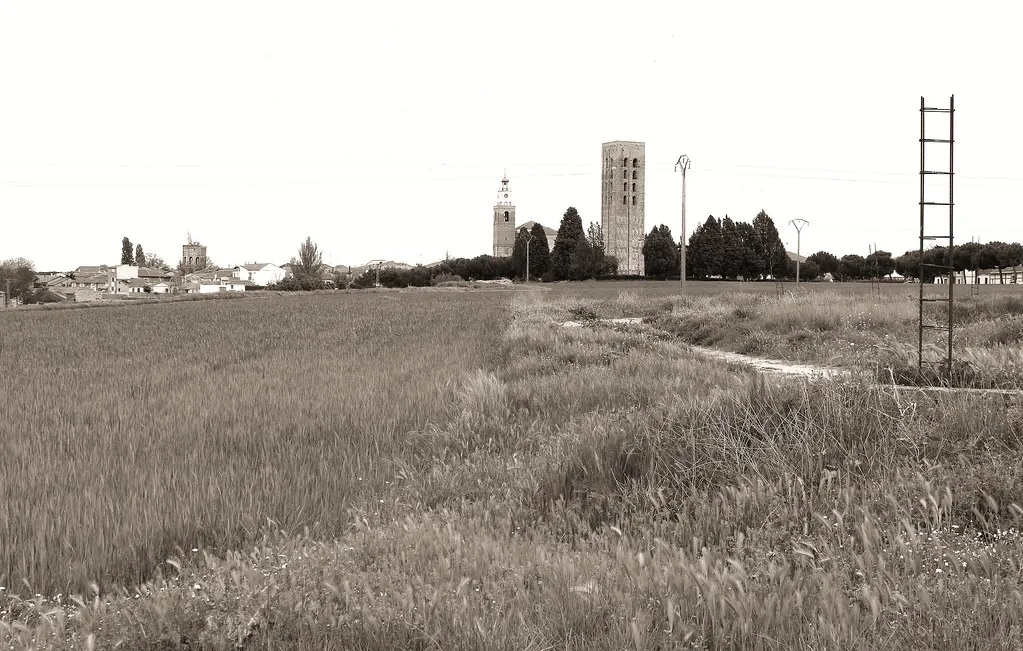
Martín Miguel sits in the Campiña Segoviana, around 900 metres above sea level, with fewer than 300 residents. Open countryside stretches out in every direction. This is agricultural land, and the village remains closely tied to it.
On arrival, it makes sense to think practically. There are no marked parking areas and barely any traffic, so most people leave the car on a wide street near the entrance. The central lanes are narrow and can be awkward for manoeuvring. Once parked, everything is easily covered on foot. A slow circuit takes about half an hour.
It helps to arrive with the right expectations. Martín Miguel does not present itself as a carefully restored historic centre. There are no headline monuments and no polished old quarter. This is a working agricultural village that has continued to function as such, without much concern for appearances.
The houses reflect that reality. Stone walls sit alongside adobe construction and later alterations made as needs changed. Some homes retain older structures, others have been adapted without much thought for aesthetics. In places where daily life and work have taken priority, maintaining a postcard image has never been the main goal.
Anyone looking for a steady buzz or a wide choice of activities will need to head towards Segovia or other larger towns in the area. Martín Miguel offers something quieter and more direct.
A Small Centre and a Modest Church
The most recognisable building in the village is the parish church. It stands beside the main square, and its stone tower is visible from several streets. The church is simple in scale and decoration, typical of a small rural parish. There are no grand altarpieces or elaborate ornamentation. If it is open, a visit is brief.
Access can be unpredictable. At times the key is held by a local resident or by the town hall, which gives an idea of how things work here. The church remains part of everyday life rather than a formal visitor attraction.
The urban centre consists of a handful of streets lined with low houses. Traces of older construction are still visible. There are sections of rammed earth walls, large wooden gates worn by time, and entrances leading down to underground wine cellars. Many of these cellars are private, so it is best to view them from the outside only.
Walking towards the edges of the village brings a broader view. Beyond the last houses lie the characteristic scenes of this part of the province: cereal fields stretching almost to the horizon. In spring the landscape turns green; by summer it becomes dry and yellow. There are no formal viewpoints or explanatory panels. The appeal lies in the simplicity of open farmland.
Tracks Across Open Country
Agricultural tracks radiate from Martín Miguel into the surrounding fields. Local residents use them to move between plots of land. Some coincide with old drovers’ roads, historic routes once used to move livestock across the countryside.
These paths are not signposted as hiking trails. Anyone venturing further out should have a clear idea of their route before leaving the village behind. The terrain is completely open, and distances can feel longer than they appear.
Wind is a constant presence here and often blows strongly across the plain. In summer the sun is intense and shade is scarce. The environment is exposed, with little to interrupt the elements.
With patience, it is possible to spot birdlife typical of cereal-growing landscapes. Martín Miguel is not known as a major birdwatching destination, yet those familiar with this kind of setting often notice movement if they walk slowly and keep an eye on the fields. The experience depends more on attentiveness than on facilities.
Food, Routine and Daily Pace
The cuisine of the area reflects what the countryside has traditionally provided. Lamb is common, as are pulses and straightforward dishes such as sopas castellanas, a hearty Castilian garlic soup. The food is rooted in farming life and seasonal availability.
In a village of this size, options for sitting down to eat are very limited. Many visitors end up travelling to nearby towns for a wider choice. The focus here is less on restaurants and more on observing how daily life unfolds.
Tractors come and go. People who have known each other for decades exchange a few words in the street. Conversations are short and unhurried. The rhythm is set by agricultural tasks rather than by visitor schedules. This everyday activity says more about Martín Miguel than any single building.
Festivities and the Agricultural Calendar
The patron saint festivities usually take place in August. During those days, people with family homes in the village return, and the atmosphere shifts. Streets that are quiet for much of the year see more movement. There are processions, music and activities organised by the residents themselves.
At Easter, known in Spain as Semana Santa, simple local events are also maintained. There are no large-scale productions or spectacular floats, but traditions continue in a modest way. The emphasis is on continuity rather than spectacle.
Autumn brings the agricultural calendar back to the forefront. Grape harvests, crop gathering and other fieldwork remain part of normal life, even if little of it is immediately visible to an outsider. The cycle of sowing and harvesting still shapes the year.
A Brief Stop in the Campiña Segoviana
Martín Miguel works best as a short stop while travelling through the Campiña Segoviana. It offers a clear view of a village that continues to live from the land. A brief walk through its streets, a glance towards the tracks leading into the fields, and then the journey continues.
Everything here is straightforward and quickly understood. There is no attempt to impress, and no effort to reinvent itself for visitors. What remains is a small agricultural community at around 900 metres above sea level, surrounded by open country and following its own steady pace.