Full Article
about Martín Muñoz de la Dehesa
Set on the Voltoya river plain; known for its irrigated farming.
Hide article Read full article
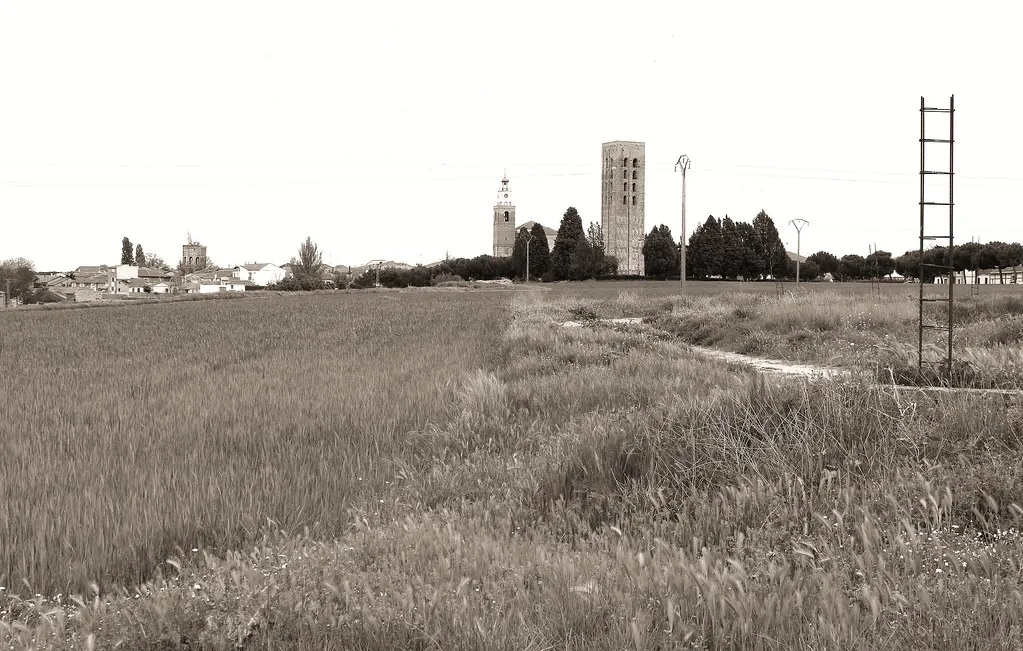
As evening settles and the sun slips towards the edge of the fields, the streets of Martín Muñoz de la Dehesa fall almost silent. The air carries the scent of dry earth and grain. From the outskirts comes the slow return of a tractor along a dirt track, and the village appears among plots of cereal as if it were simply another element in the landscape of the Segovian countryside.
Tourism here does not revolve around grand monuments or streets designed for hurried sightseeing. Martín Muñoz de la Dehesa is a small rural settlement, with adobe and brick houses, agricultural sheds at its edges and working corrals that are still in use. Daily life follows the rhythm of the surrounding farmland.
The Parish Church and the Village Heart
The village centre is organised around the parish church, a stone building whose tower rises above the low rooftops. From several of the agricultural tracks leading in from the fields, its outline is easy to recognise against the wide sky.
The structure appears old, probably built in the Early Modern period and altered over time. Inside, it generally preserves wooden elements and altarpieces that reflect parish life in past centuries. It is not always open, so anyone hoping to see the interior should ask locally in advance.
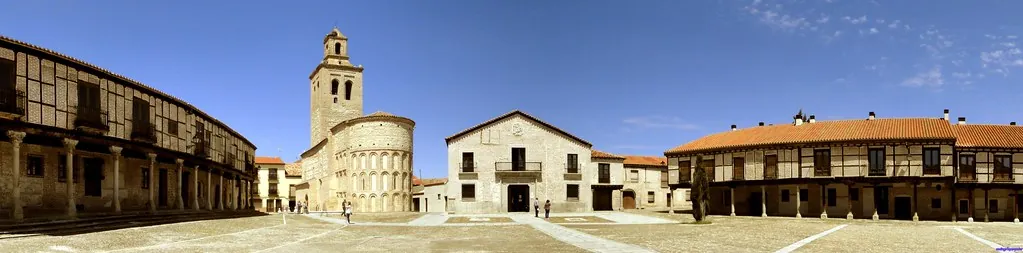
A few steps away lies the small square, framed by brick houses with wide gateways that open into interior courtyards. Many of these still store farming tools, trailers or stacks of firewood. The sense is of a place where domestic and agricultural spaces overlap without ceremony.
Adobe Walls and Agricultural Traces
The main streets, including Calle Mayor, follow the irregular layout typical of villages that grew gradually, without a fixed plan. Adobe walls show repairs from different periods: cement patches, newer bricks, layers of limewash that have faded over the years.
Doorways are often large. This was practical rather than decorative, designed to admit carts, store grain or close off animal pens. In some courtyards there are still underground cellars, dug below ground level. These cool spaces were once used to store food or wine.
By mid-afternoon, as the sun lowers, façades take on a soft ochre tone and long shadows from the tiled roofs stretch across the street. The overall effect is understated, shaped more by function than by any attempt at display.
Tracks Through the Cereal Fields
Beyond the last houses lies open countryside. Large plots, straight cultivation lines and dirt tracks extend towards other villages scattered across the plain.
These are not purpose-built walking trails. They are agricultural routes used daily, so it is common to encounter machinery or trailers loaded with crops during the working season. After rainfall they can become muddy, and during harvest they may be strewn with straw.
Even so, walking here at dawn has a particular atmosphere. Wind ripples through the cereal, a partridge may suddenly take flight, and the horizon remains completely unobstructed. With some luck, it is possible to spot steppe birds such as harriers or stone-curlews, though distinguishing them is not always easy without experience.
The landscape is defined by its openness. There are no dramatic changes in elevation, no dense woodland breaking the view. Fields and sky dominate, and the village sits quietly within that expanse.
Wide Skies and Dark Nights
One of the clearest features of this part of the Segovian countryside is the sky itself. There are no mountains to cut it off and no large urban centres nearby, so the sense of space is constant.
At sunrise, the sky often appears in very pale tones, almost white, while the ground still holds the chill of the night. Towards evening, especially in summer, colours deepen. Dust from the tracks can linger in the air, catching the light as the day fades.
On clear nights, a good number of stars are visible from the outskirts of the village. There is little strong lighting in the surrounding area, which allows the darkness to settle fully over the fields. The result is not dramatic in a theatrical sense, but calm and expansive.
When to Visit
Spring and autumn are generally the most pleasant times to approach Martín Muñoz de la Dehesa. The fields shift noticeably in colour depending on the season. After rain, green tones dominate; when the cereal stands tall, the landscape turns golden.
In summer, the sun bears down hard on the plain. Anyone planning to walk along the agricultural tracks would do well to set out early in the morning or later in the afternoon.
Winter here is drier and windier. There are very clear days with a cold light that leaves the landscape almost bare. Each season alters the appearance of the same fields, yet the underlying rhythm of sowing, harvesting and waiting remains.
A Small Village Without Ornament
Martín Muñoz de la Dehesa can be explored quickly. It is not a destination for ticking off attractions, but a place to observe how agricultural life in the Segovian countryside continues to function.
Spending time near the church or walking to the edge of the fields is often enough. The wind moves across the plain, adobe façades show the marks of repair and reuse, and daily routines unfold according to the demands of the land.
Many villages in this part of Castilla Leon still live in this way, between seasons of planting and reaping. Martín Muñoz de la Dehesa offers a clear view of that continuity, set against open skies and fields that stretch far beyond the last house.