Full Article
about Marugán
Known for its airfield and vast pine forests; a municipality with many second homes.
Ocultar artículo Leer artículo completo
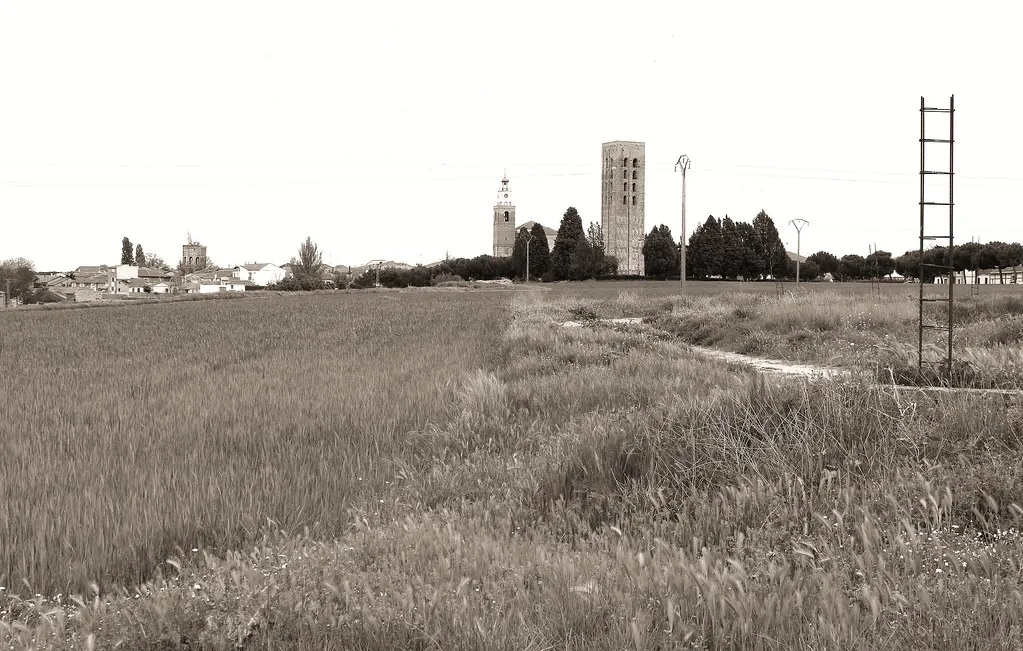
The church tower of San Pedro Apóstol appears first, a stone finger pointing skywards above wheat fields that ripple like water in the afternoon wind. At 955 metres above sea level, Marugán sits high enough that your ears might pop during the final approach along the CL-601, the road climbing steadily from Segovia through countryside that looks unchanged since the first farmers arrived with their oxen.
This isn't a village that announces itself with dramatic flourishes. The houses—stone ground floors giving way to brick above, timber beams darkened by centuries of weather—simply exist, huddled around their medieval church as if sheltering from the wind that scours these high plains year-round. It's the kind of place where tractors have right of way, where shop opening hours remain theoretical, and where the day's rhythm follows livestock rather than smartphone notifications.
The Weight of Altitude
The altitude matters here. Summer mornings arrive cool and sharp, even when Madrid swelters ninety minutes south. By midday the temperature can swing twenty degrees, leaving visitors peeling off layers while locals merely adjust their scarves. Winter brings a different challenge: when snow hits the Meseta, Marugán becomes an island. The access road closes at 900 metres, cutting the village off until diggers can carve a path through drifts that accumulate with surprising ferocity.
These extremes shape everything. The local architecture—thick walls, small windows, heavy wooden doors—speaks of a need to keep heat out in August and in during February. Even the church, rebuilt piecemeal over five centuries, squats low against the wind rather than reaching skyward like Segovia's famous cathedral. Inside, the air carries that particular coolness of ancient stone, a natural air conditioning that predates electricity by several hundred years.
The surrounding landscape reveals itself gradually. Northwards, the ground falls away towards the Duratón River, creating a natural amphitheatre where griffon vultures ride thermals. South and east, the Campiña Segoviana stretches flat as Norfolk, broken only by holm oaks that provide shade for cattle and punctuation for photographers. Westward, the Sierra de Guadarrama rises distant and blue, Madrid's weekend playground visible on clear days as a faint smudge against the horizon.
Walking the Invisible Lines
Maps show Marugán as a dot on the plain, but the village extends far beyond its houses. A network of agricultural tracks—some Roman in origin, most medieval—radiates outward like spokes from a wheel. These caminos follow ancient property boundaries, invisible lines marked by dry stone walls and solitary oaks that once served as meeting points for sharecroppers negotiating terms with absentee landowners.
Walking them reveals the area's real geography. Head north on the track past the cemetery and you'll drop into a shallow valley where limestone outcrops create microclimates. Wild thyme and rosemary thrive here, filling the air with scent when crushed underfoot. Continue for ninety minutes and you'll reach the abandoned village of Revenga, its church roofless since the 1950s, nesting storks now the only worshippers.
The southern routes prove gentler, crossing wheat fields that shift colour with the seasons. April brings an almost painful green, the young crop luminous against red soil. By July the wheat turns honey-gold, heavy heads bowing in waves with each gust of wind. These paths suit evening walks particularly; the setting sun transforms the landscape into something approaching golden hour cliché, though here it's merely Tuesday evening, farmers returning from checking irrigation pumps while neighbours stand in doorways discussing rainfall statistics.
Eating According to the Wind
Local restaurants work with what the altitude provides. Lamb arrives from flocks that graze the surrounding dehesas, their diet of wild herbs and acorns creating meat that needs nothing more than salt and the wood-fired ovens that every proper kitchen maintains. The region's extreme temperature swings produce vegetables with concentrated flavour—tomatoes that actually taste of tomato, beans requiring hours of slow cooking to tenderise properly.
El Portón de Javier, located in a former grain store opposite the church, serves portions that reflect agricultural appetites. Their cochinillo arrives as a quarter pig, crackling blistered and bubbling, enough to feed three hungry walkers or one farmer fresh from a fourteen-hour harvest shift. The wine list extends to three choices—red, white, or water—served in glasses heavy enough to withstand clumsy handling after several refills.
Casa Fortuna operates simpler, opening only when owner Fortuna feels like cooking. Her signature lentils arrive in individual clay pots, thick with chorizo and morcilla, accompanied by bread baked that morning in the village's single surviving wood oven. No menu exists; Fortuna tells you what she's making that day, take it or leave it. Most take it.
The Reality Check
Marugán offers little for those seeking entertainment beyond food and walking. The single shop stocks basics—milk, bread, tinned tomatoes—supplemented by whatever the owner's son brings from Segovia's Mercadona each Saturday. Fresh fish arrives Tuesday and Friday, sold from a white van that toots its horn at eleven sharp, creating a minor social event as residents emerge to queue and gossip.
Evening entertainment centres on the bar beside the church, where farmers play dominoes and discuss rainfall with the intensity others reserve for football. Visitors receive nods rather than welcomes, acceptance coming gradually through repeated appearances rather than charm or linguistic fluency. Spanish helps, naturally, but the local accent—thick as the local chickpea stew—requires weeks of exposure before comprehension extends beyond basic pleasantries.
Accommodation remains limited. Casa Rural El Arado offers three rooms in a converted stable, comfortable enough but bookable only via Spanish websites that reject most British credit cards. The alternative involves staying in Segovia and driving out, though this misses the point entirely—Marugán's appeal lies in existing within its rhythms, not observing them through a car window.
When to Submit to the Seasons
Late May through June provides the sweet spot. Daylight stretches until nearly ten, temperatures hover in the mid-twenties, and the wheat creates that particular green found nowhere else—vivid yet somehow reserved, colour with the volume turned down. The village hosts its annual fiesta in mid-June, three days when the population quadruples and even visitors find themselves swept up in processions that honour the local saint with equal measures of devotion and beer.
September offers another window, harvest time bringing combines that work through the night, their lights creating alien landscapes in the darkness. The air smells of cut wheat and diesel, an oddly comforting combination that speaks of work completed and food secured for another year. October can prove spectacular, crisp days revealing the Guadarrama snow-capped and crystal-clear, though nights drop cold enough that rural hotels switch on heating for the first time since April.
Winter visits require commitment. The landscape strips back to essentials—stone, sky, and the occasional flash of red from a farmer's jacket against beige fields. Restaurants close early, sometimes not opening at all if custom seems unlikely. Yet there's beauty here too, a harsh honesty that reveals the effort required to coax life from this high plain. Those who come prepared—with decent boots, flexible plans, and Spanish phrases rehearsed—find a village that functions not for tourists, but despite them, continuing patterns established long before cheap flights and travel blogs existed.
The wind never stops. It carries the smell of distant rain, the sound of tractors working fields invisible beyond the next rise, the occasional snatch of conversation as neighbours shout across narrow streets. Listen long enough and you might understand why people stay, generation after generation, anchored to this high point on the Meseta by something stronger than gravity.