Full Article
about Melque de Cercos
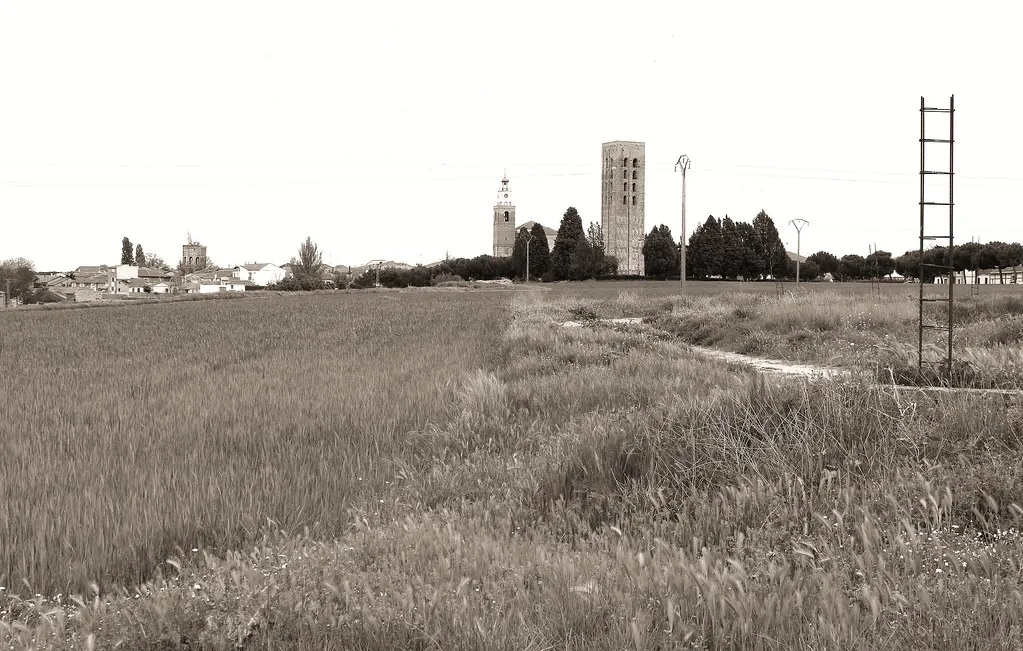
Village of brick-and-slate traditional architecture; its church stands out.
Ocultar artículo Leer artículo completo
The tractor arrives at 7:23 am. Not 7:20, not 7:25—7:23, every morning except Sunday. Its diesel engine cuts through the silence of Melque de Cercos like a rooster that learned mechanical engineering. Fifty-eight souls live here, scattered among stone houses that have watched the cereal fields turn gold for centuries. At 857 metres above sea level, the village sits high enough to catch the breeze that sweeps across Spain's central plateau, but low enough that you won't get altitude headaches—just the pleasant light-headedness that comes from breathing air untainted by traffic fumes.
The Architecture of Absence
There's no town square to speak of, no medieval castle on the hill, no Renaissance fountain in a plaza. What Melque de Cercos offers instead is subtraction tourism: the pleasure of what isn't here. No souvenir shops flogging fridge magnets. No tour groups following umbrellas. No restaurants with English menus offering "traditional Spanish paella" to visitors who don't realise they're four hours inland.
The church stands plain-faced against the sky, its single bell tower more functional than beautiful. Step inside and the temperature drops ten degrees. The interior holds the musty scent of centuries and the particular quality of silence that comes from thick stone walls. Local women still place fresh flowers on the altar every Sunday, arranging them in water-filled jam jars because proper vases seem too grand for this honest space.
Walking the streets means navigating between houses that wear their history openly. Adobe walls bulge slightly with age like well-fed bellies. Some homes sport fresh whitewash and geraniums in window boxes; others slump towards retirement, their wooden lintels sagging under the weight of too many summers. It's not picturesque decay—it's just life happening at the speed of passing generations.
The Geography of Wheat
The village exists in relationship with what surrounds it: an ocean of cereal fields that stretches until geography intervenes. Spring brings a brief, almost shocking green that lasts exactly six weeks before turning the uniform gold that gives Castilla its name. Walk fifty metres beyond the last house and you're in it—wheat, barley, and oats whispering their dry secrets to anyone who listens.
The paths aren't marked. They're not meant to be. These are farm tracks that connect Melque to neighbouring villages five, seven, twelve kilometres away. Walk them in May and you'll crunch through poppies that grew where farmers missed a spot. The sightlines run for miles in every direction, interrupted only by the occasional holm oak that some long-dead shepherd left standing for shade. Bring water. Bring a hat. The sun here has been perfecting its craft since the Bronze Age.
Birdwatchers should pack binoculars, but leave the checklist mentality at home. You'll see crested larks and calandra larks, probably a hoopoe if you're patient, definitely red-legged partridges scurrying between rows like feathered clockwork toys. The raptors arrive in late afternoon—kestrels first, then the buzzards, occasionally a golden eagle if the thermal conditions suit.
What Passes for Entertainment
The nearest restaurant sits fourteen kilometres away in Coca de Alba. This is not an oversight—it's rural reality. Come prepared with sandwiches and a sense of flexibility, or time your visit around meals in larger towns. The local gastronomy happens in kitchens where grandmothers still render lard for winter cooking, where lamb gets roasted until the skin crackles like thin ice, where beans from the previous summer's harvest emerge from storage jars heavy with tradition.
August brings the fiesta patronal, when the population swells to perhaps 200. Former residents return from Madrid and Barcelona, parking hatchbacks in spaces that didn't exist when their grandparents kept donkeys there. The church bell rings with enthusiasm rather than precision. Someone's uncle produces a guitar that's been in the family since Franco's day. Dancing happens in the street because there's nowhere else large enough to hold everyone.
The pig slaughter still happens in January, though it's become more family reunion than economic necessity. If you're offered fresh morcilla, accept it. The blood sausage tastes of iron and winter and centuries of making do with what the land provides. Vegetarians should probably plan their visits for late spring when the fields provide their own kind of feast.
Practicalities for the Determined Traveller
Getting here requires commitment. From Madrid, drive north on the A-1 for ninety minutes, then exit towards Cantalejo and follow smaller roads until asphalt gives way to something that feels like suggestion rather than infrastructure. Public transport involves a train to Segovia, a bus to Cantalejo, and then hitching a ride with someone whose cousin's wife happens to be driving past Melque that afternoon. Rent a car.
Staying overnight means Airbnb—two properties, both converted from agricultural buildings that once housed grain rather than guests. Expect thick walls, intermittent WiFi, and owners who'll invite you for coffee while explaining exactly which ancestor built each section of wall. Prices hover around €60 per night, breakfast included if you negotiate in advance and don't mind eggs from chickens with names.
Bring cash. The village has no ATM, no petrol station, no shop. The nearest services cluster twelve kilometres away in Cuellar, where supermarkets stock everything from local cheese to British teabags for homesick expats. Fill up before you arrive. Check your tyre pressure. Mobile phone coverage depends on which way the wind blows and whether the single mast feels like cooperating.
The Honest Truth
Melque de Cercos won't change your life. It won't provide Instagram moments that make friends back home seethe with envy. What it offers is the increasingly rare experience of a place that exists for itself, not for visitors. The village continues its slow conversation with the land because that's what it's always done, not because someone decided it might photograph well.
Come here when you need reminding that most of human history happened in places exactly like this—small communities where people knew which field belonged to whom, where the tractor arrives at 7:23 sharp, where the biggest decision involves whether to plant wheat or barley next season. Stay long enough to watch the light change across the fields, to learn the names of the dogs who'll escort you to the village boundary, to understand that sometimes the most interesting thing about a place is how completely uninterested it is in being interesting.
Then leave. The village prefers it that way.