Full Article
about Migueláñez
Known for its artisan chocolate industry and slate architecture
Ocultar artículo Leer artículo completo
The church bell strikes noon and only two cars pass through Migueláñez in the next hour. At 884 metres above the cereal plains of Segovia, silence arrives with the force of weather. Swifts cut across the sky; the grain silos creak; nothing else competes. This is rural Castilla y León stripped to its bones—no interpretation centre, no gift shop, not even a bar. For visitors schooled in Andalucían colour or Basque buzz, the austerity can feel like a dare: stay long enough to notice what is actually here.
A horizon that moves
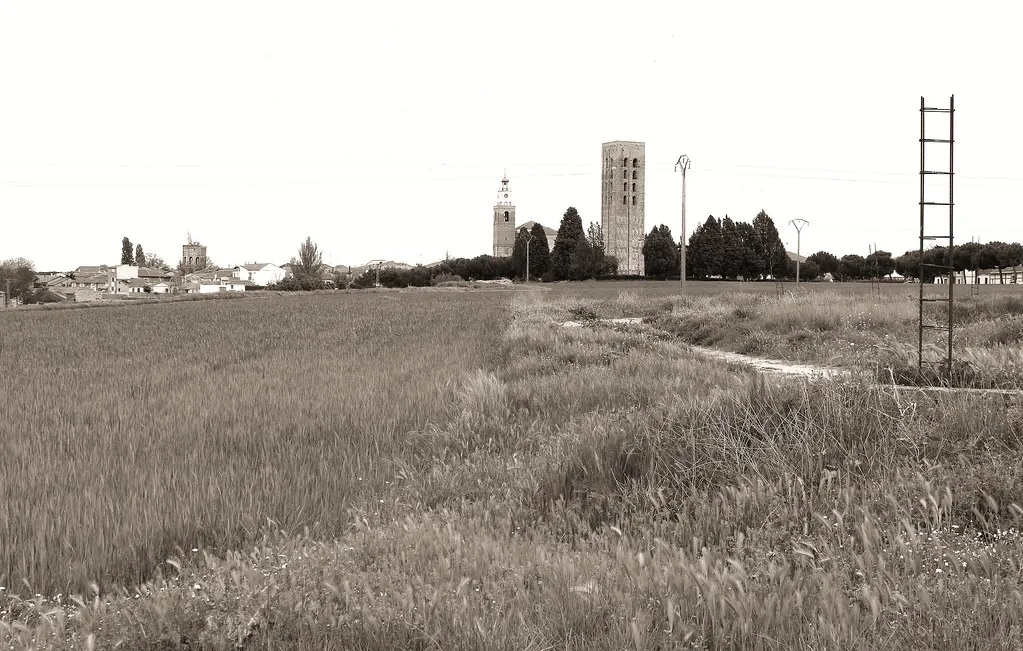
Stand at the village edge and the land falls away in every direction, a gold-brown chessboard of wheat stubble and sun-baked earth. Oak trees appear solitary, as if planted by a minimalist gardener. The effect is optical: Migueláñez feels higher than it is because everything around it refuses to rise. In high summer the thermometer scrapes 36 °C, yet the air remains breathable; the altitude thins the heat and lifts the sky. Winters reverse the contract: January mornings drop to –5 °C, north-easterlies whistle across open fields, and the single road in can whiten with drifted snow. April and late September give the kindest balance—mild afternoons, cool nights, and a horizon that blushes rather than blazes.
There is no formal mirador; instead, the last house on Calle Real ends abruptly in a ploughed field. Locals call it “el final” and treat it as a social terrace. Bring coffee, or the bottle of wine you bought in the larger town of Cuéllar 18 km away, and you qualify for membership. Sunsets last longer here because the land offers nothing to hide behind; at dusk the sky performs a slow fade through peach, rust and bruised violet while swallows rehearse their last dives.
Adobe, stone and the slow eye
Migueláñez contains one street longer than a cricket pitch, two shorter ones, and a handful of alleys that surrender to courtyards. Houses are low, thick-walled, the colour of dry biscuits. Adobe bricks show finger grooves where builders pressed straw and mud into wooden moulds; stone corners act like bookends, keeping the softer stuff from sagging. Look closely and you can read repairs: a 1970s cement patch here, a new pine door there, always slightly out of tone. The overall impression is not ruin, but weathering accepted on its own terms.
The parish church of San Miguel opens only for Saturday evening Mass. Push the heavy wooden latch and the interior smells of beeswax and grain dust; the floor is earth-toned flagstone worn into shallow bowls by centuries of kneeling. A single baroque retablo, gilded once, now flaked like old paint on a farm gate, fills the apse. No postcards, no donation box—if you want to leave something, the priest’s number is taped above the light switch. Ring him, or don’t.
Photographers expecting tiled domes or azulejo glam leave disappointed. The reward is subtler: the way adobe absorbs late light, turning walls into dim lamps; how shadows of television aerials jag across ancient surfaces; the moment a grandmother in black shifts a chair into a shaft of sun and becomes a Renaissance portrait. Work fast—she will notice and close the door.
Walking where tractors own the right of way
Leave the village by the concrete track signed “Los Villares 4 km” and you step onto a camino rural wide enough for a combine harvester. These gravel verges are the region’s public footpaths; no National Trust-style waymarks, just the occasional fingerpost painted by a farmer with time on his hands. The going is flat—ideal for easy stride-outs rather than Strava ascents. In May the verges foam with white marguerites; by July every plant has been shaved by the heat and only poppies retain colour.
After 40 minutes the path crosses the Arroyo de Valdeconejos, a stream that forgets to flow in drought years. Turn left and you reach an abandoned grain mill, roof gone, millstone split like a digestive biscuit. Stone martins have colonised the rafters; they exit in loops, chattering like radio static. Sit on the ruined wall, binos ready, and you may spot calandra lark or the flash of a little bustard—both species hang on here because the land is farmed traditionally, no irrigation pivots, no solar-panel oceans.
Circle back via the dirt road that skirts the solar farm (the one modern intrusion, installed 2021) and you clock up 7 km in under two hours. Take water: the only fountain is in Migueláñez main square, and summer shade exists mainly in your imagination.
Eating: what the fields taste like
There is no restaurant, no weekend pop-up, not even a village shop. The last grocery closed when its proprietor, Doña Feli, retired in 2019. Self-catering is therefore compulsory, which makes the place oddly honest: you eat what you can cook, on plates you wash yourself. Thursday morning brings a mobile fish van from Cantabria; it honks twice outside the church and sells hake, squid, even lemons at city prices. Locals descend with net bags and opinions about the weather—observe, queue, take your turn.
For everything else, drive 15 minutes to Cuéllar. The covered market (Tues/ Fri) has stalls selling lechazo (milk-fed lamb) and morcilla de Burgos so fresh it’s still warm. Bread comes from Horno García on Calle Portales—ask for pan candeal, a dense roll that keeps for days and needs serious chewing. Back in Migueláñez, fire up the Airbnb kitchen, open the patio doors, and the aroma of roast garlic drifts across the same square where sheep once waited for shearing.
If you visit during the September fiesta, the village imports a paella pan the diameter of a satellite dish. Residents donate rabbits; the mayor’s cousin brings saffron; someone produces a crate of Rueda wine. Visitors are welcome but plates are allocated by raffle—buy a ticket for €3 and accept defeat gracefully if your number isn’t called.
When calm tips into silence
Stay past midnight and Migueláñez can feel too quiet. Mobile signal drops to one bar; the streetlights (all six of them) switch off at 01:00; foxes scream in the stubble. Insomniacs should pack a book, or at least download podcasts before arrival. Rainy days exaggerate the hush—no café to retreat to, no museum arcade. Bring waterproofs and a tolerance for your own company, or time the visit for clear skies.
Car access is straightforward: the A-60 from Madrid to Valladolid passes 25 km west; from there the CL-601 threads across the plateau. In winter carry snow chains—drifts are rare but the provincial gritter prioritises the main highway. Buses exist on paper: one morning service to Segovia, one return at tea-time, fewer on Saturdays, none on Sunday. Miss it and the next entertainment is tomorrow.
Worth the detour?
Migueláñez will never feature on a “Top Ten” list, and that is precisely its proposition. It offers scale rather than spectacle: a place where the human footprint is still lighter than the sky. Come for a single night and you may tick “authentic Spain” without feeling much. Stay two, let the silence reset your ears, and you start measuring days by light instead of clock time. Bring everything you need, expect nothing in return, and the village will still be here when the louder destinations have burned themselves out.