Full Article
about Monterrubio
Small town near the capital; it keeps the calm of rural life.
Ocultar artículo Leer artículo completo
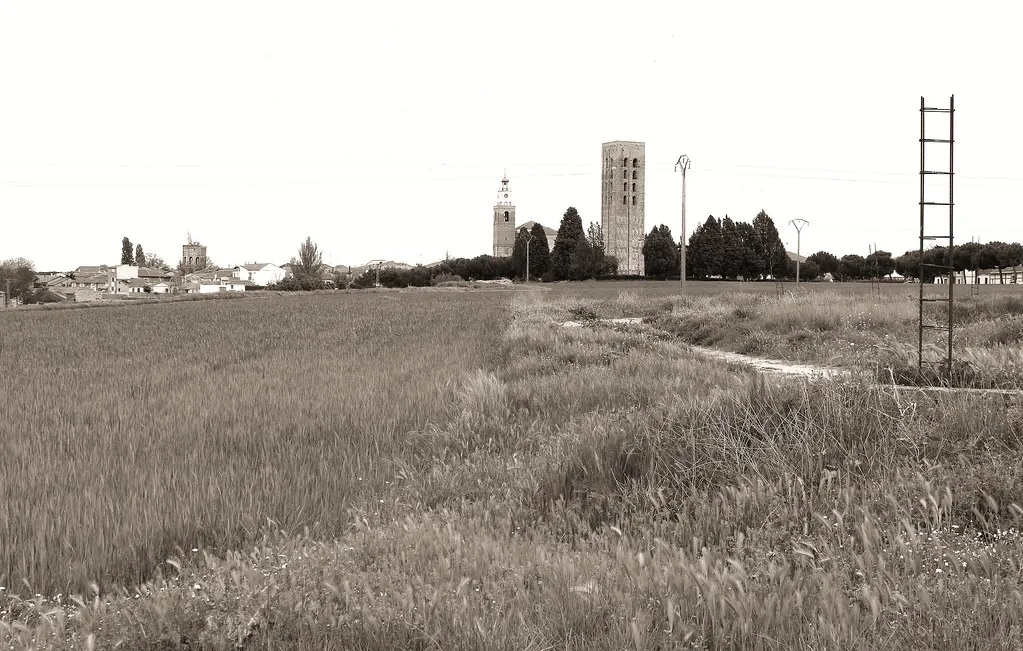
The thermometer on the car dashboard drops a full four degrees between the Segovia ring road and the turn-off to Monterrubio. At 947 metres above sea level the air thins just enough to make the ears pop, and the Guadarrama peaks that looked decorative from the capital now block half the sky. Wheat fields, biscuit-brown by July, roll right to the horizon like a rumpled counterpane. The only vertical punctuation is the stone tower of the village church, visible five kilometres before any houses appear.
Monterrubio is not a place that announces itself. The population sign reads 49 on a quiet weekday, 52 if the mayor’s two university-age children are home. One paved road goes in, becomes the high street for 300 metres, then goes out again. Park anywhere; the kerbs are low and the traffic wardens non-existent. The first sound after switching off the engine is usually a pigeon leaving the eaves of the seventeenth-century Iglesia de San Juan Bautista. The second is the wind.
What the altitude changes
The height matters. Summer afternoons here top out at 30 °C instead of the 36 °C that bakes Segovia city, and nights drop to 14 °C—perfect for sleeping without the air-conditioning Madrid hotels charge extra for. In winter the situation reverses: the village sits just above the thermal inversion layer that traps cold fog in the Duero basin. When nearby Cuéllar is locked in grey murk at –8 °C, Monterrubio can be three degrees warmer and bright. Snow still arrives, but it dusts rather than smothers, and the single municipal plough usually has the road cleared before the baker opens at seven.
That baker, María Jesús, works in a converted coal shed behind the church. She bakes once a day, 30 loaves maximum. Arrive after ten and the choice is between yesterday’s baguette or no bread at all. There is no café, no cash machine, no souvenir shop. The nearest supermarket is a 20-minute drive in Santa María la Real de Nieva, so visitors self-catering in one of the two village cottages should stock up before the final turn-off.
Walking without waymarks
Guidebooks like to promise “circular routes” and “signed PR trails”. Monterrubio ignores them. Instead, a lattice of farm tracks fans out from the last houses, used by tractors heading to the cereal plots and by shepherds moving 2,000-head flocks of Manchego sheep. The tracks are public, wide enough for a Land Rover and graded to a gentle 5 % gradient. Pick any direction and walk for an hour: you will loop back naturally because the grain fields end at dry gullies impossible to cross in trainers.
Early May turns the landscape green-gold as wheat ears form; mid-September brings the combine harvesters that work under floodlights until 2 a.m. to beat the forecast storms. Walkers should keep to the track centre—crops are sprayed right to the edge and the pesticide flags are written only in Spanish. Stout shoes are enough; boots are overkill unless you plan the full 18 km haul to the ruined Roman villa at Saelices el Chico, in which case carry water—there is none between villages and the summer sun still burns at this altitude.
Birders do better than hikers. The plains hold one of the highest densities of little bustard in Castilla y León, and calandra larks rise above the fields in song flights that last three minutes without pause. No hides, no entrance fee, no interpretation boards: just pull in at any gatepost, set a telescope on the roof rail and wait. By nine the thermals start; buzzards and the occasional golden eagle ride them until dusk.
Architecture that refuses to pose
The church tower leans 1.4 degrees north, not enough to rival Pisa but sufficient to make photographers tilt their own heads. Inside, the altarpiece is 1590s pine painted in oxidised vermilion, flaking in continent-shaped shards. Restoration money arrives in dribs and drabs—last year the regional government paid for a new roof after winter ice dislodged three slates that narrowly missed the mayor’s wife. The building is open only on Sunday mornings; at other times ask for the key at house number 14, where Felipe keeps it hooked behind the kitchen door. He will insist on accompanying you, partly to check you don’t pocket the carved Romanesque capital now doing service as a doorstop.
Domestic architecture is a mix of ochre stone and mud-brick, some walls protected by modern cement render, others left to erode into sculptural ridges. Wooden balconies from the 1920s sag under terracotta pots of geraniums that somehow survive the frost. A single new-build breaks the skyline—grey brick, aluminium glazing, satellite dish. It belongs to a Madrid family who arrive for August and Christmas, and their presence divides opinion: income versus noise. The village council recently voted against allowing any more foreign holiday homes, so the stock of rental cottages is fixed at two. Book early.
Eating, or not
There is no restaurant, no bar, no Sunday roast equivalent. The mobile fish van parks by the fountain on Thursday evenings; locals queue for merluza and the proprietor shouts the names of frozen prawns in a Galician accent thick enough to baffle GCSE Spanish. If you want the Segovian roast suckling lamb celebrated in guidebooks, drive 35 minutes to Pedraza where José María’s dining room charges €48 for a full portion (half a baby sheep, sufficient for three hungry Brits). In Monterrubio itself you cook. The cottages come with wood-burning stoves and instructions in English on how to light them without setting off the smoke alarm; bring matches and kindling—supermarket briquettes are sold in 15 kg sacks impossible to split without an axe.
Water straight from the tap tastes of calcium and the altitude; tea brews oddly pale. Serious cooks should bring a filter jug. The local olive oil, pressed in Villacastín, costs €7 a litre if you take your own bottle to the cooperative; the peppery after-kick is strong enough to make British extra-virgin taste like sunflower blend.
When the village switches on
August 15 transforms the place. The population quadruples as descendants return from Madrid, Barcelona, even Manchester. A sound system appears in the square, playing 1990s Spanish pop until three in the morning. The church bell, normally silent, clangs every quarter hour. A paella pan three metres wide feeds the crowd; tickets are €5 and sell out by midday. Visitors are welcome but there is no programme in English—ask what is happening and someone will explain between hugs and cries of “¡Tío!”.
The other date is 24 June, the eve of San Juan, when a bonfire of pruned grapevines and old pallets burns so hot the stones crack. The mayor hands out chorizo sandwiches and plastic cups of local red that stains teeth purple. By eleven the flames die, the wind picks up embers and the altitude chill drives everyone indoors. The next morning the square smells of cold ash and the village returns to 49 inhabitants.
Getting here, and away
From Madrid Barajas take the A-6 to Segovia (75 minutes), then the CL-601 north towards Cuéllar. After 38 km turn right on the SO-20—unsigned except for a white stone with “Monterrubio” painted in fading black. The final 12 km climb 250 metres; the tarmac narrows but remains smooth enough for a standard hire car. Petrol stations are scarce: fill up in Segovia. Buses run only on Tuesdays and Fridays, departing Cuéllar at 06:45 and returning at 14:00, which gives four hours in the village—ample for the church and a circular walk, but not for the Roman villa trek. A taxi from Segovia costs €90 each way; most drivers will wait three hours if paid €30 extra, but bring Spanish cash—card machines are “broken”.
Mobile coverage is 4G on Vodafone, patchy on EE; WhatsApp voice calls work, Zoom does not. The cottages have Wi-Fi beamed from Santa María 8 km away—adequate for email, suicidal for Netflix. Download box sets before you leave the airport lounge.
Worth it?
If you need gift shops, Michelin stars or a heated pool, stay on the coast. Monterrubio offers instead a calibrated sense of scale: how big the sky, how few people, how completely cereal dominates the rural economy. Come for two nights, walk at dawn, listen to the wheat rustle like rain, and by the second evening you will recognise every resident who passes the bench outside the church. On the drive down the hill the temperature rises, the radio regains its signal, and the city reasserts itself. The ears pop again, this time in reverse.