Full Article
about Nava de la Asunción
One of the largest towns; linked to poet Jaime Gil de Biedma and with a lively cultural scene.
Hide article Read full article
A Village That Still Works
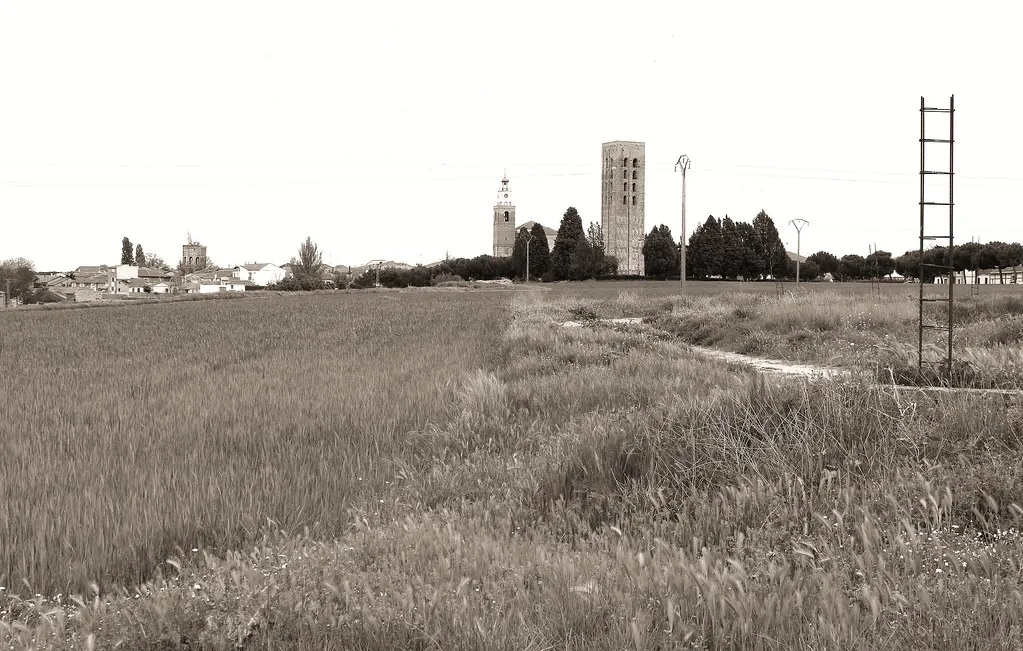
Nava de la Asunción is the sort of place where the church door stands open and there is the faint smell of firewood in the air. It does not impress at first glance or compete for attention in glossy photographs. What it offers instead is something steadier. Bread comes out of the oven in the morning, wine is poured into a simple glass, and neighbours who initially look at you with curiosity soon ask where you are from.
This is a working village in the province of Segovia, in Castilla León. Daily life is visible on the streets. Shops open, bicycles pass through the square, and conversations take their time. Nothing feels staged for visitors. If you arrive, you are stepping into a place that functions on its own terms.
A Royal Title and a Baroque Church
Nava’s status as a Villa dates back to 1773, when King Carlos III granted it the title. It was not an empty gesture. The area was active in cereal production, vineyards were established, and the village held economic weight in the region. The royal decree also added “La Asunción” to its name, in honour of the Virgen de la Asunción, the patron saint who gives her name to the parish church that dominates the main square.
The current church is Baroque and dates from the 18th century. Before it stood an earlier Romanesque building, traces of which can still be sensed in some reused stones. It is not vast or overwhelming, yet it has presence. At certain times of day, sunlight catches the gilded altarpiece and sets it glowing. The bells continue to mark the rhythm of the village more reliably than any wristwatch.
Festivities are usually held in mid-August. At that time the square fills up and residents dress for the occasion. It is not an event designed with outsiders in mind. Rather, it is the point in the year when the whole village comes together and the evening stretches on longer than usual.
Lechazo, Verdejo and Cooking That Needs No Reinvention
Food is central to understanding Nava de la Asunción. To talk about the village without mentioning what is eaten here would be like passing through Segovia and ignoring the Aqueduct. In this part of Castilla León, lechazo, roast suckling lamb, is not a fashionable speciality revived for visitors. It is something that has always been cooked.
Wood-fired ovens remain the benchmark. The result tends to be direct and unfussy, without decoration or elaboration. The focus is on the quality of the meat and the method, rather than presentation.
Wine from the nearby Rueda area appears frequently on the table, particularly verdejo. There is no lengthy commentary about aromas or tasting notes. A glass is poured, you try it, and that is that. If it suits you, another follows.
When temperatures drop, spoon dishes take centre stage. Judiones, large white beans typical of the province, are stewed with their compango, the traditional mix of meats used to give depth and flavour. These are recipes that have travelled down through families and remained largely unchanged, because there has been no need to reinvent them.
Walking the Old Routes
Nava de la Asunción can be seen quickly if you arrive by car and take a turn around the centre. The scale is modest. Yet the surrounding landscape invites a slower pace, especially on foot or by bicycle.
Several paths link the village with the former Comunidad de Villa y Tierra de Coca, a medieval administrative territory, and pass through nearby places such as Moraleja and Coca. These are longer routes, best tackled without hurry and with water in your bag. The countryside here is open and spacious.
Another option is to follow the course of the river Voltoya towards Coca. The route is straightforward and largely flat, typical of the Segovian plains: pine woods, farmland and long stretches of quiet. It is worth being prepared, as there are no places in the middle of the fields to stop and buy supplies, and mobile signal can be unreliable.
There are also itineraries that connect several old churches in the area, some of them with Romanesque remains or medieval details. Even without specialist knowledge of architectural styles, it is worth stepping inside and sitting for a moment. In these villages, the silence within a church remains complete and undisturbed.
Claudio Rodríguez and Everyday Corners
Nava de la Asunción takes pride in being the birthplace of Claudio Rodríguez, one of Spain’s important 20th-century poets. The house where he was born still stands and bears a plaque in his memory. When asked about him, residents often refer to “Claudio” as if he were still part of the neighbourhood.
Another familiar spot is the Fuente del Caño del Obispo, usually dated to the 17th century. It is not monumental. Simply a stone fountain with running water and benches nearby. On Sunday mornings it is common to see older residents sitting there, discussing local news.
Within the municipal boundaries there are also remains of former settlements, such as El Lomo. These are not signposted as formal archaeological sites. More often than not, directions come from a local who explains roughly where to head if you show interest.
A Place That Does Not Pretend
Nava de la Asunción does not win you over in five minutes. There is no hilltop castle and no single monument that demands an immediate photograph. Its appeal lies elsewhere.
There are streets with people in them, businesses that open each day, children cycling past and long conversations in the square. It is the kind of village that still operates as a village.
The simplest approach is the best one. Walk around without rushing. Cross the square, step into the church if it is open, and sit for a while watching the day unfold. Sooner or later, someone may well ask what has brought you here.
If you sit down to eat lechazo, do it in the traditional way: straightforward and shared. If there are leftovers, they are often wrapped up to take home. There is no ceremony to it, yet it often tastes better than meals in far more famous places.
Nava de la Asunción does not try to be anything other than itself. In a region where rural life can feel increasingly fragile, that quiet confidence is part of what makes a stop here worthwhile.