Full Article
about Nieva
Heart of the Rueda D.O. in Segovia; known for its Verdejo vineyards and monastery
Hide article Read full article
An Evening in the Campiña Segoviana
At sunset, when the light drops low over the cereal fields, it slides sideways through the streets of Nieva and settles on the adobe walls. The ground still holds a trace of the day’s warmth. Apart from the occasional car passing slowly along the nearby road, there is very little sound. It is at this hour that tourism in Nieva makes most sense. It has little to do with landmarks or tightly planned itineraries and more to do with pausing for a while in the wide, open plain of the Campiña Segoviana.
Nieva lies around 30 kilometres from the city of Segovia and has roughly 250 inhabitants. The layout remains that of an agricultural community. Streets run straight, houses are low, and behind large gates there are corrals and small yards. Kitchen gardens sit at the edge of the built-up area. Life centres on the Plaza Mayor, where a fountain stands in the middle. In the morning, neighbours pass through to buy bread or run errands. Later in the day, when the heat begins to ease, conversations stretch out in the open air.
This is not a village shaped around visitors. It is a working place, and that character defines the experience of being here.
San Esteban and the Village Heart
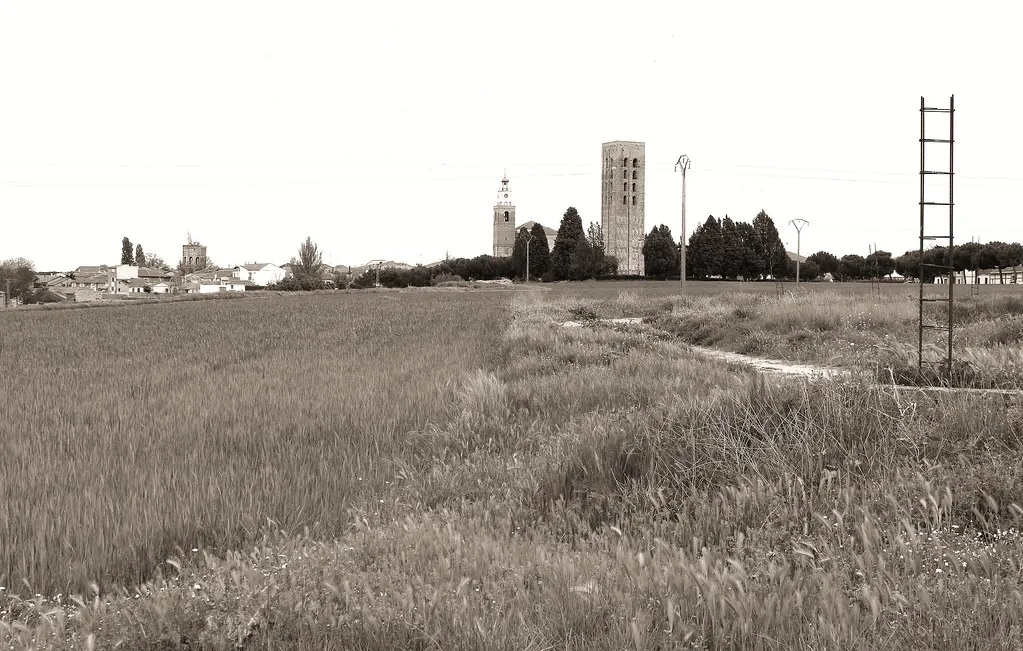
The church of San Esteban defines Nieva’s skyline. Built in stone several centuries ago, traditionally dated to the 16th century, it has a bell tower that carries clearly when the wind is still. The façade shows repairs from different periods. Some stones are lighter, others darker. The subtle variations reveal how the building has been maintained over time rather than preserved as a fixed monument.
Inside, the atmosphere is simple. White walls, religious images and a modestly sized altarpiece create a space closely tied to village life. There is nothing elaborate about it, yet it feels integral to the rhythm of the community.
A few metres away, Calle Mayor opens out towards the tracks leading into the fields. From here begin the agricultural paths still used by tractors and by those heading to their vegetable plots or parcels of land. The transition from village street to open countryside happens quickly. Within minutes, houses give way to fields.
A Horizontal Landscape
The landscape around Nieva is defined by its horizontality. Large cereal plots stretch out in straight lines, broken occasionally by a small pine grove. Dirt tracks cross at right angles, reinforcing the sense of order and openness. The feeling shifts markedly with the seasons.
In spring, the fields turn a soft green. Wind moves through the young ears of grain like a slow wave. The air feels lighter, and the land seems almost fluid under changing skies.
Summer brings harvest. Once the cereal has been cut, the terrain becomes rougher and takes on a golden tone. The sun falls directly onto the open ground, and shade is scarce beyond the village streets.
Winter introduces frost. Early in the morning, ice settles on the grasses by the roadside. It crunches underfoot, and the flatness of the land appears sharper in the cold light.
At night, when the sky is clear, the darkness is deep. It takes only a short walk away from the centre of the village to see the stars clearly. There is no need for a long hike. Any of the agricultural tracks will do. The absence of urban lighting allows the sky to take over.
Walking the Working Paths
One of the simplest things to do in Nieva is to head out on foot along the tracks that surround the village. The terrain is almost entirely flat, so there is no real physical challenge. These are not marked walking routes. They are working paths, created for agricultural use.
Two practical points are worth bearing in mind. After heavy rain, some sections become muddy and agricultural vehicles can leave deep ruts. In summer, the sun is direct and strong. If planning a walk, early morning or late afternoon is more comfortable.
Cycling also suits these tracks, provided the ground is dry. The straight lines and open views lend themselves to an unhurried ride, with the village never too far behind.
There is no prescribed route to follow. The appeal lies in moving without a fixed destination, turning at a crossroads of dirt paths simply to see where it leads, and eventually circling back towards the church tower as a point of reference.
San Esteban, August and Everyday Life
The main celebrations in Nieva revolve around San Esteban. They usually take place in August, when many residents who live elsewhere return for a few days. Religious events and processions form part of the programme, along with gatherings in the Plaza Mayor that continue into the night.
During this period, the village feels fuller. Doors open more often, conversations spill further into the square, and the daily rhythm briefly shifts. Even so, the scale remains local and rooted in community ties.
Outside these dates, life follows a calm pattern. Mid-morning brings the sound of tractors heading out towards the fields. By late afternoon they return, and the village regains a measure of quiet conversation at doorways. There is no ongoing cultural calendar or large events drawing crowds. That absence allows the everyday routines to stand out clearly.
Nieva does not stage itself for visitors. The experience here is about observing how an agricultural settlement continues to function much as it has for generations.
Getting There and Choosing When to Go
From the city of Segovia, the drive to Nieva takes around half an hour along regional roads that cross the countryside. Travelling by public transport is more complicated if heading directly to the village, so it is sensible to check options in advance if not travelling by car.
For those seeking a quieter atmosphere, weekdays tend to be calmer. August brings more activity due to the festivities of San Esteban and the temporary return of many residents.
In the end, tourism in Nieva is secondary to its identity as a working village. What awaits visitors are open fields, silence among adobe-lined streets and the feeling of being in a very flat and very old part of Castile. There are no grand attractions competing for attention. Instead, there is space, light and the steady rhythm of rural life in the Campiña Segoviana.