Full Article
about Rapariegos
Municipality with a convent and notable hermitage; religious history in the countryside
Ocultar artículo Leer artículo completo
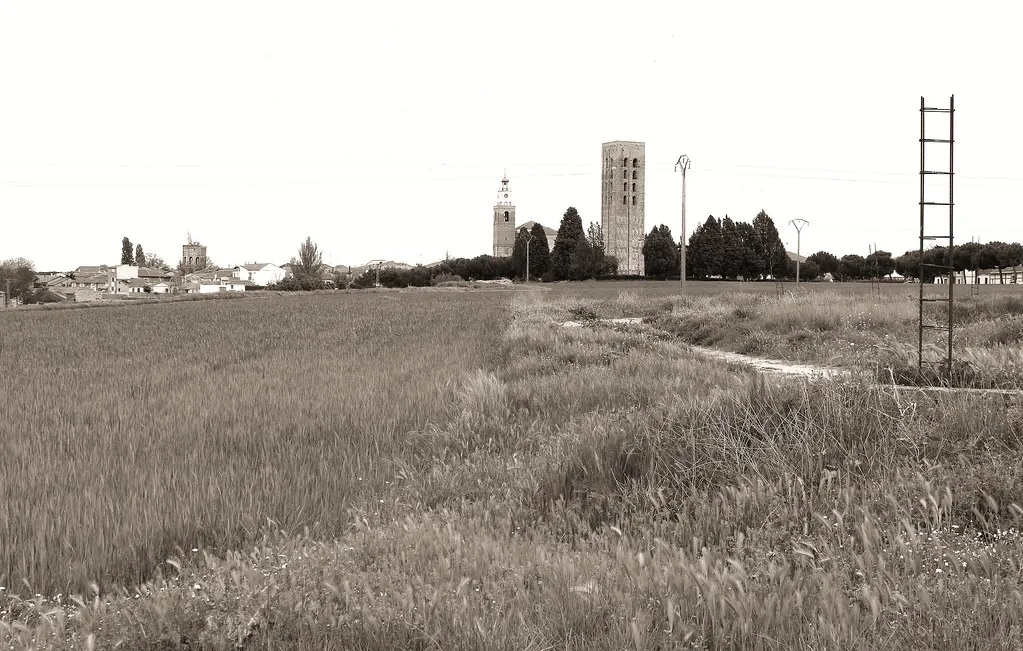
The bells strike ten and the only other sound is a tractor turning earth the colour of burnt umber. From the single bench on Rapariegos' modest plaza you can see the whole parish—church tower, bread-oven adobe, three streets that dead-end into wheat. At 853 m the air is thin enough to make the swifts overhead look sharper, and the horizon feels two postcodes away. This is Spain's cereal belt stripped of postcards: no almond blossom, no saffron fields, just sky, soil and a village that still counts its inhabitants in double figures.
A walkable lesson in Castilian building
Rapariegos needs no map; wander for fifteen minutes and you will have stepped on every cobble. The stone-and-mud walls are the colour of weak coffee where the limewash has flaked, revealing thumbprints of earlier centuries. Palomares—dove-towers—rise from rooflines like stone cigars, reminders that fertiliser once arrived on wings. Push the iron latch of the parish church (ask in the bar for the key-holder; no set timetable) and you move from white glare to cool darkness. Inside, a Romanesque arch sprouts later Gothic ribs; the bell-tower served as a lookout for both Reconquera militias and 1940s farmers scanning for rain. Photography is allowed, but flash is frowned on—the frescoes are already sun-bleached by the door that stands open all July.
Outside, house fronts carry painted numbers two storeys high, legacy of a 1960s scheme to help illiterate delivery men find the right stable. Most doors still measure two mules wide; one has been converted into a garage, the wooden gate swapped for corrugated iron that rattles like a snare drum when the wind sweeps down from the Sierra de Guadarrama, forty kilometres south.
Flat-track hiking under forty shades of beige
The landscape beyond the last streetlamp is table-top flat, criss-crossed by agricultural service roads that cyclists call caminos blancos for their pale gravel. There are no way-markers, but the rule is simple: keep the village tower in your left eyeline and you will loop back eventually. Spring brings emerald shoots and larks; by July the wheat looks like shaken gold plush; October stubble turns the fields a tired lion colour. Shade is non-existent—carry more water than you think decent, and a broad-brim hat even if you normally tolerate sun. Mobile reception is patchy; download an offline map because every crossroads resembles the last.
Birders arrive in late March and again mid-September. Great bustards can sometimes be seen from the track to Brieva, five kilometres north; stone curlews prefer the fallow strip beside the sewage plant (turn left after the cemetery). Bring binoculars rated for heat-haze and patience rated for disappointment—this is farmland, not a reserve, and farmers drive straight through the middle of your sighting.
Roast lamb and other certainties
Segovia's terraza restaurants may charge €28 for a plate of cochinillo, but in Rapariegos you eat what the owner's sister has thawed. The only public dining option is the bar attached to the grocery, open Thursday to Sunday, hours elastic. Order lechazo a day ahead; it arrives in a wood-fired oven whose smoke escapes through the same chimney once used for curing hams. The meat is served in a clay dish with only a wedge of lemon for garnish—no vegetables, no apology. Expect to pay €18–20 for half a kilo, enough for two if you add bread and a €2 glass of tinto de la casa poured from an unlabelled demijohn.
Outside mealtimes, buy supplies in the same shop: local honey crystallised into fudge, Judión de La Granja beans at €4.50 a kilo, and torta del Casar cheese that softens into spoonable cream if you leave it near the car windscreen. Vegetarians survive on tortilla and salad; vegans should bring a cool-box.
How to arrive without your own wheels
Rapariegos sits 35 minutes north-west of Segovia by the A-601, a road that slices through wheat oceans and past the royal palace of La Granfa. There is no bus. Renfe's fastest train from Madrid Chamartín reaches Segovia in 27 minutes; from there you will need a hire car or a pre-booked taxi (around €55 each way, cheaper if you agree a return time). In winter fog the autopista can close—carry a high-visibility jacket, compulsory in Spain and useful when you are pacing the hard shoulder wondering why Google still thinks you will arrive by brunch.
Accommodation within the village limits amounts to one self-catering house, Casa de los Segadores, sleeping four, booked through the regional tourism board's website. Heating is by pellet stove; instructions are in Spanish but the owner, Marisol, will WhatsApp you a video if the ignition light blinks red. The nearest hostal is in Nieva, ten kilometres south, where €45 buys a clean room above a bakery that starts pumping churros fumes at dawn—either a wake-up call or a torture, depending on budget.
When to come, when to stay away
April and mid-September give you green shoots or golden stubble without the furnace heat of July, when thermometers touch 36 °C by eleven in the morning. In January the village sits above the snowline; roads are gritted but unlit, and the single grocery may shut if the owner drives to Segovia for supplies. Fiestas run from 12–15 August: temporary bars, late-night verbenas, and a rodeo-style bull event in a portable ring. Rooms are booked months ahead; if you dislike fireworks, bagpipes or public address systems that crackle all night, avoid these dates. Conversely, if you want to see 193 inhabitants swell to 1,500 for seventy-two hours of communal memory, book early and bring earplugs.
Rapariegos will never make a top-ten list. It offers no souvenir stalls, no audio guides, no Instagram swing. What it does give is a calibration point: a place to recalibrate your sense of scale, where the loudest noise after dark is the church clock counting you towards tomorrow's bread delivery, and the horizon keeps widening until you remember why flat country can feel unexpectedly immense.