Full Article
about Santiuste de San Juan Bautista
Wine-growing village in the D.O. Rueda; known for its wineries and vineyards.
Hide article Read full article
A village shaped by the Campiña Segoviana
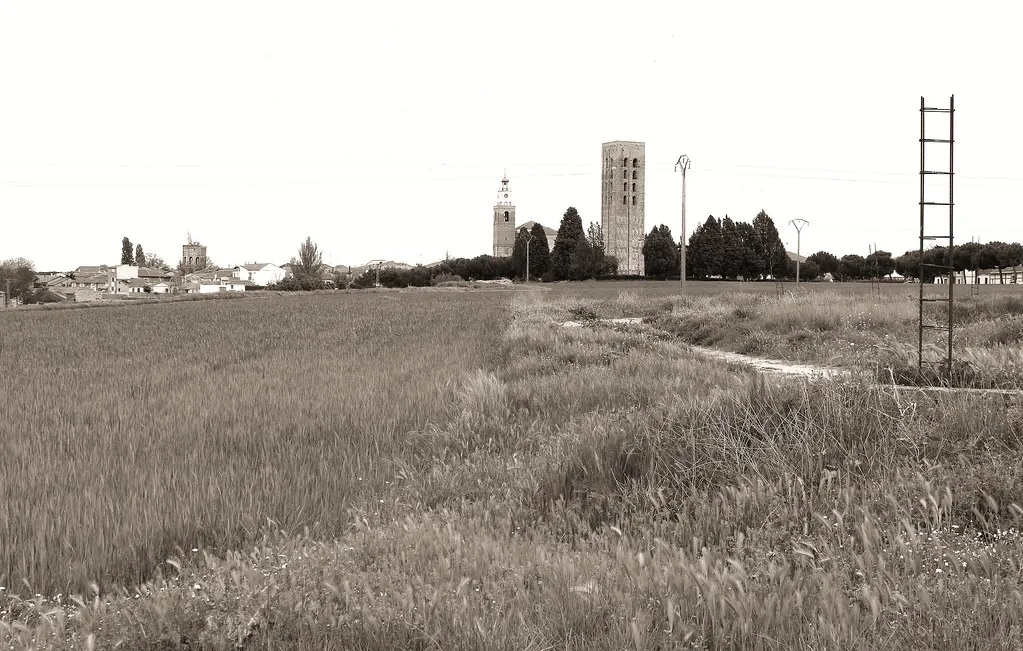
To talk about tourism in Santiuste de San Juan Bautista is first to understand the Campiña Segoviana. This is a landscape that sets the rules. A wide, open plain stretches across much of northern Segovia province, given over almost entirely to cereal crops, with villages spaced at measured intervals across the horizon.
Santiuste, home to just over five hundred residents, fits squarely into this agricultural pattern. It is one of many settlements that developed to serve the surrounding fields, and its identity is closely tied to that function. For centuries the local economy has revolved around the cultivation of wheat, barley and pulses. Even today that rural character can be felt in the pace of daily life and in the layout of the streets.
The village does not present itself as a destination of headline sights. Instead, it offers a clear example of how the Castilian plains have been inhabited and worked over generations. The focus here is less on individual monuments and more on the overall relationship between settlement and farmland.
Medieval roots and the parish church
The name Santiuste de San Juan Bautista points back to the Middle Ages. In early documents it appears in forms related to Sancti Iusti. Later, the dedication to San Juan Bautista was added, and today this is the main religious reference for the municipality.
At the centre of the village stands the parish church, the most prominent building in the urban fabric. The current structure largely dates from the early modern period, probably from the 16th century onwards, although it may have been built on the site of an earlier temple. This layering is common in rural Castile, where churches were often rebuilt or expanded over time.
Architecturally, the church reflects the sobriety typical of the cereal-growing plains. Masonry walls give it a solid, functional appearance. A square tower rises above the surrounding rooftops and acts as a visual landmark from different points in the village. Ornamentation is limited. Rather than standing apart as an isolated monument, the church works as the anchor of the settlement, around which streets and houses are arranged.
Streets built for the countryside
The layout of Santiuste follows the pattern found in many cereal villages in Segovia. Streets are straight or only slightly irregular, leading towards the main square and the area around the church. The overall plan is practical, shaped by the needs of an agricultural community.
Traditional houses are still visible, built from adobe and brick. Their façades are simple, with small openings designed to protect interiors from both winter cold and summer heat. Many properties originally included rear courtyards, storage spaces or stables. These features underline how closely domestic life was linked to farming tasks.
Although some houses have been renovated, the general structure of the village continues to reflect its original purpose. Santiuste was conceived as a place to live from the land. Grain, tools and work animals were once central to everyday routines, and the built environment was adapted accordingly. Walking through the streets today offers a sense of that continuity, even as modern changes have altered individual buildings.
The open horizons of the Campiña
Step beyond the last houses and the agricultural plain appears almost immediately. Fields extend in every direction with very few interruptions, a defining feature of this part of Segovia. The sense of space is striking. There are no dramatic hills or dense woodland to break the view, just cultivated land and wide skies.
Seasonal change transforms the colours of the landscape. In spring, green dominates as crops grow across the plain. At the beginning of summer, golden tones arrive with the harvest. These shifts give rhythm to the year and reinforce the close link between village life and the agricultural calendar.
A network of farm tracks connects plots and neighbouring settlements. These paths allow the surrounding countryside to be explored on foot or by bicycle. In such open terrain it is possible to encounter bird species typical of cereal-growing plains, including bustards and stone-curlews, as well as other steppe birds. Sightings depend heavily on the time of year and on the level of disturbance in the fields, but the environment itself is characteristic of this ecosystem.
Festivities and everyday life
The main celebrations in Santiuste de San Juan Bautista are organised around San Juan Bautista at the end of June. As in many small Spanish villages, the programme combines religious events with popular activities arranged by local residents. These days bring renewed movement to the streets, as families who live elsewhere for much of the year return to gather in the village.
Outside these dates, daily life is calm and closely linked to agricultural routines. Work in the fields continues to mark the seasons, and the social atmosphere reflects the scale of the community. Visitors arriving at quieter times should expect a peaceful setting rather than a packed calendar of events.
Exploring nearby villages
Santiuste can also serve as a base or stopping point for discovering other villages in the Campiña Segoviana. Within a short distance are places such as Vallelado, Santa María la Real de Nieva and Villaverde de Íscar. Each has its own history and features examples of Mudéjar architecture, a style that developed in medieval Spain and blends Christian and Islamic artistic traditions.
Regional roads connect these settlements, and journeys between them are relatively brief. This makes it possible to explore several villages across this part of the province without undertaking long drives. The appeal lies in understanding the broader landscape and its shared architectural and cultural traits.
A visit focused on context
Santiuste de San Juan Bautista can be covered in a short amount of time. There are no grand monuments demanding hours of attention. The interest instead lies in observing details: old adobe houses, the arrangement of the streets, the relationship between the church and the square, and the expanse of cultivated land that surrounds everything.
A visit here is about grasping how the Castilian countryside functions. The village illustrates a way of life shaped by wheat fields, seasonal harvests and modest architecture adapted to practical needs. For those curious about rural Spain beyond its better-known cities, Santiuste offers a clear and unembellished example of the Campiña Segoviana and the communities that continue to inhabit it.