Full Article
about Valseca
Known for its trademarked chickpea and geological museum
Hide article Read full article
A small village in wide-open country
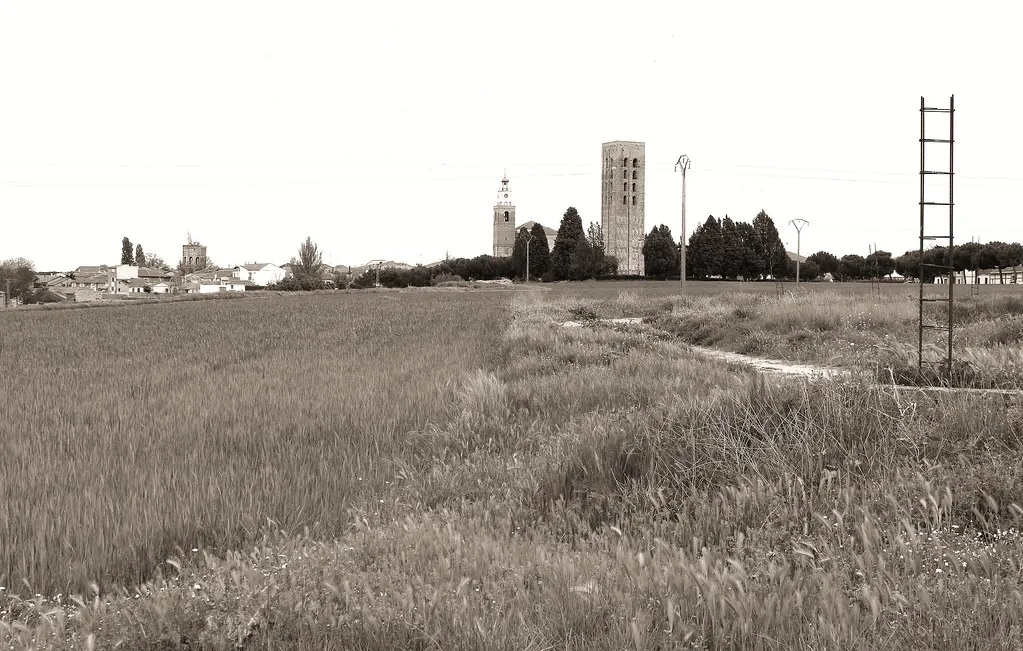
Some places are chosen in advance; others appear on the way to somewhere else. Valseca belongs to the second group. It sits in the Campiña Segoviana, surrounded by cereal fields where the horizon seems to stretch without end. The village arrives almost without warning, small and calm, with just over two hundred residents.
There are no prominent museums or signposted routes telling visitors where to begin. Instead, the place reveals itself gradually. A short walk is enough to understand how life here has long revolved around the land and its cycles.
The setting is defined by its flatness. Fields of grain dominate the view, with the occasional holm oak breaking the line and a wide sky overhead. Buildings follow practical needs rather than style. Stone and wood are common, with thick walls built to withstand cold winters and dry summers. These are houses shaped by work and daily life, and that purpose still defines the pace of the village.
The church at the centre
The Iglesia de la Asunción acts as a clear point of reference. Its tower rises above the rooftops and can be seen from several approaches. Like many churches in the province, the building reflects different periods, with extensions and alterations added over time.
When open, the interior contains a few altarpieces and simple religious elements. It is not a grand or monumental space, yet it helps explain the importance of parish life in villages of this size. The church is less about spectacle and more about continuity, tied closely to the routines and traditions of the community.
Streets shaped by work and storage
A walk through Valseca does not take long, but it benefits from a slow pace. Large wooden gates appear along several streets, once used to access courtyards or storage areas. These features hint at the working nature of the buildings, where agricultural life dictated how space was organised.
Underground cellars are another recurring element. Dug into the ground, they were used to store wine or preserve food before modern methods were available. They are common across this part of Segovia and form part of the practical landscape rather than a decorative one.
Some houses have been updated while keeping their traditional character. Others remain much as they were decades ago. The village still reflects a time when daily routines were tied more closely to fields and seasons than to cars or fast roads. That sense of continuity remains visible in the layout of the streets and the way buildings relate to one another.
Tracks across the Campiña Segoviana
Beyond the edge of the village, agricultural tracks extend into the surrounding countryside. These are simple dirt paths that link fields and nearby settlements, used by farmers as part of their daily work.
The landscape changes noticeably with the seasons. Spring brings green fields and a little more movement across the land. By summer, the colours shift to gold, and the wind moves through the grain in long, steady waves.
Birdlife is part of this open environment. Species such as bustards, little bustards or larks can often be seen, along with kites circling above fallow fields. The area is not arranged as a formal natural park with marked trails. These are working routes rather than designed itineraries, which is precisely what gives them their character within the Segovian plateau.
Food rooted in the countryside
Food in Valseca follows the same logic as the landscape. Dishes are filling and straightforward, shaped by the needs of long working days. Roast lamb, legume stews, cured meats and candeal bread form the basis of what is eaten here.
Ingredients often come from the immediate surroundings. Kitchen gardens, livestock and traditional pig slaughtering practices still play a role in local culture. The result is a direct style of cooking that does not rely on modern reinterpretations or elaborate presentation. It is easy to understand and closely tied to the environment.
When the village fills again
The atmosphere shifts during local festivals, as happens in many small villages. These are the moments when people who live elsewhere return, and Valseca becomes busier than usual.
Events include processions, open-air dances and communal meals organised by residents themselves. Religious traditions remain part of the calendar, with occasions such as Semana Santa and local pilgrimages continuing to be observed.
Valseca is not defined by major landmarks or large-scale tourism. It works better as a brief stop that helps explain this part of the Campiña Segoviana: open land, small communities and a way of life still closely linked to the soil. A simple walk through the streets and out towards the fields is often enough to grasp what the place is about.