Full Article
about Valverde del Majano
A dynamic industrial and residential town, known for its cultural activity.
Hide article Read full article
A village shaped by open land
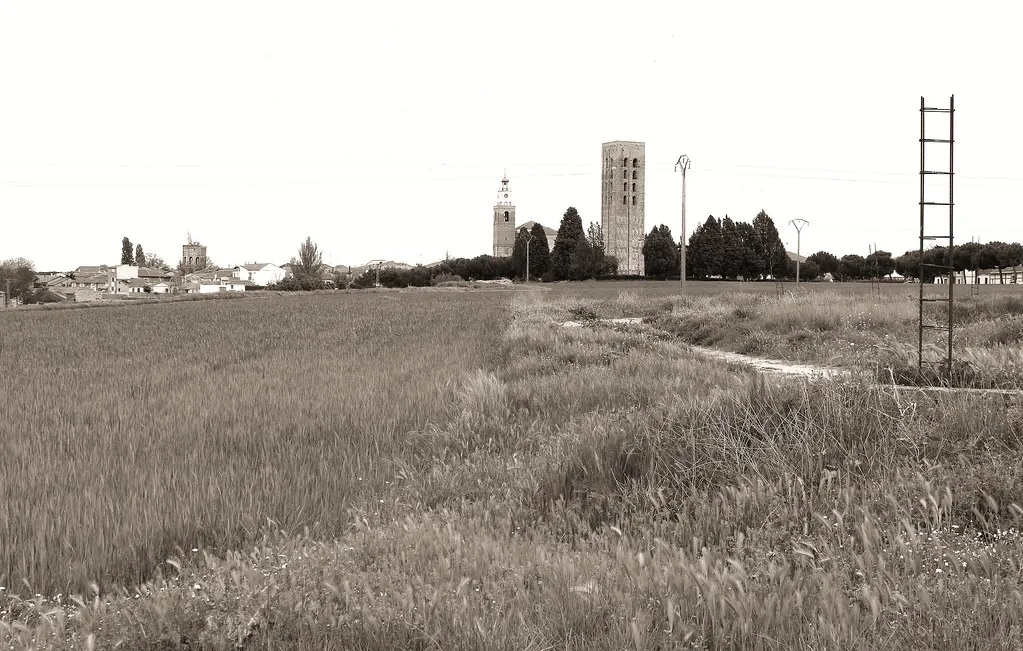
Valverde del Majano sits in the centre of the Campiña Segoviana, a broad agricultural plain in the province of Segovia. The setting explains much of what the place is. This is cereal country, defined by long horizons and very few interruptions, where the passing of the seasons is seen mainly in the shifting colour of the fields. With just over a thousand residents and an altitude of around 925 metres, the village reflects the character of settlements across this part of Castilla y León: a mix of traditional houses and more recent builds, and a daily rhythm still closely tied to farming.
The proximity to Segovia, less than twenty kilometres away, plays an important role. Valverde falls naturally within the city’s orbit. Many residents live here while working in the provincial capital, and that relationship has influenced how the village has grown in recent decades. It is not a place designed around visitors. That absence of a tourism focus gives a clearer view of how the Segovian countryside functions, rather than presenting a polished destination.
From the higher streets, the surrounding farmland opens up in wide views. Spring brings intense greens across the fields, while summer shifts the palette towards dry gold tones and dusty tracks. Patches of pine and holm oak appear here and there, breaking the continuity of the terrain. On clear days, the outline of the Sierra de Guadarrama can be made out to the south, faint but distinct against the sky.
Built heritage and everyday architecture
The centre of Valverde del Majano is organised around the parish church of Nuestra Señora de la Asunción. The current building dates from the 16th century, with later alterations that likely took place in the 18th century. This combination is visible in its structure, where different construction approaches meet. The brick tower stands out from various points in the village and acts as a visual reference when moving through the streets.
Around the church, several blocks still preserve traditional housing. These buildings are constructed using combinations of stone, brick and adobe, materials typical of the area. Some retain large wooden gates once designed for carts, along with simple wrought iron grilles on the windows. Wooden eaves extend over façades, and interior courtyards hint at a practical design shaped by climate and agricultural life rather than ornament.
Below ground, there is another layer to the village. Subterranean wine cellars, excavated into the earth, are a common feature in many towns across the province and Valverde is no exception. Most of these spaces are now either closed or used privately, yet they point to a time when producing wine for household consumption formed part of the local economy.
Moving through the Campiña
The countryside around Valverde del Majano is easy to explore on foot or by bicycle. Agricultural tracks link the village with others in the area, forming simple routes across largely flat terrain. There are no major monuments or dramatic landmarks along these paths. The appeal lies in the openness of the landscape and the sense of continuity that stretches across the plain.
Walking or cycling here brings a direct awareness of the environment. The lack of shade is noticeable across much of the route network. In summer, the heat builds quickly, so it makes sense to head out early in the day or later in the afternoon. At other times of year, the same openness allows for uninterrupted views, with the sky occupying as much attention as the land itself.
These routes also reflect how the territory is used. Fields dominate the scene, punctuated occasionally by clusters of trees or distant farm buildings. The simplicity of the terrain makes orientation straightforward, yet distances can feel longer than expected due to the absence of clear visual markers.
Festive moments and local traditions
The calendar in Valverde del Majano is marked by celebrations tied to religious traditions, with the most prominent centred on Nuestra Señora de la Asunción around 15 August. During these days, the village becomes noticeably more active. Many people who live elsewhere return, and the pace of daily life shifts. Religious events, activities in public spaces, and family gatherings fill much of the week, creating a more animated atmosphere than usual.
In September, festivities dedicated to San Miguel are also held. These tend to feel more local in scale, though they are no less participatory. Both occasions offer a clear sense of the community character that defines the village. For most of the year, that character is expressed in quieter ways, through routine interactions and a steady pace of life. During the festivals, it becomes more visible in shared celebrations and collective involvement.
Getting there and getting your bearings
Valverde del Majano is easily reached from Segovia via the SG‑342 road, with a journey time of roughly twenty minutes by car. From Madrid, the usual approach is to travel first to Segovia via major routes such as the A‑6 or the AP‑61, then continue towards the Campiña along the same road.
The short distance to Segovia makes access straightforward and quick, reinforcing the close relationship between the village and the city. This connection helps explain both the presence of commuters and the gradual development seen in recent years. Even so, once in Valverde, the atmosphere remains distinctly rural, shaped more by fields and local routines than by the flow of visitors.