Full Article
about Pinilla del Campo
Small grain-farming village
Hide article Read full article
Morning Light on the Campo de Gómara
Early in the morning, when the sun is still low in the eastern sky, Pinilla del Campo appears almost motionless in the middle of the plateau. The air often carries the scent of dry earth and cereal crops, and for a few minutes the only sound is the wind moving across the fields. Houses built from a mix of local stone and adobe, with practical repairs made from whatever materials were at hand, keep their shutters half closed as the light slowly brightens the façades.
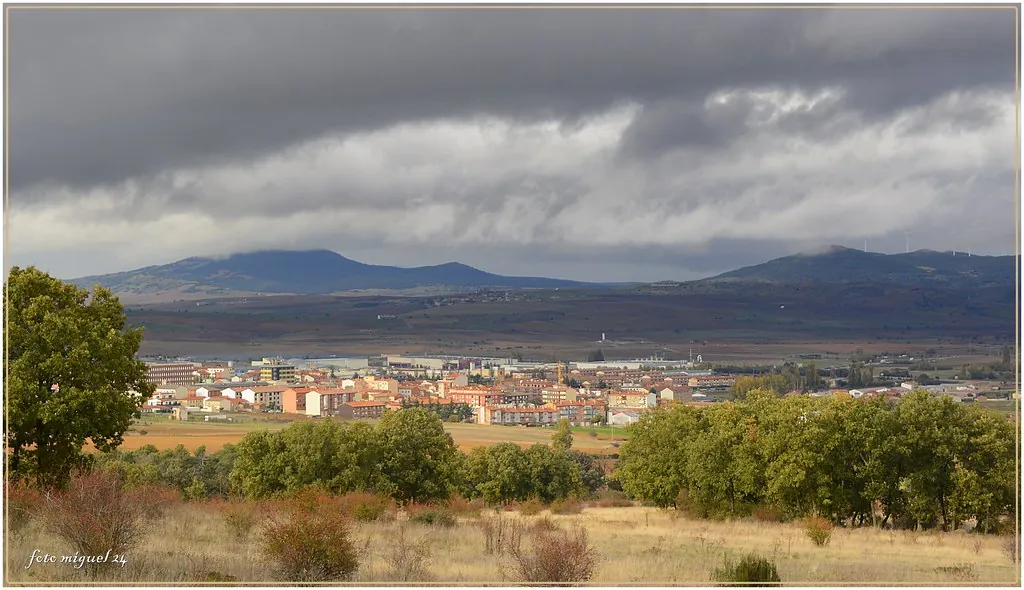
Today, Pinilla del Campo has very few registered residents, just a handful of homes lived in all year round. The streets are short and can be walked in a matter of minutes. Beyond them stretches the plain of the Campo de Gómara, one of those landscapes in the province of Soria where the horizon seems fixed in place and cultivated fields run uninterrupted into the distance. In summer, gold tones dominate. In spring, when the cereal is still young, the land turns a clear green that contrasts with the pale soil of the tracks.
This is rural Castilla y León at its most open and elemental. There are no visual distractions, no rush of traffic, just cultivated land and sky.
San Miguel and the Shape of the Village
The clearest landmark within the village is the church of San Miguel Arcángel. Built from local limestone, it rises above the rooftops with a simple tower that stands out against the flat surroundings. When the door is open, stepping inside brings an immediate change in temperature. A gentle coolness replaces the outdoor heat, along with the scent of old wood and the particular stillness of rural churches where few people pass through during the day.
The layout of the streets has changed little over time. Low houses line the lanes, their wooden gates darkened by years of weather. Some still reveal corrals with mangers or former storage spaces for tools and farm equipment. Many properties remain closed for much of the year. Others are gradually repaired when families return in summer or during festival periods. There are no major renovations designed to impress visitors, no façades reworked for display. Architecture here remains practical, shaped by need rather than aesthetics.
The overall impression is of continuity. Even with a shrinking population, the physical structure of the village endures, quietly tied to its agricultural surroundings.
Tracks Through the Cereal Fields
From the edges of the village, several agricultural tracks head out across the plain. These dirt paths are mainly used by tractors and farm vehicles. Outside busy periods in the farming calendar, they are almost empty. Walking along them can feel hypnotic. Dry ground crunches underfoot, wind brushes through the cereal, and now and then a hoopoe or a crow cuts across the silence.
The landscape shifts markedly with the seasons. In April and May the fields are alive and slightly damp, full of fresh growth. By July, after the harvest, the view becomes a patchwork of golden stubble and pale soil. Shade is scarce. Anyone planning to walk here would be wise to head out early in the day or later in the afternoon, when the sun begins to drop and the air moves a little more freely.
There is very little to interrupt the view. No wooded areas, few buildings beyond the village itself. The sense of scale comes from the width of the sky and the unbroken line of the horizon.
Nightfall on the Plateau
Darkness arrives quickly once the sun sets. There is almost no surrounding light pollution, and the sky opens fully above the plateau. On clear nights, the milky band of the Milky Way is visible, along with far more stars than are usually seen near towns and cities.
Venturing out along the tracks after dark calls for a small torch. The terrain is straightforward, but beyond a short distance from the village everything becomes completely black. In exchange, the silence is deep. Occasionally a distant dog barks, or the wind stirs the stubble left after harvest, yet most of the time the stillness dominates.
In a place with so few inhabitants, night feels expansive rather than enclosed. The absence of artificial light and constant noise creates a different rhythm, one that follows the natural cycle of day and dark.
Agriculture and Everyday Life
Life in Pinilla del Campo has long been tied to cereal farming and livestock. In the surrounding area, sheep farms can still be seen, along with cultivated plots that mark the pace of the agricultural year. Much of the food associated with the wider region traditionally comes from these types of family-run farms scattered across the comarca. Lamb, dried pulses and cured sausages form part of the local culinary identity, rooted in the produce of the land.
Within the village itself, there are no shops or bars open on a continuous basis. For bread, groceries or any everyday errands, residents typically drive to nearby villages in the Campo de Gómara or to larger towns elsewhere in the province. Daily life depends on short journeys beyond the village limits.
This lack of services reinforces the sense that Pinilla del Campo is primarily a place of residence and return, rather than a commercial stop.
San Miguel and the Return of Former Residents
The festival linked to San Miguel is usually held towards the end of September. During these days, the village changes pace as former residents and relatives who now live elsewhere come back. Houses that have been closed for months reopen, and conversation returns to the streets in the afternoon.
There are no large stages or programmes designed to attract outside crowds. The gatherings are simple: long shared meals, conversations that stretch into the night, and the atmosphere of reunion that continues to define many small villages in Soria. The focus is on those with ties to the place rather than on tourism.
For a short period each year, the population rises and the streets regain a level of activity that contrasts with the usual quiet.
When to Visit Pinilla del Campo
Spring and early autumn are generally the most pleasant times to walk in the surrounding countryside. In summer, the heat can be intense and there is almost no shade along the tracks. In winter, the winds that sweep across the plateau and the frequent frosts can leave the village extremely quiet for days at a time.
Pinilla del Campo is small even by the standards of rural Soria. There are no spectacular monuments and no organised activities waiting on arrival. What it offers instead is space, open sky and a sense of stillness that is increasingly rare. The appeal lies in its scale and its landscape: fields that change colour with the seasons, a church that anchors the village, and a horizon that seems to hold steady from dawn to night.