Full Article
about Campaspero
A high-plateau village known for its white limestone and roast-meat cuisine.
Hide article Read full article
A quick stop on the high plain
Tourism in Campaspero is straightforward. You arrive, park near the main square or on any wide street in the centre, and start walking. Parking is usually easy unless there is a local celebration or a busier weekend. The village is small enough to cover on foot in a short time, with no need for planning or routes.
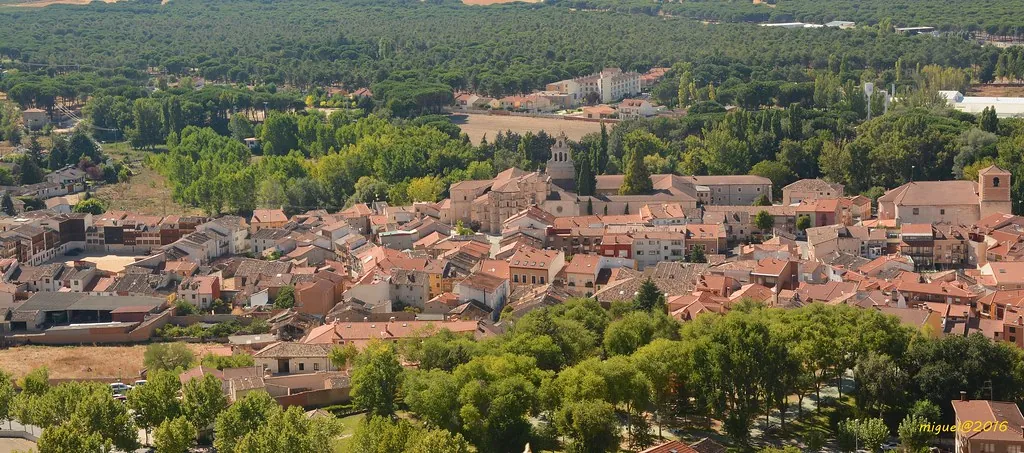
Campaspero sits a little over an hour from Valladolid, reached by the A‑11 and local roads. The setting belongs to the Campo de Peñafiel, a high, open plateau where vineyards spread across the surrounding land. Limestone defines the place. It shows up everywhere, in façades, boundary walls and older paving underfoot, giving the village a pale, dry look that blends into the landscape.
The square and the streets
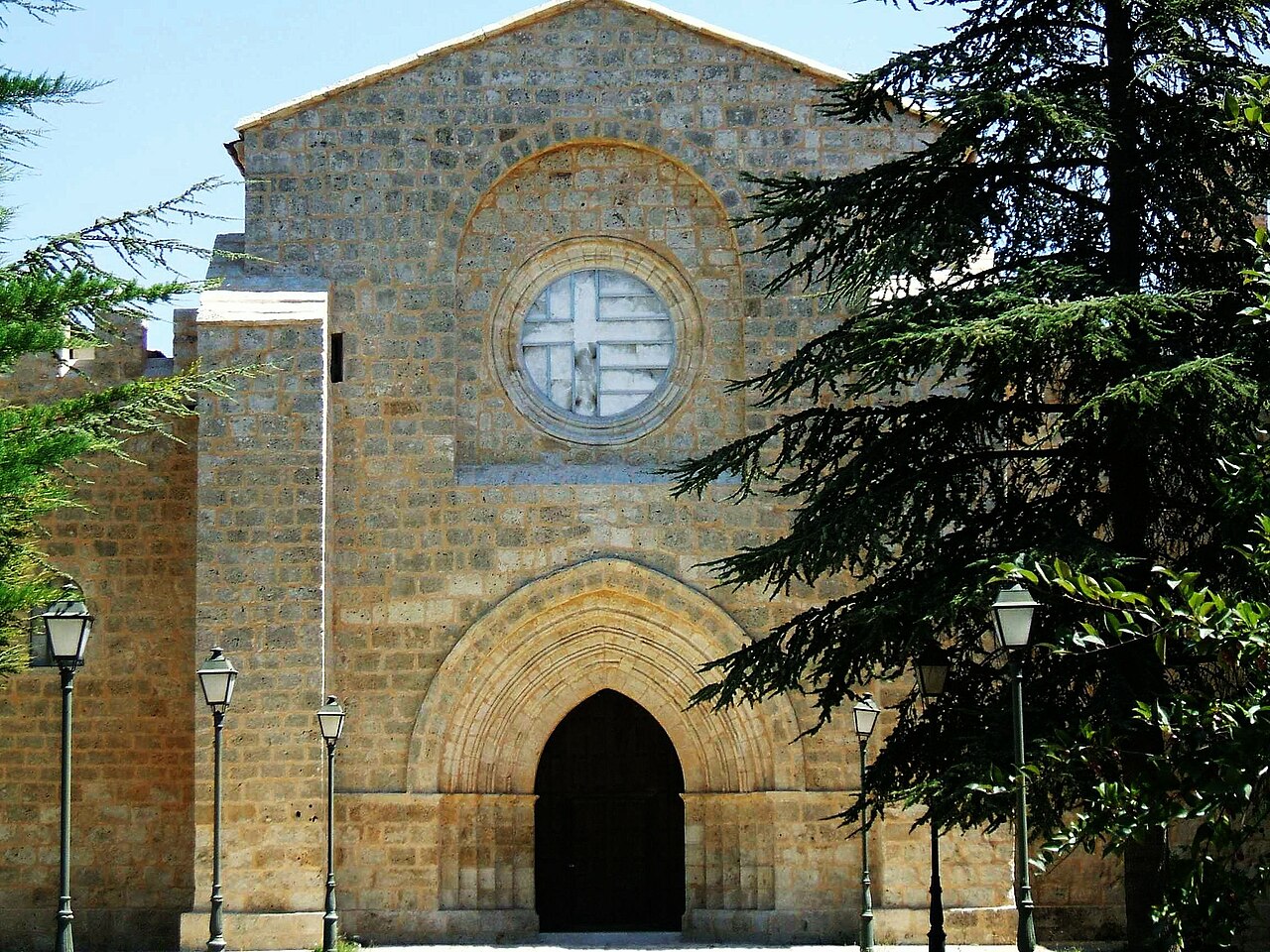
The Iglesia de San Pedro Apóstol stands on the main square and anchors the centre of Campaspero. It has a large tower and a solid stone structure, with a mix of styles that reflects how it was extended over time. The interior is simple rather than decorative. If the door happens to be open, it is worth stepping inside briefly before heading back out into the light.
The streets around the square are short and easy to follow. Houses are built in stone or whitewashed, often with enclosed courtyards. Beneath some of them are underground wine cellars, a common feature in this part of Castilla y León. Most are still privately owned, so what you will usually see are entrances or small vents at ground level rather than the interiors.
On the outskirts of the village, several dovecotes remain, including the Palomar de los Frailes. These circular constructions are typical of the province of Valladolid. Many are now in a state of decline, partly abandoned or worn by time, so they read more as part of the rural scenery than as preserved monuments.
The surrounding landscape
Beyond the last houses, the land opens out into páramo, a high plain of cereal fields and vineyards that shifts in appearance through the year. Autumn brings some colour to the vines, while for much of the rest of the year the tones are dry and muted.
There are very few trees and almost no shade. Anyone heading out on foot or by bike needs to come prepared with water and some protection from the sun. Agricultural tracks leave the village in all directions, linking Campaspero with nearby places such as Canalejas or Fompedraza. These routes are generally easy to follow, though they can be long and fully exposed.
Secondary roads offer another option for cycling. Traffic is light and the gradients are gentle, making for steady riding rather than technical climbs. The trade-off is the sense of distance: long straight stretches and the presence of wind when it picks up across the plateau.
Wine and food in the area
Campaspero lies within the Ribera del Duero wine region, one of Spain’s best-known wine-producing areas. Even so, the visible activity linked to wine is more noticeable in neighbouring towns. From here, it is possible to drive to other nearby locations where more wineries can be visited.
Food in the area follows the traditions of Castilla. Roast suckling lamb, known as cordero lechal and typically cooked in a wood-fired oven, remains central. Alongside it are straightforward, hearty dishes that suit the climate and the agricultural setting. Options for eating out are limited, especially outside peak periods, and not every place is open year-round or at all hours. It makes sense to check in advance if planning to stop for a meal.
Festivities and local rhythm
The main celebrations in Campaspero revolve around San Pedro at the end of June. There is a procession, events in the square, and activities organised by local residents. The atmosphere is that of a small village gathering, with families out in the streets and a modest, close-knit feel.
Summer brings a slight increase in activity as people return to houses they keep in the village. The streets fill a little more, though the scale remains small. In September, the grape harvest, the vendimia, briefly energises the surrounding countryside as work in the vineyards takes priority for a few days.
A place to pause, not to rush
Campaspero is not a destination for major monuments or an extensive historic centre. It works better as a short stop or as a quiet base for exploring the Campo de Peñafiel and the wider Ribera del Duero. A simple plan is enough: walk through the square, wander the stone streets, and then head out towards the vineyards along the road. That gives a clear sense of what the village is about without needing to look further.