Full Article
about Canalejas de Peñafiel
Historic village in the Duratón valley, noted for its Romanesque heritage and sweeping views.
Hide article Read full article
A Village on the Campo de Peñafiel
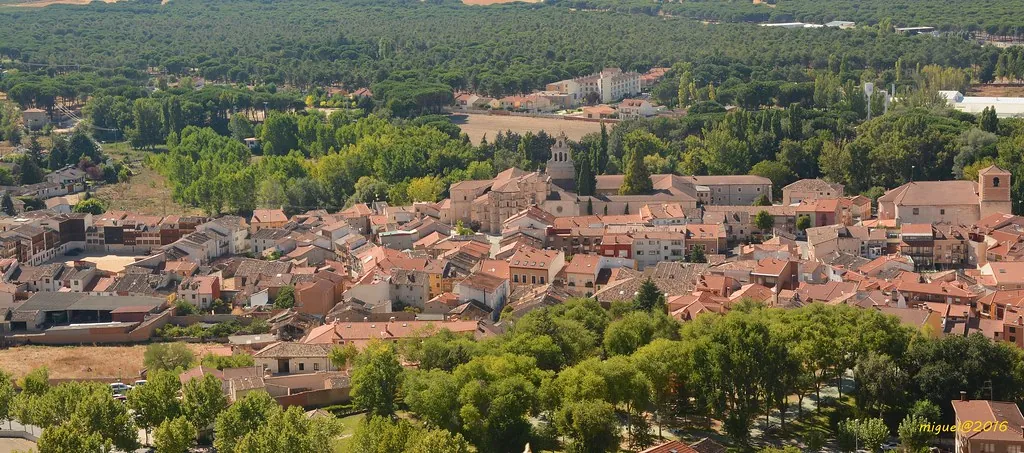
Tourism in Canalejas de Peñafiel begins with a simple question: where exactly is it? The village lies in the Campo de Peñafiel, on the eastern edge of the province of Valladolid, in Castilla y León. This is a landscape of open rolling plains where cereal crops and vines have shaped daily life for centuries. With just under 250 inhabitants, Canalejas keeps the scale and rhythm of a small agricultural settlement on the Castilian plateau. Streets are short, houses are low, and the pace of life still follows the agricultural calendar.
The surrounding countryside is typical of this part of inland Spain. Wide fields of grain stretch out in every direction, turning completely golden in summer. Vines occupy the most favourable plots, and the horizon feels long and uninterrupted, broken only by the occasional stand of pine trees or the low hills that lead towards the valley of the River Duero.
Canalejas forms part of the network of villages that orbit Peñafiel, the historic centre of the area. Its castle, visible from far across the plain, has long dominated this comarca, a district closely linked to wine production for centuries. Understanding that connection between land, vine and settlement is key to understanding the village itself.
Everyday Architecture and the Parish Church
There are no grand monuments or vast historic complexes here. What defines Canalejas de Peñafiel is its everyday architecture. Houses are built with a mixture of stone and adobe, their thick walls designed for insulation against harsh winters and hot summers. Wide gateways hint at an agricultural past shaped by carts and livestock, while small courtyards recall a time when most families relied on their own domestic economy.
On the edges of the village, old dovecotes can still be seen, a reminder of traditional rural practices across Castilla y León. Scattered along small slopes are traditional bodegas, wine cellars dug into the earth. These underground spaces are common throughout the Peñafiel area. Before modern refrigeration, they provided the stable temperatures needed to preserve wine throughout the year.
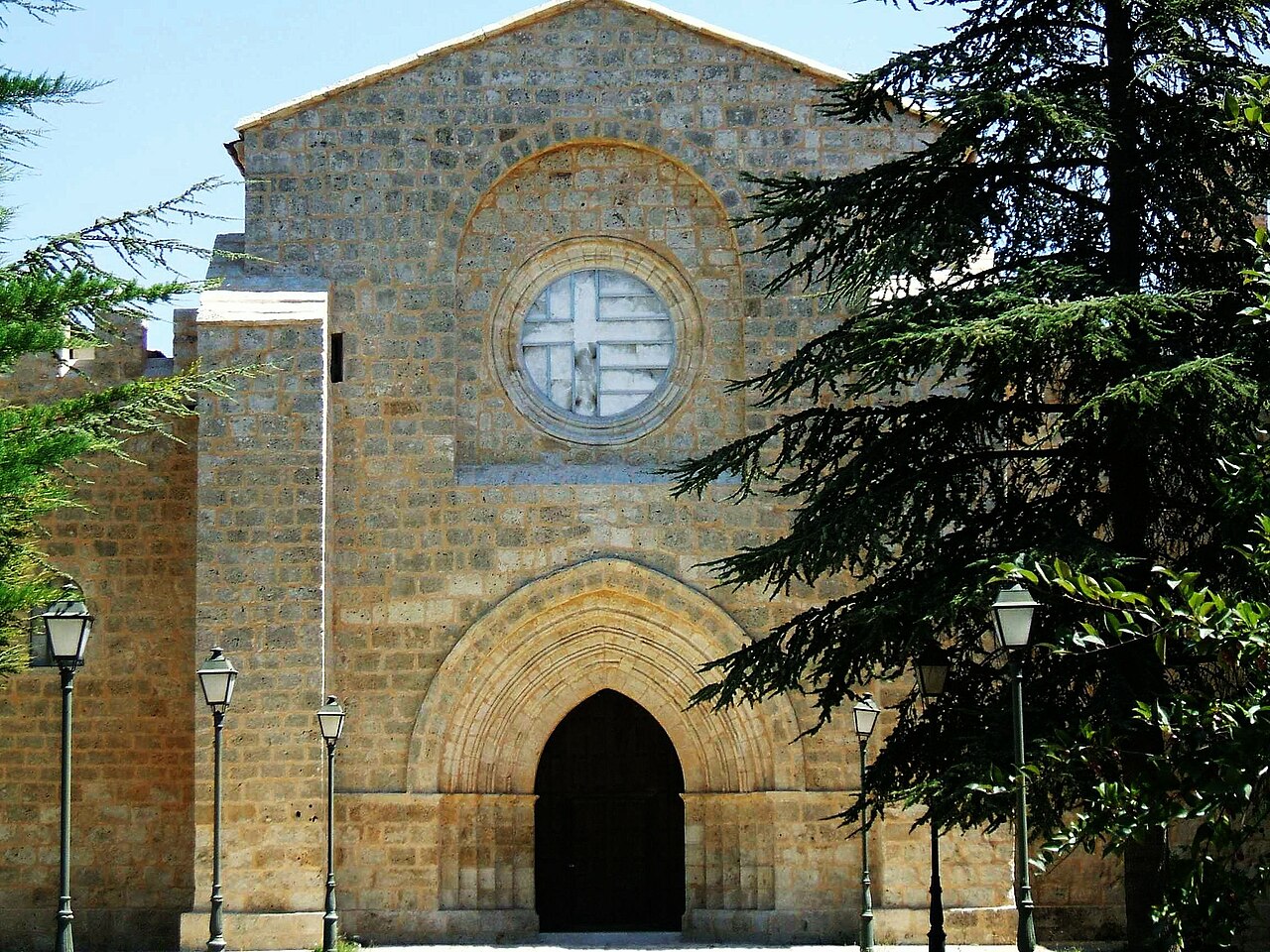
The principal building in the village is the parish church of San Andrés. At least part of its origin appears to date back to the 16th century, although its current appearance reflects later alterations, typical of rural churches in the region. The construction is simple, using local materials, and responds more to its function as a parish church than to any ambitious artistic programme.
More significant than its architecture is its role within the village. As in many small municipalities across Castilla, the church remains the focal point of community life. The space around it forms the centre of social activity, structuring the layout of the settlement and serving as a meeting point during important moments of the year.
Walking through the streets reveals how the village developed. Facades are sober, practical rather than decorative. Some houses still preserve traditional features such as pronounced eaves, small balconies or former animal enclosures. Together they speak of an economy long based on farming and livestock.
Between Fields and Vineyards
The landscape around Canalejas is well suited to exploring on foot or by bicycle, following agricultural tracks that connect it to other villages in the Campo de Peñafiel. Many of these routes remain working paths used by tractors and local residents. They are not always signposted as hiking trails, so anyone unfamiliar with the area is advised to carry proper maps or GPS.
Viticulture is central to the identity of the wider comarca. In nearby villages and around Peñafiel there are numerous wineries associated with the Denominación de Origen Ribera del Duero, one of Spain’s most recognised wine appellations. Some organise visits, usually arranged in advance, offering insight into how vineyards are cultivated today in this stretch of the Duero valley.
Peñafiel itself is only a short drive away and serves as the historical and cultural reference point for the area. Its castle, visible from many kilometres across the plain, underlines the strategic importance the town once held. Beneath its urban centre, underground galleries carved into the ground further illustrate how central wine production has been to the local economy for centuries.
In autumn, nearby wooded areas and scattered pine groves attract mushroom enthusiasts. As across Castilla y León, mushroom picking is often regulated, so it is sensible to check local rules before heading into the countryside.
Traditions Rooted in the Rural Calendar
The main festivities in Canalejas de Peñafiel are usually held in summer, when many former residents return to the village. During those days the square and streets regain a livelier atmosphere. Religious events, communal meals and activities organised by the neighbours themselves shape the programme. The emphasis is on participation and reunion rather than spectacle.
In winter, the tradition of the matanza del cerdo, the slaughter and preparation of the pig for household consumption, still survives in some homes. For generations this was an essential practice for family provisions and also an important social occasion. Although it is less common today than in the past, it remains part of the shared memory of many villages in the Campo de Peñafiel.
Canalejas de Peñafiel is, at heart, an agricultural village that has barely changed in scale. It does not depend on tourism, nor does it appear to be trying to reinvent itself around it. Precisely for that reason, it preserves a clear image of how small rural settlements in this part of Valladolid have functioned for a long time. Visitors who arrive with an interest in landscape, architecture and the quiet continuity of rural life will find a place that reflects the enduring patterns of the Castilian plateau.