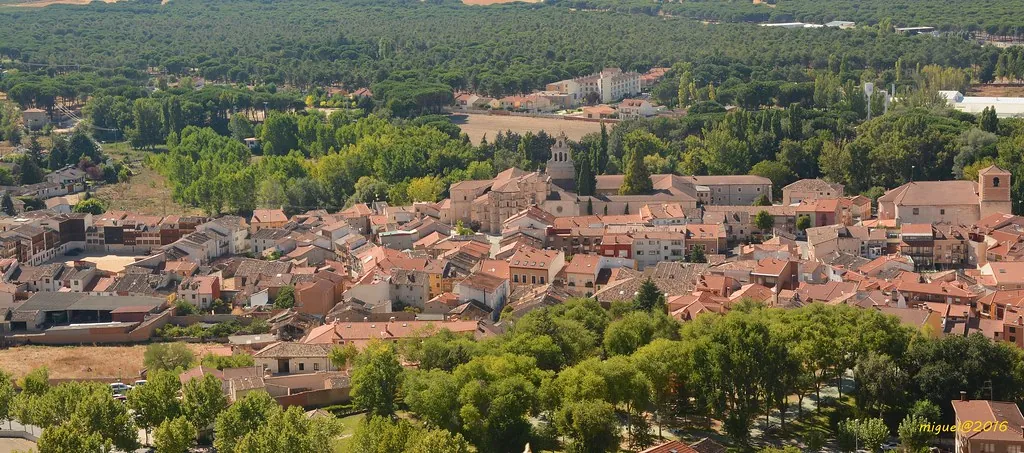
Vista aérea de Cogeces del Monte
Instituto Geográfico Nacional · CC-BY 4.0 scne.es
Castilla y León · Cradle of Kingdoms

Cogeces del Monte

The tractor grinds up Calle Real at half past seven, dragging the smell of diesel through stone archways and past houses whose wooden doors haven't...

640 inhabitants · INE 2025
885m Altitude

Why Visit

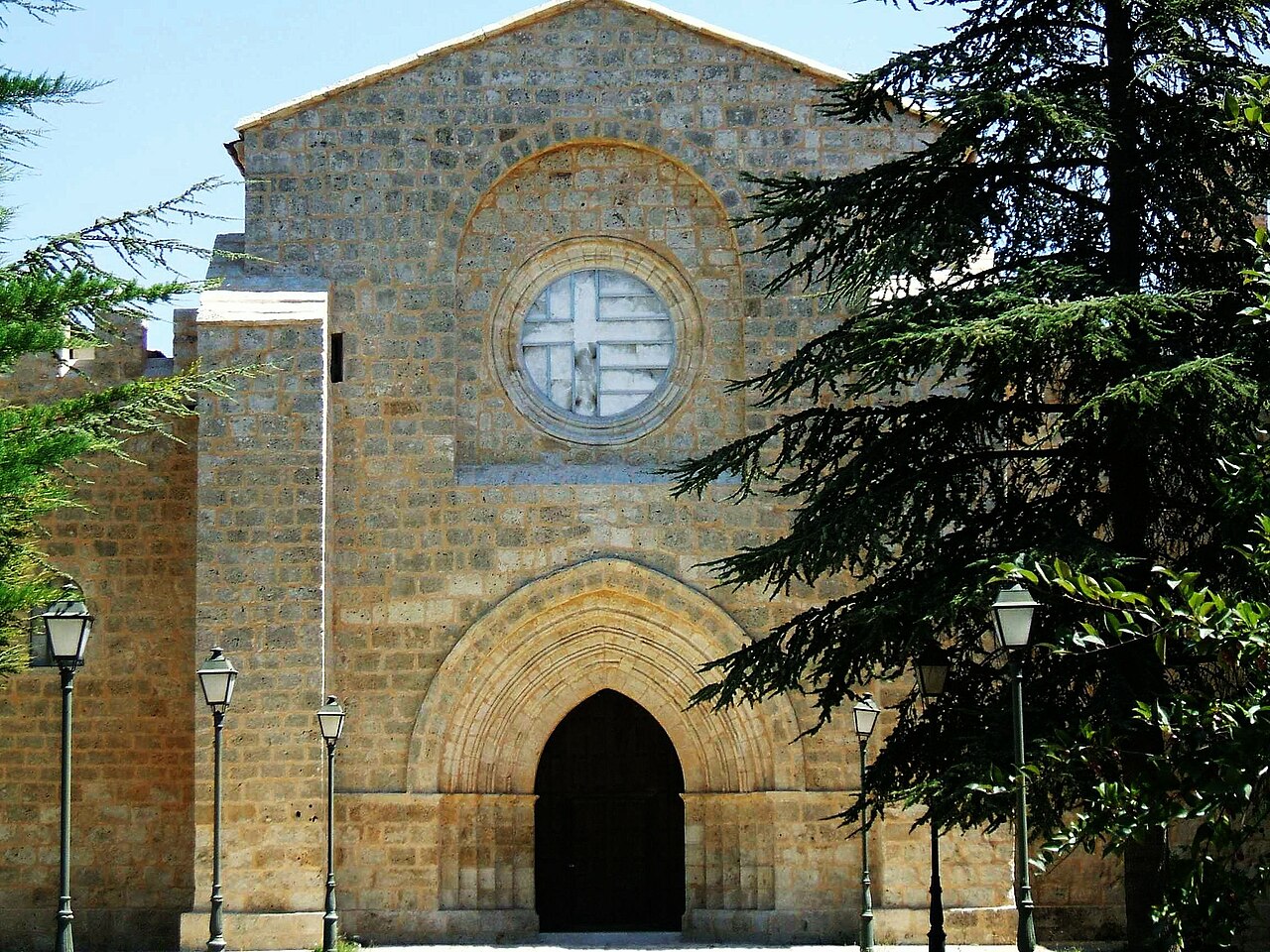
Mountain Monastery of La Armedilla (ruins) Cultural tourism

Best Time to Visit

summer

San Antonio (June) agosto

Things to See & Do
in Cogeces del Monte

Heritage

  • Monastery of La Armedilla (ruins)
  • Church of the Assumption

Activities

  • Cultural tourism
  • Hiking to La Armedilla

Festivals
& & Traditions

Fecha agosto

San Antonio (junio), Virgen de la Armedilla (agosto)

Las fiestas locales son el momento perfecto para vivir la autenticidad de Cogeces del Monte.

Full Article
about Cogeces del Monte

Town with a rich ethnographic heritage; noted for its science museum and the nearby monastery of La Armedilla.

Ocultar artículo Leer artículo completo

The tractor grinds up Calle Real at half past seven, dragging the smell of diesel through stone archways and past houses whose wooden doors haven't closed properly since 1953. Nobody looks up. In Cogeces del Monte, population 640, farm machinery in the street is the morning equivalent of a city bus.

This is Castilian upland life stripped of romance. The village sits on a clay ridge 885 metres above sea level, forty minutes west of Valladolid, ringed by cereal plains that turn the colour of burnt toast by late June. Wind arrives unfiltered from the Meseta; in winter it can knife through three layers. Yet the same exposure delivers night skies so clear that Orion’s belt feels within reach, and summer evenings when the temperature drops ten degrees the moment the sun slips behind the grain silos.

Stone, Adobe and Working Chimneys

Forget the postcard version of rural Spain. Cogeces carries no souvenir stalls, no interpretive centre, no guided walk every hour on the hour. What it does have is a functioning grain cooperative, a bar that opens when the owner feels like it, and a weekly delivery van for bread. The architecture tells the rest: thick-walled houses of ochre adobe and grey limestone, their ground-floor arches once sheltering pigs and donkeys, now storing garden tools and the occasional tractor tyre. Chimneys shaped like tall, narrow funnels poke above the roofline; walk the lanes at dusk and you’ll smell oak smoke long before you see it curling upwards.

The fifteenth-century church of San Pedro Apóstol anchors the highest point. Its squat masonry tower was rebuilt after lightning split the original in 1784; inside, a single nave holds a Baroque retablo gilded with American silver that never quite made it to the port of Seville. The building is usually locked—call the number taped to the door and the sacristan strolls up, wiping flour from his hands after making the midday loaf.

Underground Cellars and Above-Ground Silence

Ask for directions to “las bodegas” and you’ll be pointed toward a patch of wasteland dotted with stone chimneys that emerge from the earth like periscopes. These are family wine cellars, hand-dug into the clay to keep bottles at 12 °C year-round. They are not a museum; they are private storehouses, unlocked only when the owner fancies a glass of tinto after ploughing. Politeness works: compliment the workmanship and you may be invited down a narrow spiral stair into a room smelling of damp earth and last year’s grapes. Bring a bottle to exchange—local Cigales rosado is appreciated—and you’ll leave with the unspoken understanding that you’ve been admitted to the village sitting room.

Above ground, the soundtrack is minimal. A dog barks two streets away, a hoe hits stone, the wind rattles barley heads. This is the appeal and the warning: Cogeces offers no curated entertainment. What it offers is space to think, provided you’ve remembered to bring snacks, water and a hat that stays on in a gale.

Walking the Paramo

Three way-marked footpaths leave the village, following medieval livestock trails between wheat and barley plots. The shortest (6 km) loops south to an abandoned shepherd’s hut whose roof collapsed under snow in 2017; the longest (14 km) reaches the ruins of a Roman dam across the small Duratón tributary. None are Alpine: gradients are gentle, stiles non-existent, and the only hairy moment comes when a territorial red kite swoops low to defend its nest. Spring adds a scattering of purple viper’s bugloss and white asphodel; after harvest the earth is rolled bare, revealing flint blades left by Mesolithic hunters.

Cyclists discover quickly that “paramo” translates as “not flat, just less hilly than the Picos”. Secondary roads linking Cogeces with neighbouring villages roll like badly ironed sheets. Traffic averages six vehicles an hour, half of them tractors whose drivers wave with the economy of people who meet everyone they already know. Hire bikes in Peñafiel, 18 km east, or bring your own—there is no shop within the village to fix a puncture.

Food at Real Hours

Meal times are immutable: 14:30–15:30 for comida, 21:00–22:00 for cena. The single bar, La Plaza, serves coffee and brandy at a counter decorated with a 1986 Real Madrid calendar; it will grill a tortilla if asked before noon, but do not expect a menu del día. For anything more elaborate, drive ten minutes to Cuéllar or accept an invitation from a resident—fiestas are the likeliest route. The local formula is roast lechazo (milk-fed lamb) in a wood-fired clay oven, crackling turned the colour of burnished mahogany, accompanied by morcilla de Valladolid spiced with cinnamon and a pitcher of Cigales rosé that costs the grower less than bottling water. Vegetarians receive tortilla de patatas and sympathetic looks.

Festivals Without Headsets

San Pedro, patronal feast, lands around 29 June. The village quadruples in size as emigrants return from Madrid, Bilbao and, increasingly, Manchester. A brass band plays pasodobles in the square until the trombonist’s lips give out; neighbours haul trestle tables from garages and dine on caldereta, a lamb stew thick enough to support a spoon upright. Fireworks are modest—this is not Valencia—but the communal spirit is fierce. If you appear lost, someone will hand you a plastic plate and ask where you’re parked.

Mid-August brings the verbenas de verano: one evening of bingo, one of foam party (using agricultural foam normally reserved for spraying potatoes), and one of open-air cinema with a projector balanced on a tractor trailer. Films are Spanish-dubbed; last year’s offering was “Mamma Mia!” sung in Castilian. Rain cancels everything; wind merely adds atmosphere.

Getting There, Staying Warm

Cogeces has no railway station. From Valladolid’s bus station, line 260 trundles twice daily, dropping passengers outside the church in exactly 42 minutes. A hire car is simpler: take the A-6 west, exit at Villanubla, follow the CL-605 south for 24 km. In winter carry snow chains—altitude plus clay equals ice quicker than you’d credit.

Accommodation is limited to Casa Rural Maryobeli, three converted village houses sharing a patio and a wood-burner that the owner lights if you arrive before dusk. Doubles run €70 mid-week, €95 at weekends, breakfast included (instant coffee, supermarket pastries, but genuinely fresh orange juice). There is no reception; ring the door with the brass boot-scraper and wait. Alternative bases are Cuéllar or Peñafiel, both under 25 minutes away and stocked with medieval castles, supermarkets and central heating.

When to Cut Your Losses

Come in January and the paramo is brown, the wind bitter, the bar shut while the owner visits his daughter in Salamanca. August afternoons hit 36 °C and shade is theoretical. Ideal windows are late April–mid-June and September–October: skylarks overhead, cereal heads waist-high, evenings cool enough to justify the jumper you packed. Even then, bring a waterproof; the Meseta does sudden, theatrical storms.

Leave expectations of epiphany at Valladolid city limits. Cogeces del Monte offers instead the slower pleasure of watching life continue without your presence mattering very much. If that sounds like relief rather than insult, the village will still be here, chimney smoke bending sideways in the wind, when you’re ready.

Key Facts

Region
Castilla y León
District
Campo de Peñafiel
INE Code
47054
Coast
No
Mountain
Yes
Season
summer

Livability & Services

Key data for living or remote work

2024
ConnectivityFiber + 5G
EducationElementary school
Housing~5€/m² rent · Affordable
CoastBeach 15 km away
Sources: INE, CNMC, Ministry of Health, AEMET

Official Data

Institutional records and open data (when available).

  • MONASTERIO NUESTRA SEÑORA DE LA ARMEDILLA-RUINAS
    bic Monumento ~4 km

Planning Your Visit?

Discover more villages in the Campo de Peñafiel.

View full region →

More villages in Campo de Peñafiel

Traveler Reviews