Full Article
about Fompedraza
Small wine-growing village near Peñafiel, known for its wineries and parish church.
Hide article Read full article
A small village on the edge of Ribera del Duero
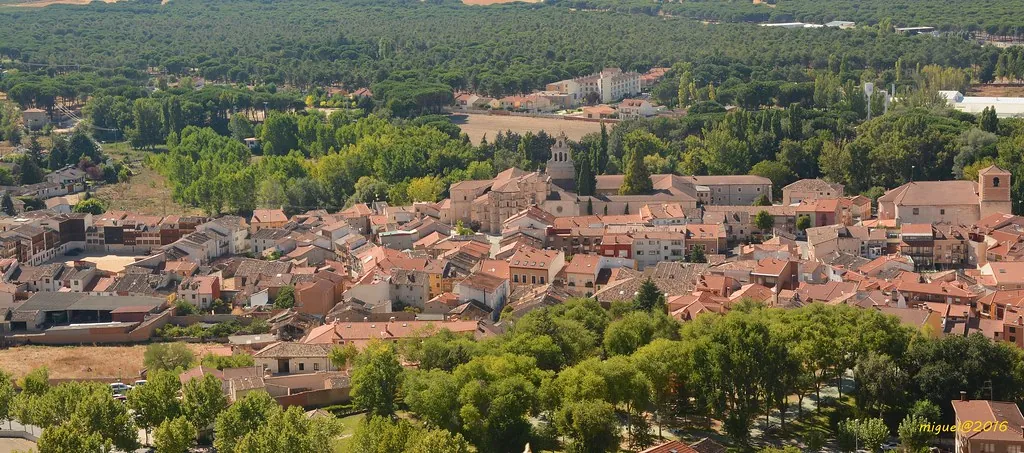
Fompedraza sits in the Campo de Peñafiel, in the eastern stretch of Valladolid province, where the open plateau begins to edge towards the vineyards of the Ribera del Duero. It is a very small place, with around a hundred residents, and its layout follows a pattern that repeats across this part of Castilla: houses clustered around the church, yards and corrals behind them, and then, almost immediately, wide cereal fields.
The scale here is modest. There is no monumental centre and nothing arranged with visitors in mind. What stands out instead is continuity. This is a village that still reflects a way of agricultural life that has gradually declined across much of the Spanish plateau. The streets are short and loosely arranged, linking the main square with the old routes out to the fields.
Local architecture retains many familiar features of the area. Walls are often built from adobe or rammed earth, reinforced with stone. Large gateways once allowed carts to pass through, and interior courtyards are tied to farming work. Some houses have been updated, but overall the village still gives a clear sense of how these cereal-growing communities were traditionally organised.
San Andrés and the shape of the village
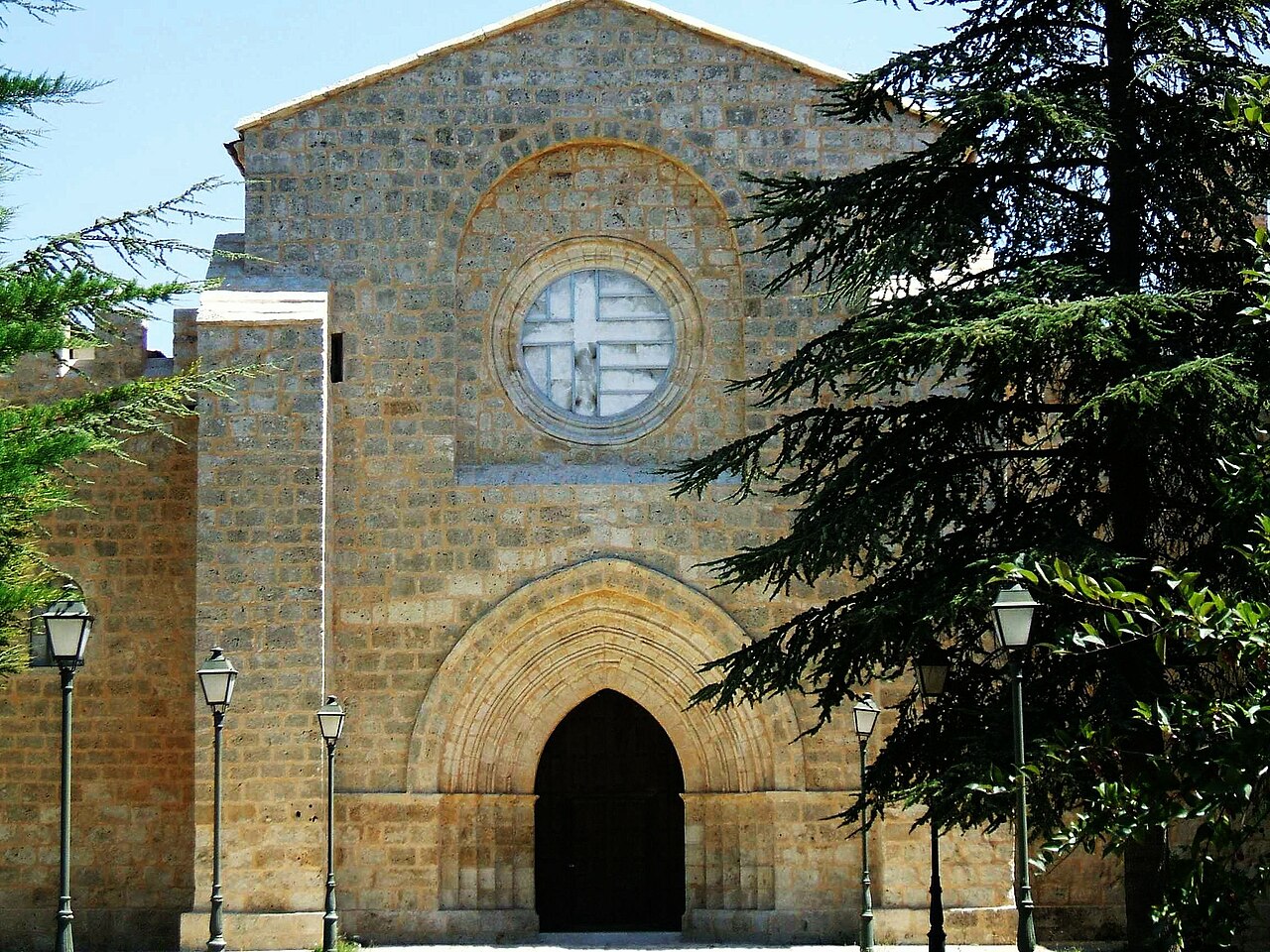
The parish church of San Andrés marks the most recognisable point in Fompedraza. The current structure is generally dated to around the 16th century, though like many rural churches it has been altered over time.
Its importance lies less in its size than in what it reveals about the village itself. The main streets and shared spaces extend out from its immediate surroundings. For centuries, the area around the church, including the atrium and nearby square, served as a meeting place. It was used for occasional markets and as a setting where news and communal decisions were shared.
Around this central space, houses with simple façades line the streets. Some display stone details or coats of arms that hint at past renovations or ownership. There are also empty plots and shuttered homes, a sight that is common in smaller villages across the region.
The landscape of the Campo de Peñafiel
Beyond the village, the landscape opens into dryland cereal country. This is a terrain of flat plateaus and gentle rises, with large fields and very few trees. The dominant impression is one of wide horizons.
The appearance changes noticeably through the year. In spring, the fields turn green as crops begin to grow. Early summer brings the golden tones of wheat and barley. After the harvest, the land becomes more exposed, with stubble left behind and tracks cutting clearly through the fields. It is a restrained landscape, but it offers a direct view of the traditional economy that has shaped this part of Valladolid.
Along the edges of tracks, there are still strips of low vegetation and the occasional holm oak. These provide shelter for birds adapted to the open spaces of the plateau.
Walking the farm tracks
Several agricultural tracks begin at the edge of Fompedraza. These routes, created through land consolidation, are mainly used by farmers. They are wide, made of earth or gravel, and designed for machinery, yet they can also be followed on foot or by bicycle without much difficulty.
There is no dedicated tourist signage. A typical approach is to follow one path for a while and then retrace your steps, or to link different tracks between fields. With a bit of patience, it is common to spot birds such as larks or partridges, species closely associated with dry cereal landscapes.
The local roads can also be used for cycling. The terrain is open, so wind is a factor worth bearing in mind, as it is a regular presence across these exposed plains.
Close to Peñafiel and the vineyards
Fompedraza lies just a few kilometres from Peñafiel, the historic centre of this area. That is where most services are found, along with several well-known landmarks, including the castle overlooking the Duero valley.
The proximity of the Ribera del Duero is also evident in the surroundings. As the land slopes towards the river, the cereal fields gradually give way to vineyards. Many visitors combine time in the rural setting of the Campo de Peñafiel with routes through this wine-producing strip.
Traditions and the rhythm of the year
In a village of this size, social life is closely tied to the annual cycle. The busiest moments tend to be during the patron saint festivities and the summer months, when people who have moved away return to spend time here. During these periods, events such as open-air dances, shared meals and religious celebrations bring activity back to the streets.
Agriculture continues to set the pace. Sowing in autumn, the growth of crops in spring and the harvest at the beginning of summer shape both the landscape and daily life. Tractors and trailers are a constant presence on the tracks during these key periods.
Some households still keep older practices alive. One example is the preparation of homemade cured meats in winter, linked to the traditional pig slaughter that once formed an important part of rural life.
Getting there and moving around
Fompedraza is located in the eastern part of Valladolid province, within the Campo de Peñafiel. The usual way to reach it is by road from Peñafiel or from nearby villages.
The village itself is small enough to explore on foot without difficulty. Walking through its streets and out into the surrounding fields offers a straightforward way to understand both its layout and the landscape that defines it.