Full Article
about Manzanillo
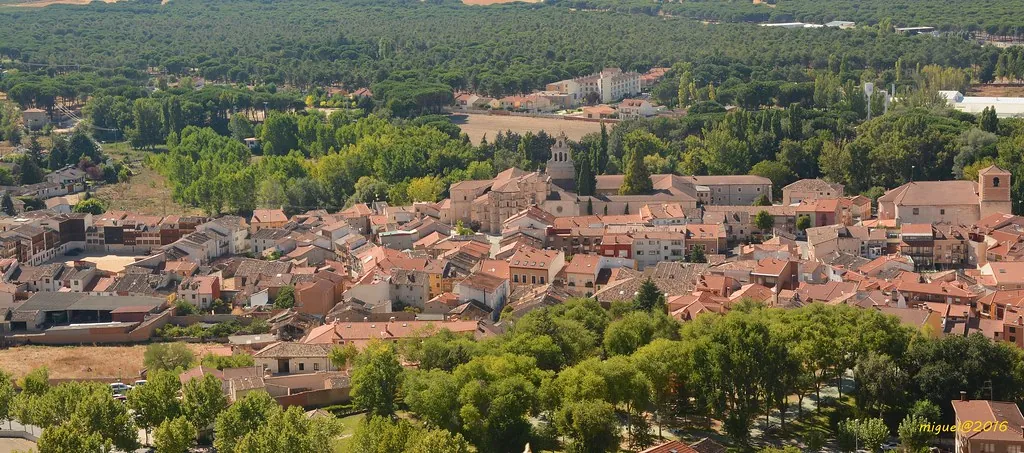
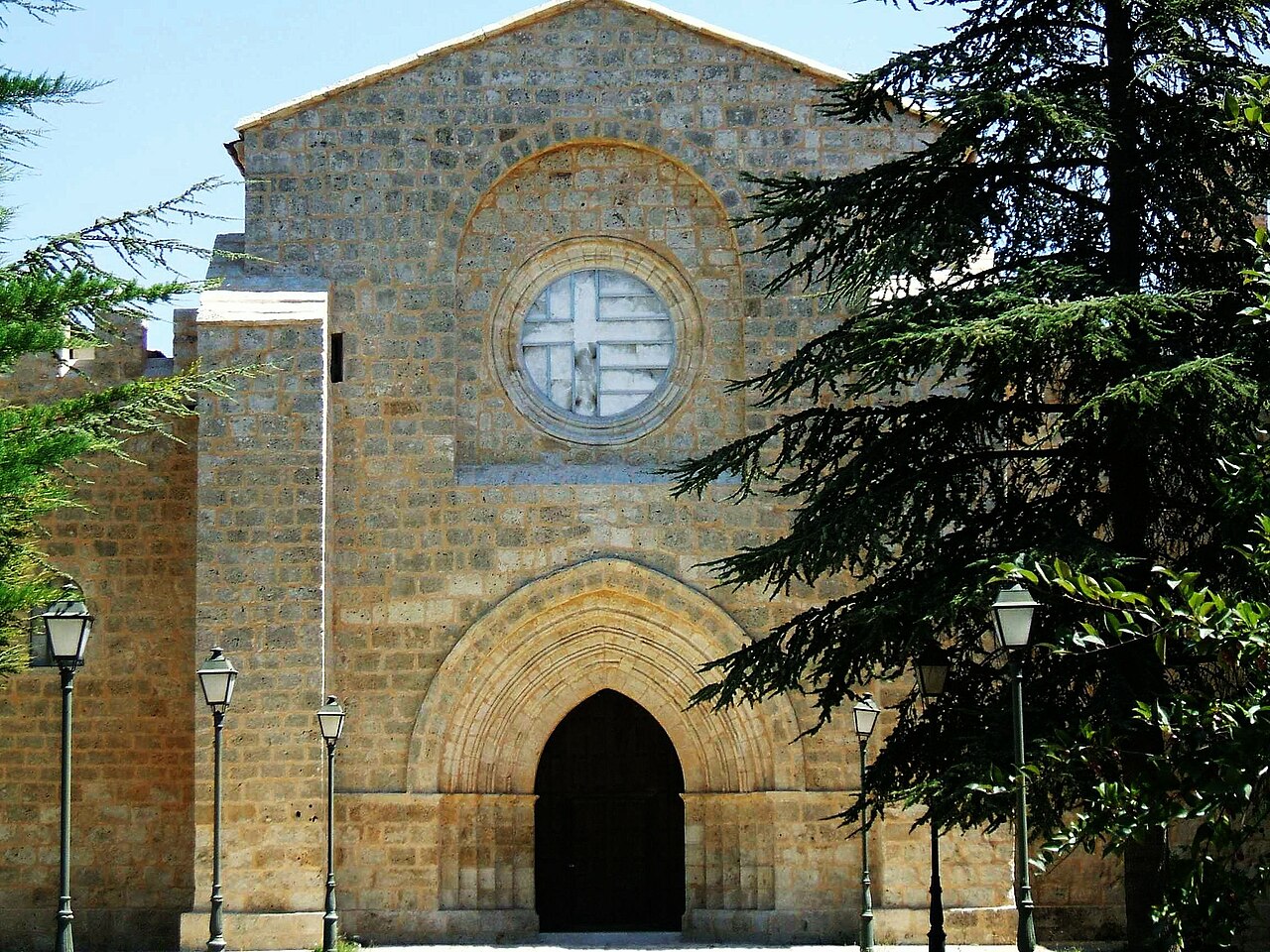
Small wine-growing town near Peñafiel; known for its church and views over the Duero valley.
Ocultar artículo Leer artículo completo
The church bell strikes eleven, and the only other sound is wheat rustling in the breeze. At 780 m above sea-level, Manzanillo sits high enough for the air to feel thinner, cleaner, almost sharp. Below the single bell tower, forty-odd houses of ochre earth and grey stone bake quietly under the Castilian sun; beyond them, cereal fields roll away until they merge with a sky that seems twice the normal size. No souvenir stalls, no interpretive centre, not even a bar—just the village, the horizon, and the slow tick of agricultural time.
Earth and Sky
Adobe walls, two palms thick, keep interiors cool in July and blunt the edge of winter winds that can knife through the meseta from October to March. Most façades carry the patina of decades: sun-bleached timber, ironwork rusted to a uniform chocolate, the occasional hand-painted house number fading like an old bus ticket. Look down and you will notice the streets are simply compacted earth, the colour of plain toast; after rain they turn the shade of strong coffee and every footstep leaves a precise print until the surface dries and the village erases its own memory again.
The surrounding landscape is equally frank. Vineyards belonging to the Ribera del Duero denomination begin 6 km south-east; from the northern edge of the village, paths follow tractor ruts between wheat and barley plots, then disappear over creases in the plateau. Walk for twenty minutes and Manzanillo shrinks to a dark smudge beside the only stand of cypresses for miles. Continue another hour and you will reach the banks of the Duero, though the river keeps itself hidden in a deep canyon—more a geological rumour than water you can dip a toe into.
A Calendar Written in Soil
April brings bright-green lattices of cereal shoots; by late June the colour has drained to gold and the first headers rumble through at dawn, raising dust clouds that smell of toasted grain. During harvest, villagers set out chairs to watch the procession of machinery the way coastal dwellers watch a regatta. Autumn is planting season, and the fields turn black with freshly turned soil; winter strips everything back to soil, sky and stone, the palette reduced to three stubborn shades.
Those rhythms decide what food appears on tables. Lechazo asado—milk-fed lamb slow-cooked in a wood-fired oven—emerges for Sunday lunch or the small fiesta that hijacks the main square every mid-August. The cuts are local, the price (around €22 a portion in nearby Peñafiel) less negotiable than the recipe, which has not changed since the village had five times its current population. If you rent one of the two village houses offered as casas rurales, the owner will likely drop off a stew of chickpeas and morcilla on the first night; accept it, because the nearest restaurant open outside high season is a 20-minute drive.
Walking Without Waymarks
Manzanillo is a starting point, not a packaged destination. Footpaths exist in the sense that any farm track exists: they go somewhere specific for someone with a tractor or sheep. Pick up the unsigned camino that leaves from the cemetery gate and you can trace the ridge above the Arroyo de Valladares, dropping eventually to the hamlet of Corrales de Duero (population 120, seasonal bakery, one fountain). The circuit is 11 km, almost flat, and you will meet more crested larks than humans. Take water—there is none en route—and expect zero phone signal for stretches; GPS works, but the plain can play optical tricks, so print the provincial map (scale 1:50 000) the night before in Valladolid.
Mountain bikers use the same grid of tracks. The gravel is firm when dry, gummy after storms; 35 mm tyres minimum. A rewarding loop heads north-west to the ruins of the Ermita de San Juan, a 16th-century chapel whose bell still lies where it fell during the 1755 Lisbon earthquake. Return via the dirt service road that shadows the N-122 and you clock up 24 km with under 200 m of ascent—perfectly civilised if the afternoon heat stays below 30 °C, unlikely from mid-June to early September.
Wine at Arm’s Length
The bodegas everyone mentions are elsewhere: Pesquera, Anguix, Quintanilla—all within 25 minutes by car. Most require prior booking; weekday tastings start around €15 and end with the hard sell on €40 crianzas. If you prefer not to drive, ask the casa rural owner; a neighbour with a vineyard behind his corral occasionally opens a shed door, pours three wines, asks for a fiver in the honesty box and refuses to speak English, which feels more honest than the glossy tasting rooms on the main road.
When to Come, How to Reach
Spring and autumn bracket the extremes. In May, daytime peaks hover around 22 °C and night frosts are still possible—pack a fleece. Late September offers similar comfort plus the theatre of harvest: grape lorries shaking purple drizzle onto the asphalt, the air sweet with must. July and August sear; the thermometer can touch 38 °C, and the village’s only patch of shade is inside the church, open for mass on Sunday and little else. Winter is crystalline but harsh; snow is rare, yet wind chill can push the felt temperature below –5 °C. If you visit then, bring slippers—stone floors suck heat out of socked feet.
Public transport is academic. Valladolid bus station runs one daily service to Peñafiel (55 min), from where a regional taxi will cover the remaining 18 km for about €30. Hiring a car in Valladolid is simpler: take the A-62 south, peel off at junction 104, follow the CL-610, then the VP-124 for 12 km of empty single-track. Petrol stations close early; fill up in Peñafiel if you plan night drives.
The Quiet Sell
Manzanillo will never elbow its way onto a “Top Ten” list, and that is precisely its proposition. No entrance fee, no audio guide, no artisan ice-cream. Instead, you get a vertical slice of Castilian life the way it tasted before rural tourism learned to package itself: bread delivered from a van that beeps at the square around ten, conversations conducted in the measured Spanish of the plateau, and evenings so silent you can hear the electrical transformer hum two streets away.
Come if you want space more than spectacle. Leave disappointed if you need museums, cocktails or souvenir teaspoons. The village offers none, yet it gives you the meseta’s huge sky for free—and, at closing time, that is the only attraction still open.