Olivares de Duero - Flickr
Castilla y León · Cradle of Kingdoms

Olivares de Duero

The church bell strikes noon, and the only other sound is a tractor changing gear somewhere beyond the stone houses. Olivares de Duero doesn't do f...

328 inhabitants · INE 2025
743m Altitude

Why Visit

Church of San Pelayo Wine tourism

Best Time to Visit

summer

San Pelayo (June) junio

Things to See & Do
in Olivares de Duero

Heritage

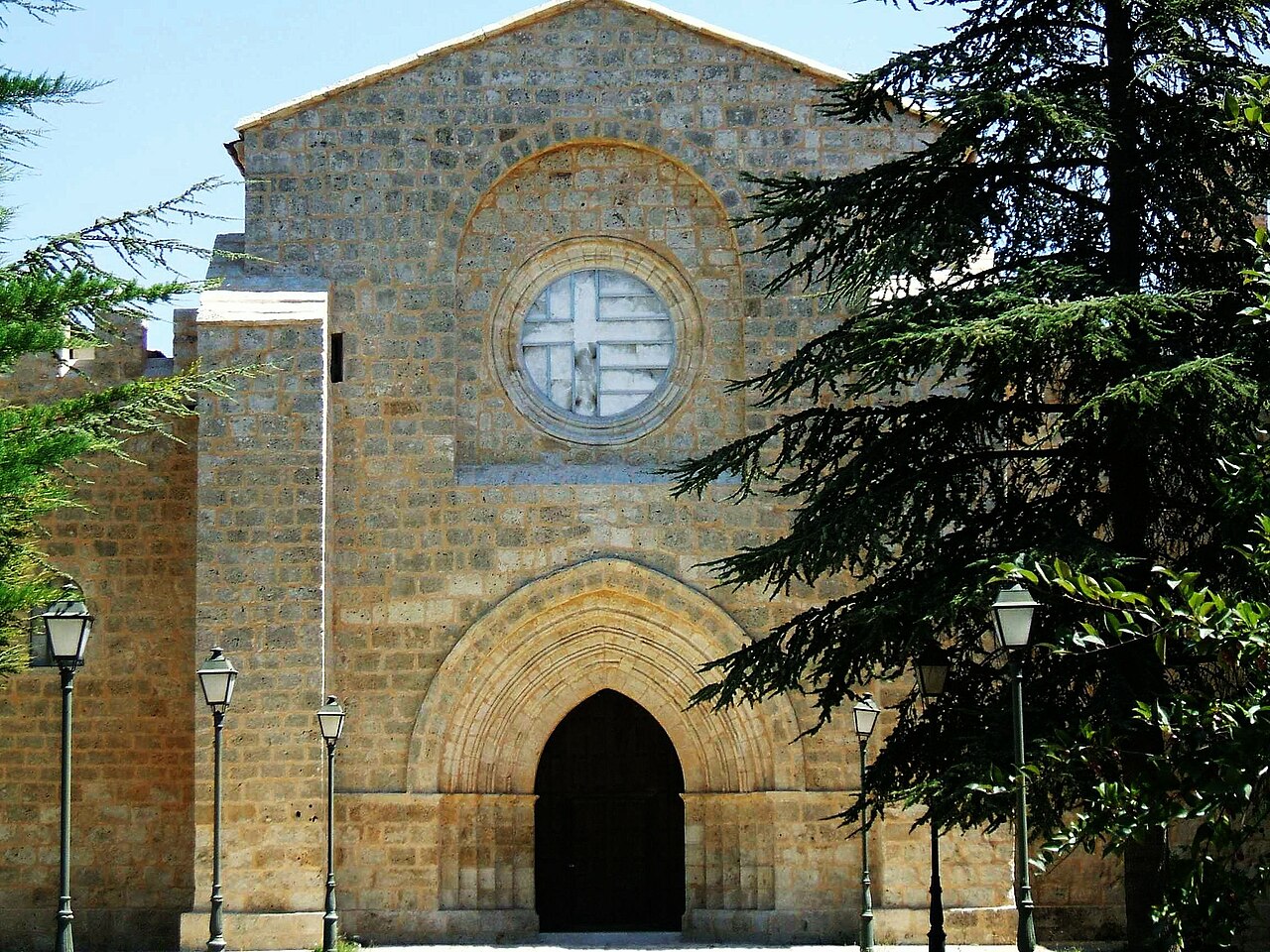
  • Church of San Pelayo
  • Bridge over the Duero

Activities

  • Wine tourism
  • Hiking along the Duero Trail

Festivals
& & Traditions

Fecha junio

San Pelayo (junio)

Las fiestas locales son el momento perfecto para vivir la autenticidad de Olivares de Duero.

Full Article
about Olivares de Duero

Town on the banks of the Duero; noted for its Gothic church with a Renaissance altarpiece and its wine cellars.

Ocultar artículo Leer artículo completo

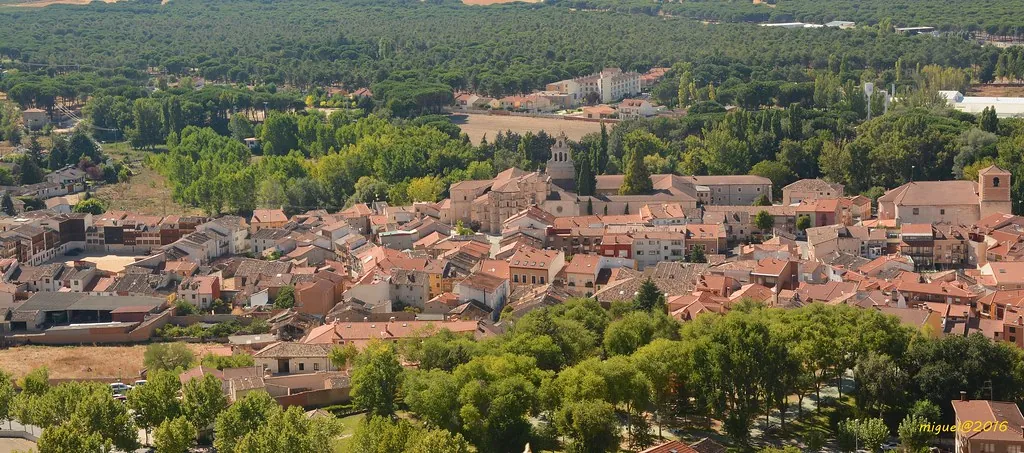
The church bell strikes noon, and the only other sound is a tractor changing gear somewhere beyond the stone houses. Olivares de Duero doesn't do fanfare. At 743 metres above sea level, on a plateau that feels closer to sky than sea, the village simply gets on with what it has done for centuries: growing grapes, minding sheep, and ignoring passing trends.

Three hundred souls live here, give or take a student who has left for Valladolid University and returns only at weekends. The maths is simple: for every resident, roughly four hectares of Tempranillo surround the place in ruler-straight rows. Drive in from the A-11 and the vineyards press right up to the first houses, as though the vines themselves are curious about who has arrived.

A Bridge, a Church and a Handful of Cellars

Start at the sixteen-arch bridge (locals insist it has seven, but count again: the extras are hidden in undergrowth). Built in the 1500s to haul wine carts across the Duero without soaking the barrels, its stone is the colour of burnt cream and still shows the grooves of iron-rimmed wheels. Mid-morning light makes the reflection look like a perfect ellipse—better value than any viewpoint in nearby Peñafiel, and you will not queue.

From the bridge, the lane climbs past adobe walls the thickness of a London bus. Houses are topped with terracotta tiles whose curved undersides once carried the maker’s thumbprints. Many retain bodegas subterráneas: hand-hewn caves beneath the kitchen where families fermented their own crianza until the 1980s. Few are officially open, yet knock politely at number 18 and the owner might lift the trapdoor to reveal a chalked tally of vintages dating back to Franco’s time. Treat it as a favour, not a service.

The parish church, dedicated to the Assumption, squats at the top of the rise rather than dominating a plaza—there is no plaza. Its Romanesque doorway is worth a slow lap: you will find a capital carved with what looks suspiciously like a bunch of grapes masquerading as ecclesiastical foliage. Inside, the air smells of candle wax and old grain; Sunday mass is at eleven, sung by twelve villagers and a priest who drives over from Curiel de Duero.

Between the River and the Sky

Walk south for ten minutes and the tarmac gives way to a farm track bordered by poplars. The Duero slips past, narrower than you expect, olive-green and flecked with cottonwood seed. Kingfishers use the telephone wire as a perch; nightingales start up at dusk even in October. A circular loop of four kilometres brings you back via the railway embankment—freight trains rumble through but never stop. Mobile signal dies halfway round; download an offline map before setting off, or simply trust the skyline of Peñafiel castle to steer by.

Cyclists can follow signed agricultural lanes that fan out towards Quintanilla de Onésimo and the “golden mile” of bodegas. Surfaces are compacted dirt: fine for hybrids, suicidal on skinny road tyres. The gradients look gentle until you realise the plateau is tilting at 6 %; reward is a horizon that stretches forty kilometres to the Montes de Torozos. Spring brings lime-green shoots, autumn a traffic-jam of tractors hauling glistening grapes. Both seasons smell of crushed stems and diesel—oddly comforting.

Wine Without the Walt Disney Treatment

Olivares has no commercial winery of its own, which paradoxically makes it a better base than tourist-heavy Pesquera. Within a twelve-minute drive you can ring the bell at Condado de Haza, learn why Tinto Fino clones matter at Hermanos Pérez Pascuas, or taste a £90 bottle of Pingus at the gate (appointment essential, credit card tremor optional). Most cellars open 10:00–13:00 then shut for three hours; plan two visits maximum per day or you will spend siesta time twiddling thumbs in an empty car park.

Back in the village, buy everyday bottles at the multiservice shop on Calle Real. The owner keeps a hand-written list of local vintages under the counter—last year’s cosecha sells for €4.50, screw-cap included. There is no cashpoint; the nearest ATM is eleven kilometres away in Quintanilla, so fill your wallet before arrival.

Food That Forgives a Hangover

Lunch options oscillate between one bar and zero. Bar La Plaza (it still calls itself that despite the absence of any such square) opens at 13:30, shuts when the last customer leaves, and serves a plato de la abuela that could silence a rugby front row: lean pork, mild chorizo, a fried egg and a raft of hand-cut chips, all for €9. If the door is locked, the proprietor has probably gone hunting; phone the landline listed on a scrap of cardboard and he will cycle back from the dove field.

For something more formal, drive four kilometres to San Bernardo and book a table at Casa Rural Entreviñas. British guests praise the proprietor’s command of wine vocabulary in English and, crucially, the provision of a proper kettle for tea. Expect roast suckling lamb that flakes at the sight of a fork, followed by a sheep’s-milk cheesecake that makes you reconsider every prior dairy experience. Set menu €28, wine included—designate a driver.

Where to Sleep (and Why to Stay)

Olivares itself offers no hotels, only two self-catering houses restored with stone floors and under-floor heating. Casa de la Tercia sleeps four, overlooks the river path and has thick walls that keep July temperatures bearable without air-conditioning. Nights are silent enough to hear grapes expanding on the vine; mornings begin with church bells and the smell of diesel from the first tractor. Nightly rate hovers round €110; book through the provincial tourism site because Google Maps still thinks the address is a field.

If you prefer breakfast made for you, La Cantamora in neighbouring Pesquera provides vineyard-facing rooms and a continental spread that Brits describe as “safe for non-Spanish palates”—meaning yoghurt, toast and fruit rather than churros and cured fat. Ten minutes by car, or a brisk uphill cycle if you feel penitent after the cheesecake.

The Catch (Because There Is One)

Public transport is a myth. The last bus passed through in 1992 and never returned. Hire a car at Valladolid airport (40 minutes on the A-11) or pre-book a taxi for €45 each way; the driver will wait while you extract luggage from the carousel. Monday and Tuesday see the village shut down almost entirely—no bar, no shop, only the tractor driver and a handful of dogs negotiating the streets. Come mid-week or at the weekend, and still phone ahead for meals. Winter nights drop to –5 °C; summers hit 35 °C but the air is dry enough that shade actually works.

When to Time Your Escape

April showers turn the plateau an almost Irish green; by mid-May the vines have raced up their posts and the nightingales are in full voice. September harvest brings the smell of fermentation drifting from open winery doors and a slim chance of joining in traditional foot-treading—wear old shoes and prepare to be laughed at for your technique. October light is the photographers’ favourite: low, honeyed and mercilessly honest about every wrinkle in the landscape. August is simply hot, empty and closed.

Leave before you start recognising the dogs by name. Olivares de Duero offers a reset button, not a theme-park ride. The village will carry on growing grapes and fixing tractor engines long after your flight home, and that, rather than any souvenir, is the point.

Key Facts

Region
Castilla y León
District
Campo de Peñafiel
INE Code
47103
Coast
No
Mountain
No
Season
summer

Livability & Services

Key data for living or remote work

2024
Connectivity5G available
HealthcareHospital 29 km away
EducationElementary school
Housing~5€/m² rent · Affordable
CoastBeach nearby
Sources: INE, CNMC, Ministry of Health, AEMET

Official Data

Institutional records and open data (when available).

  • IGLESIA DE SAN PELAYO
    bic Monumento ~1.2 km

Planning Your Visit?

Discover more villages in the Campo de Peñafiel.

View full region →

More villages in Campo de Peñafiel

Traveler Reviews