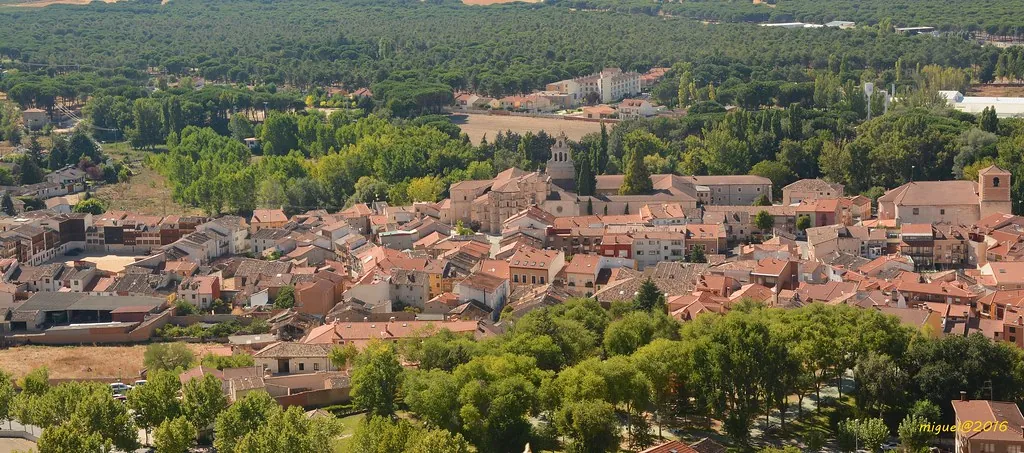
Vista aérea de Olmos de Peñafiel
Instituto Geográfico Nacional · CC-BY 4.0 scne.es
Castilla y León · Cradle of Kingdoms

Olmos de Peñafiel

The church bell strikes noon and the only other sound is a tractor grinding through wheat stubble. At 785 metres above sea level, Olmos de Peñafiel...

35 inhabitants · INE 2025
785m Altitude

Why Visit

Church of Santa Engracia Wine tourism

Best Time to Visit

summer

Santa Engracia (April) agosto

Things to See & Do
in Olmos de Peñafiel

Heritage

  • Church of Santa Engracia

Activities

  • Wine tourism
  • Country walks

Festivals
& & Traditions

Fecha agosto

Santa Engracia (abril), La Asunción (agosto)

Las fiestas locales son el momento perfecto para vivir la autenticidad de Olmos de Peñafiel.

Full Article
about Olmos de Peñafiel

Small village with a winemaking tradition; known for its wine cellars and parish church.

Ocultar artículo Leer artículo completo

The church bell strikes noon and the only other sound is a tractor grinding through wheat stubble. At 785 metres above sea level, Olmos de Peñafiel distils the Castilian plateau to its essence: thirty-five residents, one grocery van a week, and a horizon that refuses to budge. Most visitors speed past on the A-62, bound for Peñafiel’s postcard castle twenty minutes east. Those who turn off discover a village that tourism forgot—and deliberately so.

A grid that fits in a pocket

Olmos stretches barely four streets. Adobe walls the colour of dry biscuits shoulder against brick additions; wooden gates hang slightly askew after decades of grain deliveries. The parish church of San Miguel locks its doors after Mass, so the tower does the talking. Built from local limestone, it rises square and unadorned, a medieval exclamation mark you can spot from any approach road. Walk the length of the village in ten minutes, linger at the stone cross where the roads meet, and you have seen the civic centre. There is no ticket office, no interpretation panel, no souvenir shop—just the smell of chicken feed drifting from back gardens and the soft click of dominoes from the only bar, open when the owner feels like it.

Below several houses, stone steps drop to family bodegas sunk into the hill. Iron grates guard clay vats once used for country wine; nowadays most hold bicycles and string-bound archives of Recuerdos magazines. Peer in, but don’t expect a tasting—production stopped when the last commercial vineyard leased its plots to a co-operative in Peñafiel. The hand-painted signs above the doors still read “Vino de la Casa, 50 pesetas”, ghost prices from before the euro.

Wheat, wind and the missing elms

Olmos means “elms”, yet Dutch elm disease reduced the original avenue to a single veteran on the road out. What remains is cereal country: kilometres of wheat, barley and the odd regimented stripe of peas. In April the fields glow emerald; by July they bleach to gold sharp enough to hurt the eyes. Public footpaths are signed in theory, but way-marking stops at the municipal boundary. A sensible loop follows the farm track south-west towards the abandoned venta (roadhouse) at Carrascales, 3 km away. The route is dead flat, shared with the occasional 4×4 spraying herbicide, and offers zero shade—carry water and a hat even in May.

Cyclists find the same openness either a liberation or a penance. Roads have negligible traffic because everyone uses the motorway; surfaces vary from glass-smooth to “last seen a grader in 1998”. A quiet 22 km circuit links Olmos with neighbouring Hontoria de Valdearados and back, passing three villages where the only open facility is a cold-water fountain. Download the route beforehand—mobile coverage flickers between 3G and none.

Eating: bring the car or your own saucepan

The village has no restaurant, bakery or shop. The Thursday grocery van honks its horn in the plaza at 11:00, sells tinned tuna and toilet paper for forty minutes, then departs. Self-caterers stock up in Peñafiel’s Carrefour on the way in. For a sit-down meal, the closest options are:

  • Mesón de la Villa, Peñafiel: roast suckling lamb (€22 half-ration, big enough for two), decent vegetarian starters if you phone ahead.
  • Castilla Termal Monasterio de Valbuena: Michelin-recommended wine-pairing menu inside a converted Cistercian monastery, five courses from €65; book weeks ahead in harvest season.

If you rent a cottage with a barbecue, local shepherds will sell you a dressed kid goat at €12 per kilo—ring the number pinned to the noticeboard outside the town hall.

Wine without the coach parties

Olmos sits ten kilometres south of the “Golden Mile” of Ribera del Duero: Pesquera, Vega Sicilia, Pingus. You can reach eight bodegas in twenty minutes, yet the coach circuit stops in Peñafiel, so tastings stay low-key. Start at Bodegas Protos beneath the castle (English tours 12:00 and 17:00, €16 including two glasses). Further afield, Alión accepts drop-ins only on weekdays before 13:00; you need an email confirmation and a willingness to spend €35 on their entry crianza. Designate a driver—Spanish police set up random breath-tests on the N-122 most weekend nights.

When to come, when to stay away

Spring (mid-April to mid-June) brings daytime highs of 22 °C and nights cold enough for a jacket. Wheat ears rustle like paper; storks commute between chimney nests and the Duero river. September mimics the weather but adds grape-harvest bustle in surrounding vineyards. July and August bake: 34 °C by 14:00, thermometer barely below 20 °C at midnight. Accommodation without air-conditioning is plentiful and cheap, but sleep becomes theoretical. Winter is crisp, often sunny, occasionally snow-covered; the same farm tracks turn to glutinous mud, and the single village road can ice over. Bring chains if you book a rural cottage between December and February.

A room for the night—elsewhere

Olmos itself has no hotel. Expect to base yourself in Peñafiel (12 km) or Aranda de Duero (35 km). Reliable picks tested by British visitors:

  • Castilla Termal Monasterio de Valbuena (5-star spa, doubles from €180): spacious cells in a sixteenth-century monastery, geothermal pool kept at 34 °C, complimentary wine bath.
  • Aparthotel Essenzia, Aranda (apartments from €75): underground parking, handy if you’re hauling wine back; walls are thin, so request top floor.
  • Casa Rural La Solana, Hontoria de Valdearados (entire house €120): stone cottage with wood-burner, no Wi-Fi, nearest bar 7 km—perfect for digital detox until you crave a flat white.

Fiestas: the volume knob turns once a year

For fifty weekends, Olmos dozes. On the third weekend of August the population quadruples as former residents return for the fiesta of San Roque. A sound system appears in the square, teenagers drink calimocho (red wine and cola) from two-litre bottles, and grandmothers serve sopa castellana (garlic bread soup) from cauldron-sized pans. Saturday night ends with a disco in the sports pavilion that thumps until the Guardia Civil remind organisers of the 04:00 curfew. By Monday lunchtime the village empties, leaving only the hum of the grain dryer and a few burst balloons snagged on telephone wires.

Getting here without the chapel choir

Britain has no direct public transport to Olmos. Fly to Madrid or Valladolid, collect a hire car, and head north on the A-62. Petrol stations on the motorway close at 22:00; fill up in Peñafiel if you arrive late. There is no railway stop—the nearest trains terminate in Valladolid, 70 km away, where a twice-daily bus reaches Peñafiel. From there, a local taxi charges €18 to Olmos; book in advance because only two cars serve the whole comarca.

Worth the detour? Honest maths

If your Spanish fantasy involves flamenco and paella on the beach, stay on the motorway. Olmos delivers something narrower: a glance at rural Castilla before the generation that still harvests by hand disappears. Allow forty minutes to walk the village, another hour for the fields, and a lifetime of anecdotes about the day you found a place where Google Street View last visited in 2009. Come as part of a Ribera loop, sandwich the stop between two winery lunches, and you will leave neither overwhelmed nor disappointed—merely conscious that somewhere on the plateau, life continues at the speed of a church bell that rings whether anyone is there to hear it or not.

Key Facts

Region
Castilla y León
District
Campo de Peñafiel
INE Code
47106
Coast
No
Mountain
No
Season
summer

Livability & Services

Key data for living or remote work

2024
Housing~5€/m² rent · Affordable
CoastBeach nearby
January Climate4.4°C avg
Sources: INE, CNMC, Ministry of Health, AEMET

Official Data

Institutional records and open data (when available).

  • IGLESIA DE SANTA ENGRACIA
    bic Monumento ~0 km

Planning Your Visit?

Discover more villages in the Campo de Peñafiel.

View full region →

More villages in Campo de Peñafiel

Traveler Reviews